ガリレオのヨーロッパ
Galileo's Europa
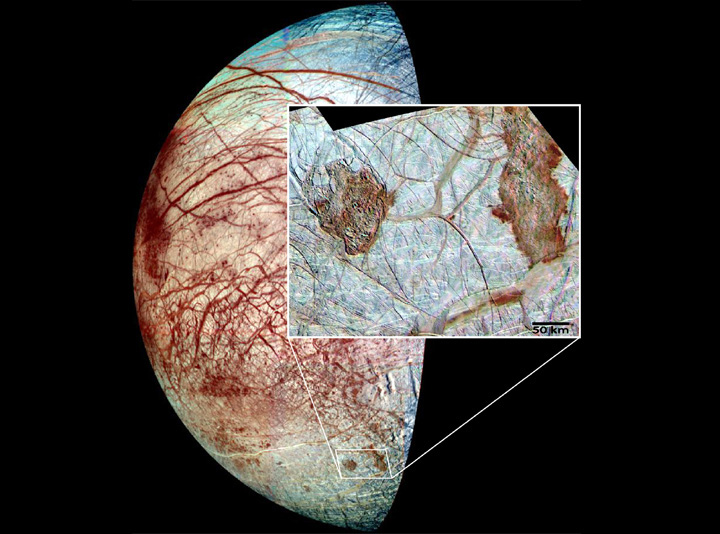
1989年に打ち上げられ、1995年後半から木星系を周回してきたNASAのガリレオ探査機の航海は、まもなく終わりを迎える。探査機は今週日曜日、9月21日に秒速約30マイルで木星に直接突入する予定だ。探査機の部品は、巨大ガス惑星の外層大気で蒸発する。ガリレオの長きにわたる探査航海は、素晴らしい科学的遺産をもたらしたが、探査機の最終的な運命は、おそらく最も魅力的な発見、つまり木星の衛星エウロパの凍った表面の下に液体の海が存在するという強力な証拠と関係している。ガリレオは現在、軌道修正のための燃料がほぼ完全に尽きているため、今回の意図的な木星への衝突は、将来エウロパと意図せず衝突することを防ぎ、惑星間空間で生き残るのに十分なほど丈夫な地球由来の微生物が木星の衛星を汚染する可能性を回避することになる。 1995年から1998年にかけてガリレオ探査機が記録したカラー画像データを用いて、エウロパのひび割れた氷の表面を描いた。挿入図は、テラとトラキアと呼ばれる、暗赤色で乱れた領域を示している。
原文(English)
Launched in 1989 and looping through the jovian system since late 1995, the voyage of NASA's Galileo spacecraft will soon come to an end. The spacecraft has been targeted to plunge directly into Jupiter this Sunday, September 21st, at about 30 miles per second. Its components will be vaporized in the gas giant's outer atmosphere. While Galileo's long voyage of exploration has resulted in a spectacular scientific legacy, the spacecraft's ultimate fate is related to perhaps its most tantalizing discovery -- strong evidence for a liquid ocean beneath the frozen surface of Jupiter's moon Europa. Galileo is now almost completely out of fuel for maneuvers, so this intentional collision with Jupiter will prevent any unintentional future collision with Europa and the possibility of contaminating the jovian moon with microbes from Earth hardy enough to survive in interplanetary space. Color image data from the Galileo mission recorded between 1995 and 1998 was used to create this depiction of Europa's cracked and icy surface. The inset shows dark reddish, disrupted regions dubbed Thera and Thrace.
\ この感動を宇宙仲間にシェア /
宇宙をXでシェア
© NASA / APOD