夕日と月光
Sunset Moonlight
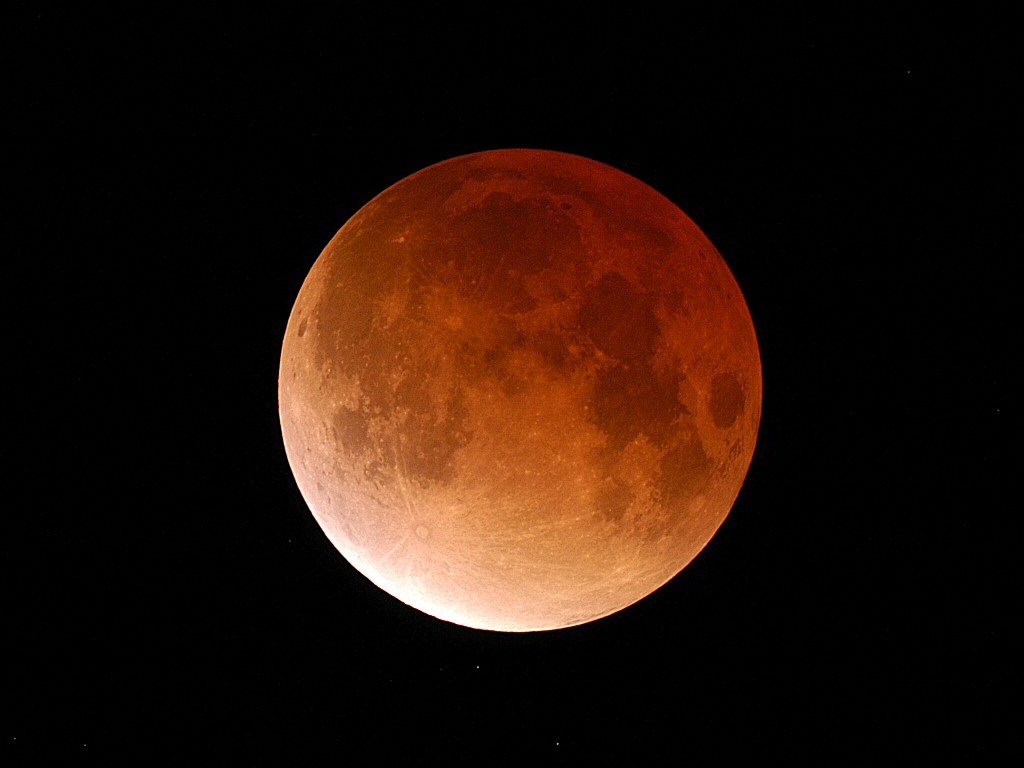
11月の月食は近年で最も短いものの1つであり、同時に最も明るいものの1つでもあり、地球の影が完全に暗くならないことを示した。皆既月食の間も月は容易に見え、シルエットになった地球の縁の周りのすべての日没と日の出から表面に差し込む赤みがかった光を反射していた。月面から約40万キロメートル離れたドイツのケルン近郊で地球の夜側から天体の影の戯れを見ようと、アマチュア天文家のマルクス・シュトラスフェルトはデジタルカメラと望遠鏡を携え、明るい街の明かりを避けるために市街地から約10キロメートル離れた場所まで車を走らせた。幸運にも、月食が始まる約1時間前に空が晴れ、彼は皆既月食中の月を照らす夕日の鮮明な画像を記録することができた。直径約85キロメートルの若い光線クレーター、ティコは、月の明るい南端付近で際立っている。
原文(English)
November's lunar eclipse was one of the shortest in recent years and also one of the brightest -- demonstrating that the Earth's shadow is not completely dark. The eclipsed Moon remained easily visible during totality, reflecting reddened light filtering on to its surface from all the sunsets and sunrises, as seen from the lunar perspective, around the edges of a silhouetted Earth. Hoping to view the celestial shadow play from the Earth's night side near Cologne, Germany, about 400,000 kilometers from the lunar surface, amateur astronomer Markus Strassfeld packed a digital camera and telescope and drove about 10 kilometers outside the city to escape the bright city lights. Fortunately, the sky cleared about an hour before the eclipse began and he was able to record this sharp image of sunsets illuminating the totally eclipsed Moon. Young ray crater Tycho, about 85 kilometers across, stands out near the Moon's brighter southern edge.
\ この感動を宇宙仲間にシェア /
宇宙をXでシェア
© Markus Strassfeld / APOD