宇宙論の解明の一年
A Year of Resolving Cosmology
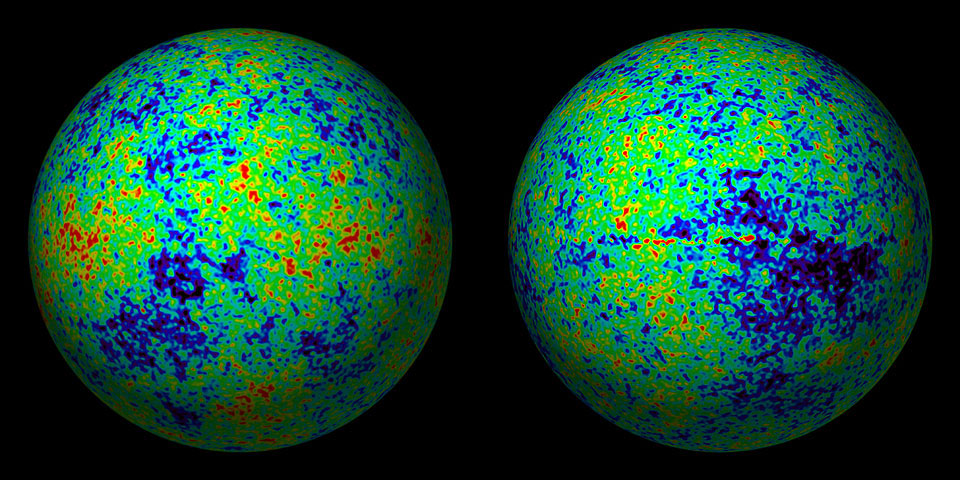
今年、人類は宇宙の年齢が137億年であることを知りました。今年以前は、宇宙の年齢は約130億年と考えられていましたが、実際には約120億年から150億年の間としか特定されていませんでした。この違いは主に、地球の通常軌道上でデータを収集していたウィルキンソン・マイクロ波異方性プローブ(WMAP)という小型衛星によってもたらされました。上の図は、WMAPの最初のデータ公開で記録された、これまでになかった詳細さで2つの半球に分割された完全な宇宙マイクロ波背景放射の、そのデータを示すスカイマップです。宇宙の年齢に加えて、宇宙マイクロ波背景放射のスポットに関する新しいデータと分析は、宇宙が主に奇妙で謎めいたタイプのダークエネルギー(73%)で構成されているという既存の兆候を強化しました。残りの物質は、おなじみの原子で約4%、残りの23%はやや謎めいたタイプのダークマターです。この1年間で、宇宙論研究の多くは、宇宙を定義するパラメーターを見つけようとする試みから、これらのパラメーターをツールとして用いて、宇宙がどのように進化してきたかの詳細を理解しようとする試みへと移行した。
原文(English)
This year, humanity learned that the universe is 13.7 billion years old. Before this year, the universe's age was thought to be about 13 billion years, but really only constrained to be between about 12 billion and 15 billion years old. The difference was made, primarily, by a small satellite named the Wilkinson Microwave Anisotropy Probe (WMAP) that had been collecting data in an unusual Earth orbit. Pictured above is a sky map of the enabling data -- the complete cosmic microwave background divided into two hemispheres, in detail never before resolved, as recorded by the WMAP's first data release. Besides universe age, new data and analyses of the spots on the cosmic microwave background bolstered existing indications that the universe is composed predominantly of a strange and mysterious type of dark energy (73 percent). The remaining matter is only about 4 percent in familiar atoms, with the remaining 23 percent in a somewhat mysterious type of dark matter. During the year, much cosmological research shifted from trying to find the parameters that define our universe to trying to use these parameters as a tool for understanding details of how our universe evolved.
\ この感動を宇宙仲間にシェア /
宇宙をXでシェア
© NASA / APOD