オリオン・ディープフィールド
An Orion Deep Field
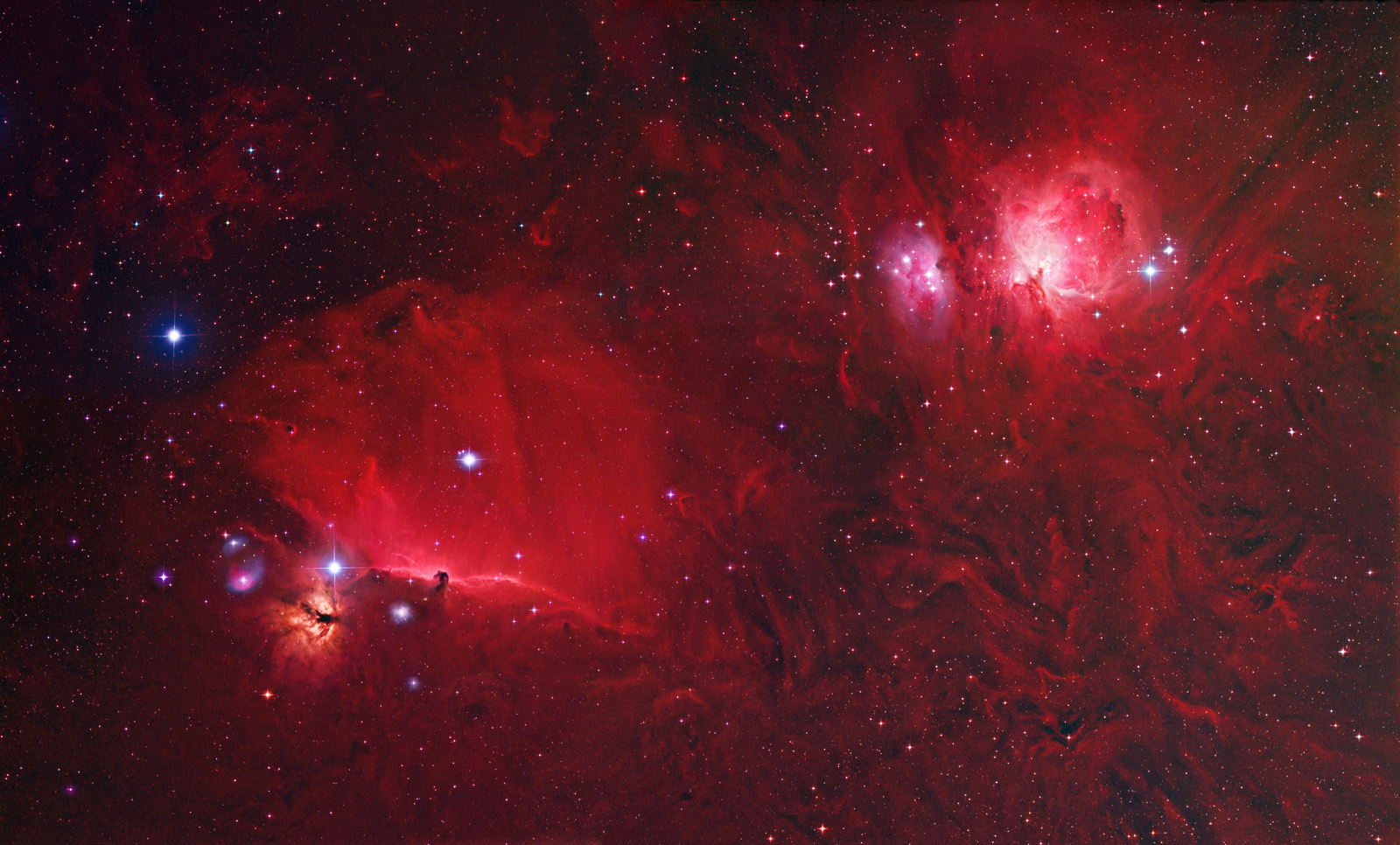
夜空で最もよく知られた星座の一つに位置する、1500光年離れた場所に浮かぶ輝くオリオン大星雲と暗い馬頭星雲は、対照的な宇宙の景観です。この見事な合成デジタル画像は、水素原子からの放射を記録するためにフィルター処理された露光を含む20時間以上のデータから作成されました。この画像からは、数百光年にも及ぶ巨大なオリオン分子雲複合体に関連する広範囲の星雲が明らかになります。壮大な放射領域であるオリオン大星雲(別名M42)は、画像の右上部に位置しています。そのすぐ左には、ランニングマンと呼ばれることもある、目立つ青みがかった反射星雲の集まりがあります。馬頭星雲は、左下の長い赤い光に切り込まれた小さなシルエットの暗い雲として見えます。アルニタクはオリオン座の三つ星の中で最も東に位置する星で、馬頭星雲の左にある最も明るい星として見えます。アルニタクの下には、明るい放射状の雲と印象的な暗い塵の帯を持つ炎星雲が広がっている。オリオン座のこの深宇宙領域では、かすかに光る水素ガスの筋が至る所に見られる。
原文(English)
Adrift 1,500 light-years away in one of the night sky's most recognizable constellations, the glowing Orion Nebula and the dark Horsehead Nebula are contrasting cosmic vistas. They both appear in this stunning composite digital image assembled from over 20 hours of data that includes exposures filtered to record emission from hydrogen atoms. The view reveals extensive nebulosities associated with the giant Orion Molecular Cloud complex, itself hundreds of light-years across. The magnificent emission region, the Orion Nebula (aka M42), lies at the upper right of the picture. Immediately to its left are a cluster of of prominent bluish reflection nebulae sometimes called the Running Man. The Horsehead nebula appears as a dark cloud, a small silhouette notched against the long red glow at the lower left. Alnitak is the easternmost star in Orion's belt and is seen as the brightest star to the left of the Horsehead. Below Alnitak is the Flame Nebula, with clouds of bright emission and dramatic dark dust lanes. Fainter tendrils of glowing hydrogen gas are easily traced throughout the region in this Orion deep field.
\ この感動を宇宙仲間にシェア /
宇宙をXでシェア
© Robert Gendler / APOD