N49のコズミックブラスト
N49's Cosmic Blast
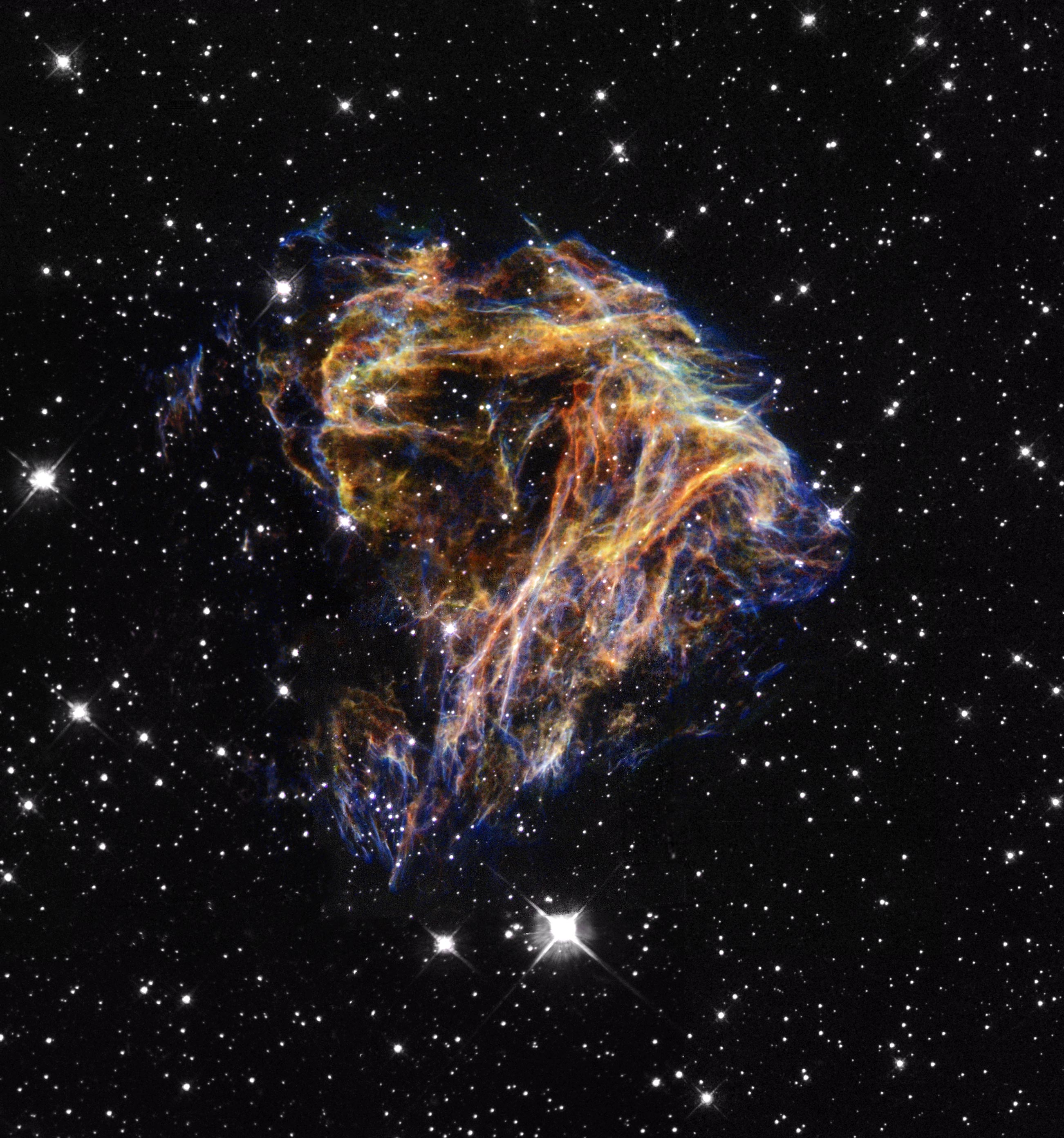
ハッブル宇宙望遠鏡のデータを基にしたこの美しい合成画像では、宇宙の超新星爆発から散乱した残骸が空を照らしています。N49としてカタログ化されたこれらの輝く衝撃波ガスのフィラメントは、私たちの隣の銀河である大マゼラン雲に約30光年にわたって広がっています。元の爆発した星からの光は数千年前に地球に到達しましたが、N49は別の高エネルギーの爆発、つまりわずか25年前の1979年3月5日に衛星によって検出された非常に強烈なガンマ線の爆発の場所も示しています。この日付は、研究者が新しい種類の星の理解へと導いた天体物理学のエキサイティングな旅の始まりでした。3月5日のイベントの発生源は現在、マグネター、つまり超新星残骸N49を生み出した古代の恒星爆発で生まれた、強く磁化された回転する中性子星であると考えられています。マグネターは超新星の残骸雲の中を秒速1200キロメートル以上の速度で突き進む。
原文(English)
Scattered debris from a cosmic supernova explosion lights up the sky in this gorgeous composited image based on data from the Hubble Space Telescope. Cataloged as N49, these glowing filaments of shocked gas span about 30 light-years in our neighboring galaxy, the Large Magellanic Cloud. Light from the original exploding star reached Earth thousands of years ago, but N49 also marks the location of another energetic outburst -- an extremely intense blast of gamma-rays detected by satellites only twenty-five years ago on March 5, 1979. That date was the beginning of an exciting journey in astrophysics which led researchers to the understanding of an exotic new class of stars. The source of the March 5th Event is now attributed to a magnetar - a highly magnetized, spinning neutron star also born in the ancient stellar explosion which created supernova remnant N49. The magnetar hurtles through the supernova debris cloud at over 1,200 kilometers per second.
\ この感動を宇宙仲間にシェア /
宇宙をXでシェア
© NASA / APOD