金星とプレアデス星団
Venus and the Pleiades
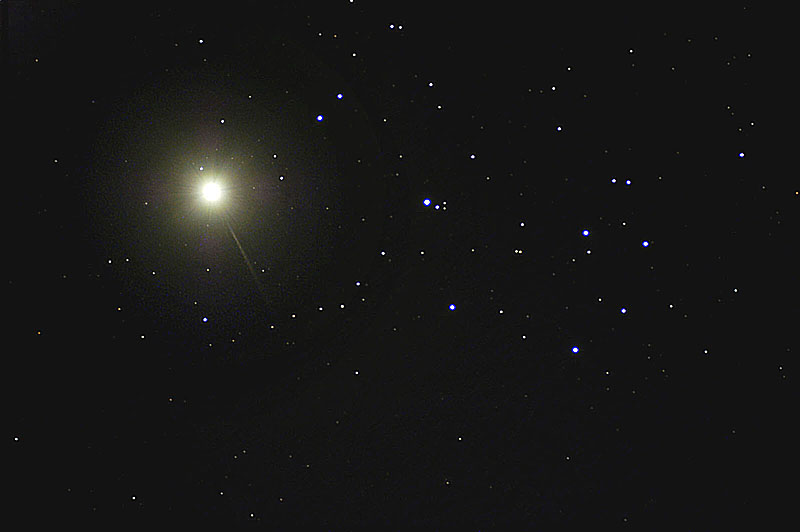
金星は日没後も西の空を輝く宵の明星として支配しています。今月初め、肉眼で見える他の惑星と共に黄道上を移動していた金星は、プレアデス星団の近くを通過し、地上の天体観測者にとって印象的な写真撮影の機会を提供しました。M45に分類されるプレアデス星団は、それ自体が美しい光景であり、しばしばぼんやりとした青い反射星雲に包まれた長時間露光画像に写し出されます。しかし、4月3日の夕方に撮影されたこの写真では、輝く金星が七姉妹星団に近づき、繊細な宇宙雲の光を圧倒しています。この光景は、プレアデス星団で最も明るい星であるアルキオネよりも金星が約700倍明るく見えるため、コントラストの研究となっています。金星は地球からわずか5光分強の距離にあり、アルキオネと他のプレアデス星団の星々は約400光年離れています。太陽を生み出した収縮する星雲から形成された金星も、およそ45億歳である。一方、プレアデス星団の星々は、わずか1億年ほどしか経っていないと考えられている。
原文(English)
Venus still rules the western skies after sunset as the brilliant evening star. While wandering the ecliptic with its fellow naked-eye planets earlier this month, it passed near the Pleiades star cluster, providing a striking photo opportunity for earthbound skygazers. Cataloged as M45, the Pleiades stars make for a lovely sight on their own, often shown in long exposure images immersed in hazy blue reflection nebulae. In this picture though, recorded on the evening of April 3rd, brilliant Venus closes with the Seven Sisters and overwhelms the light from the delicate cosmic clouds. The view offers a study in contrasts as Venus appears about 700 times brighter than Alcyone, the Pleiades brightest star. With Venus just over 5 light-minutes from Earth, Alcyone and the other Pleiades cluster stars are about 400 light-years distant. Formed out of the contracting nebula which gave birth to the Sun, Venus is also roughly 4.5 billion years old. The stars of the Pleiades are likely aged a mere hundred million years.
\ この感動を宇宙仲間にシェア /
宇宙をXでシェア
© David Cortner / APOD