彗星NEATとプレセペ星団
Comet NEAT and the Beehive Cluster
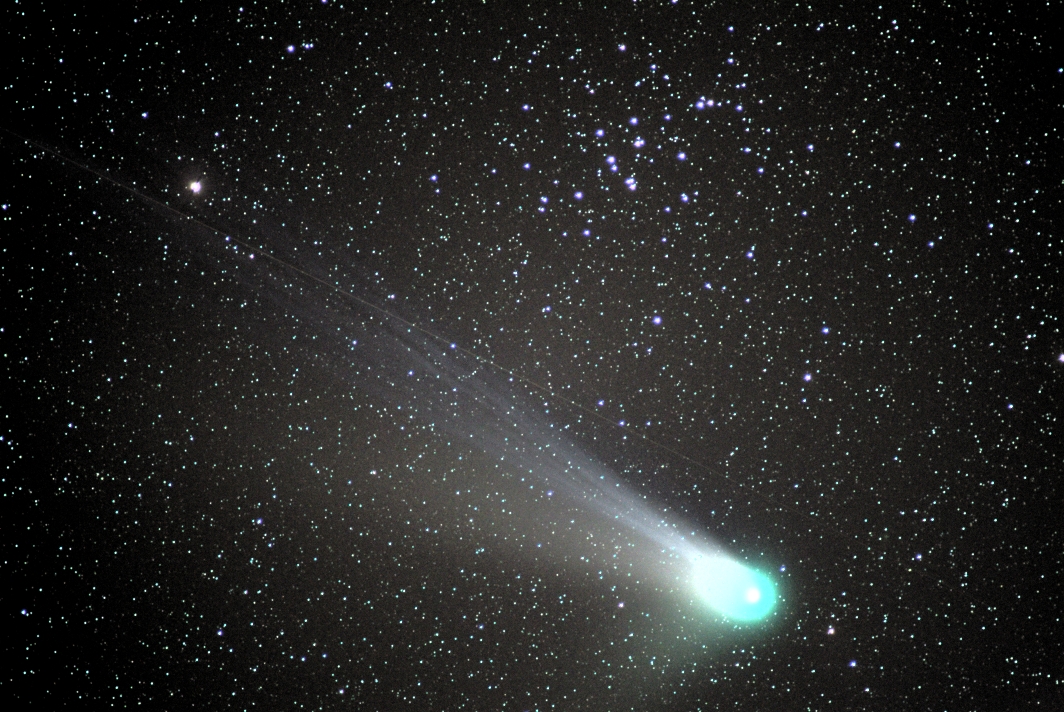
肉眼では、それらは似たようなぼやけた斑点のように見えました。しかし先月、明るい彗星が明るい星団の前を通過したとき、双眼鏡やカメラは劇的な方法でそれらの顕著な違いを映し出すことができました。上の写真では、明るい彗星C/2001 Q4 (NEAT)がそのコマと尾の多くの詳細を示し、遠くにあるプレセペ星団M44は多くの星を示しています。彗星Q4は現在、肉眼で見える限界まで暗くなっており、北半球では6月まで星図と双眼鏡で見つけるのが最適です。星団M44は、かに座の方向にいつまでも印象的な星団として残ります。
原文(English)
To the unaided eye, they appeared as similar fuzzy patches. But when a bright comet passed in front of a bright star cluster last month, binoculars and cameras were able to show off their marked differences in dramatic fashion. Pictured above, the bright comet, C/2001 Q4 (NEAT) shows many details of its coma and tail, while far in the distance the Beehive open cluster, M44, shows many of its stars. Comet Q4 has now faded to the edge of unaided visibility and can best be found with a sky map and binoculars from the Northern Hemisphere well into June. Star cluster M44 will remain an impressive star cluster toward the constellation of Cancer indefinitely.
\ この感動を宇宙仲間にシェア /
宇宙をXでシェア
© Jimmy Westlake
(Colorado Mountain College) / APOD