NGC 2170の星、塵、星雲
Stars, Dust and Nebula in NGC 2170
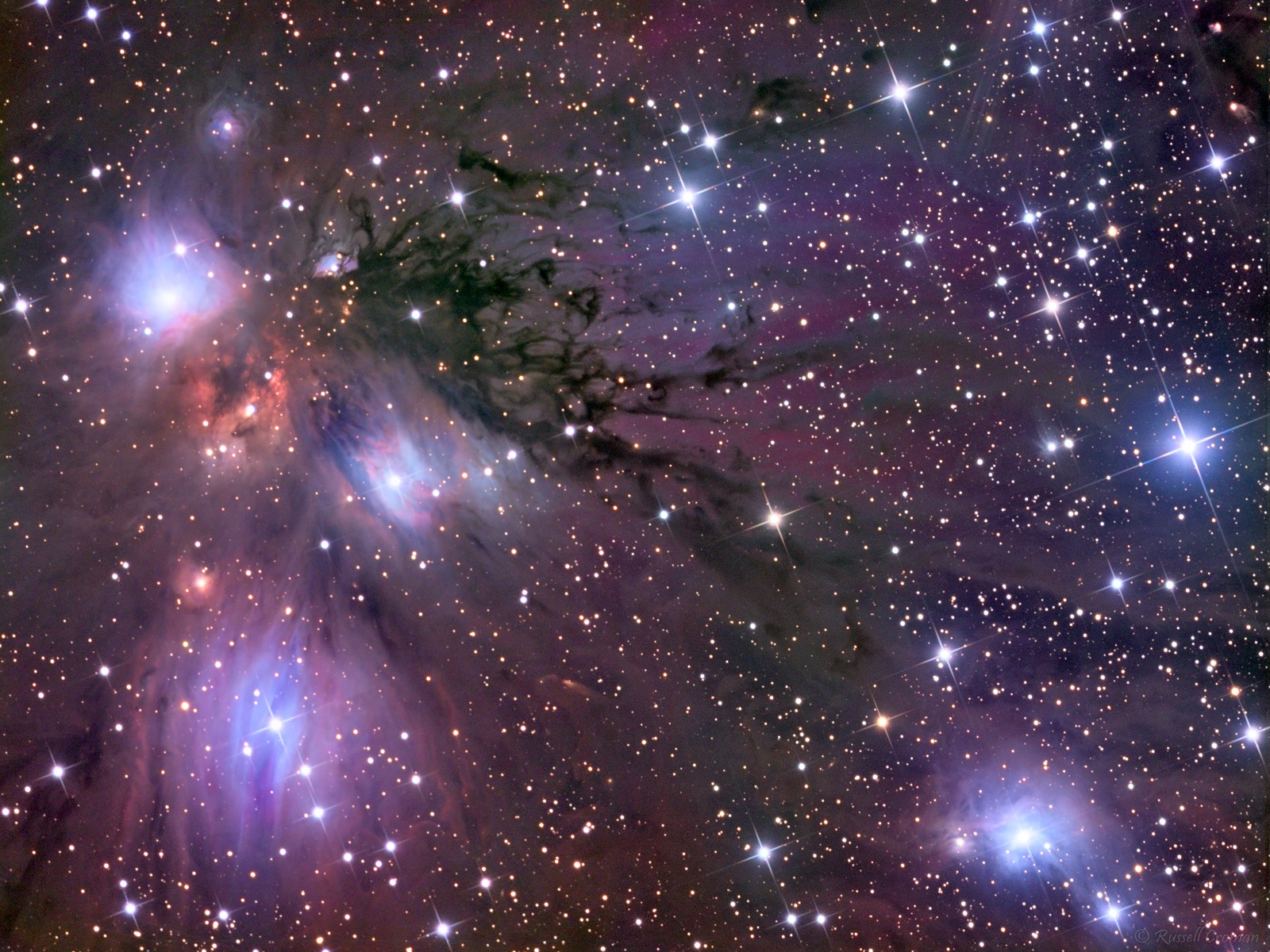
星が形成されるとき、そこはまさに大混乱の様相を呈する。その典型的な例が、星形成領域NGC 2170である。上空には、水素の赤く輝く輝線星雲、塵の青い反射星雲、塵の暗い吸収星雲、そしてそれらから形成された星々が見える。高密度のガスから最初に形成された大質量星は、強力な光と恒星風を放出し、その誕生の地を侵食し、断片化し、形作る。そして、それらは爆発する。その結果生じる混沌とした光景は、複雑であると同時に美しいものとなることが多い。数千万年後、塵は蒸発し、ガスは吹き飛ばされ、残るのはむき出しの散開星団だけとなる。
原文(English)
When stars form, pandemonium reigns. A textbook case is the star forming region NGC 2170. Visible above are red glowing emission nebulas of hydrogen, blue reflection nebulas of dust, dark absorption nebulas of dust, and the stars that formed from them. The first massive stars formed from the dense gas will emit energetic light and winds that erode, fragment, and sculpt their birthplace. And then they explode. The resulting morass is often as beautiful as it is complex. After tens of millions of years, the dust boils away, the gas gets swept away, and all that is left is a naked open cluster of stars.
\ この感動を宇宙仲間にシェア /
宇宙をXでシェア
© Russell Croman / APOD