上空から見た土星
Saturn from Above
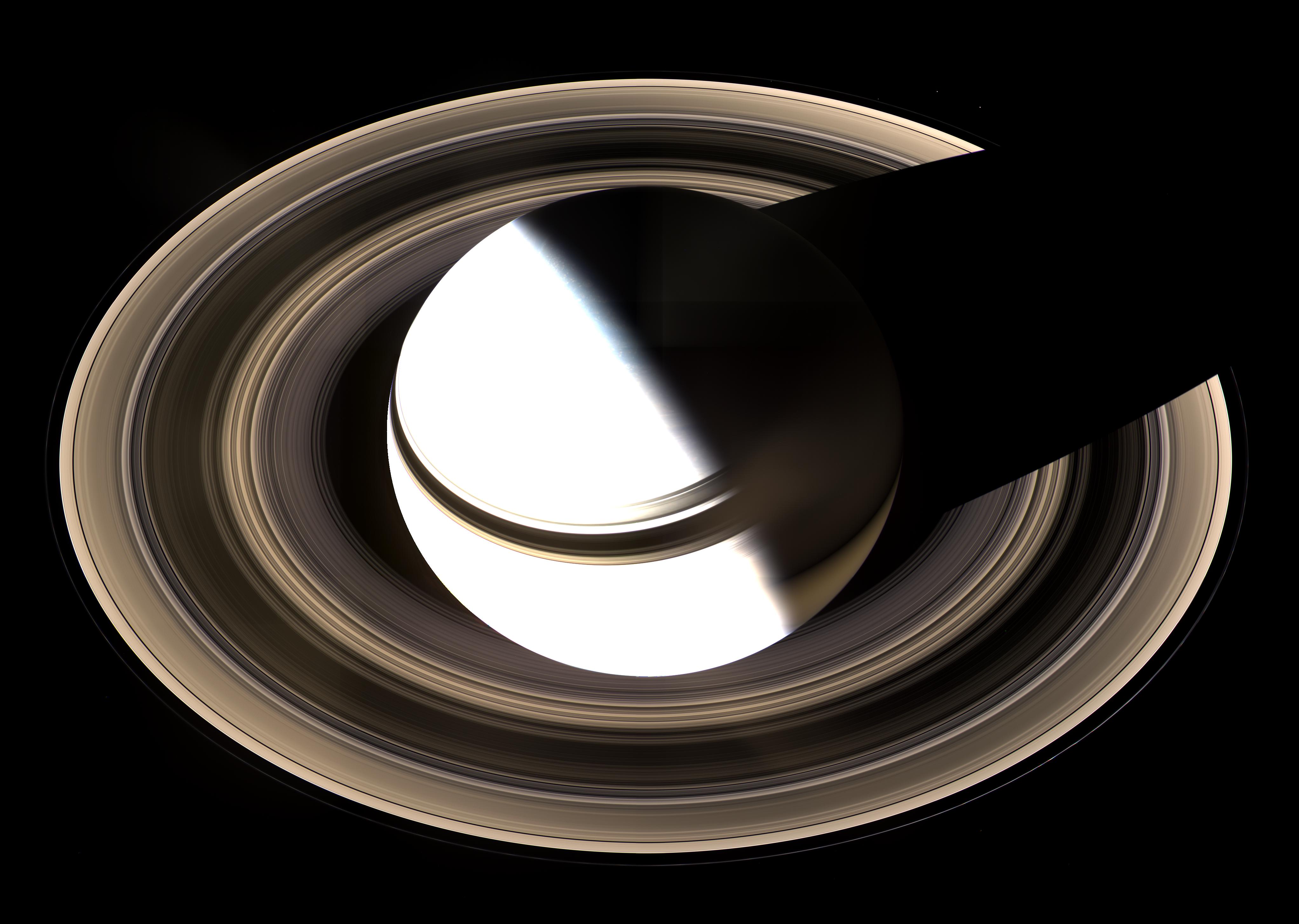
この土星の画像は地球から撮影されたものではありません。地球から撮影した写真では、土星の夜側と、土星の環に映る影を捉えることは不可能です。地球は土星よりも太陽にずっと近いため、地球からは土星の昼側しか見ることができません。実際、この画像モザイクは、現在土星を周回している探査機カッシーニが1月に撮影したものです。土星の美しい環が全景で捉えられており、昼夜の境界線付近には雲の細部まで見ることができます。
原文(English)
This image of Saturn could not have been taken from Earth. No Earth based picture could possibly view the night side of Saturn and the corresponding shadow cast across Saturn's rings. Since Earth is much closer to the Sun than Saturn, only the day side of the planet is visible from the Earth. In fact, this image mosaic was taken in January by the robotic Cassini spacecraft now orbiting Saturn. The beautiful rings of Saturn are seen in full expanse, while cloud details are visible near the night-day terminator divide.
\ この感動を宇宙仲間にシェア /
宇宙をXでシェア
© NASA / APOD