アラスカ上空のオーロラ
Aurora Over Alaska
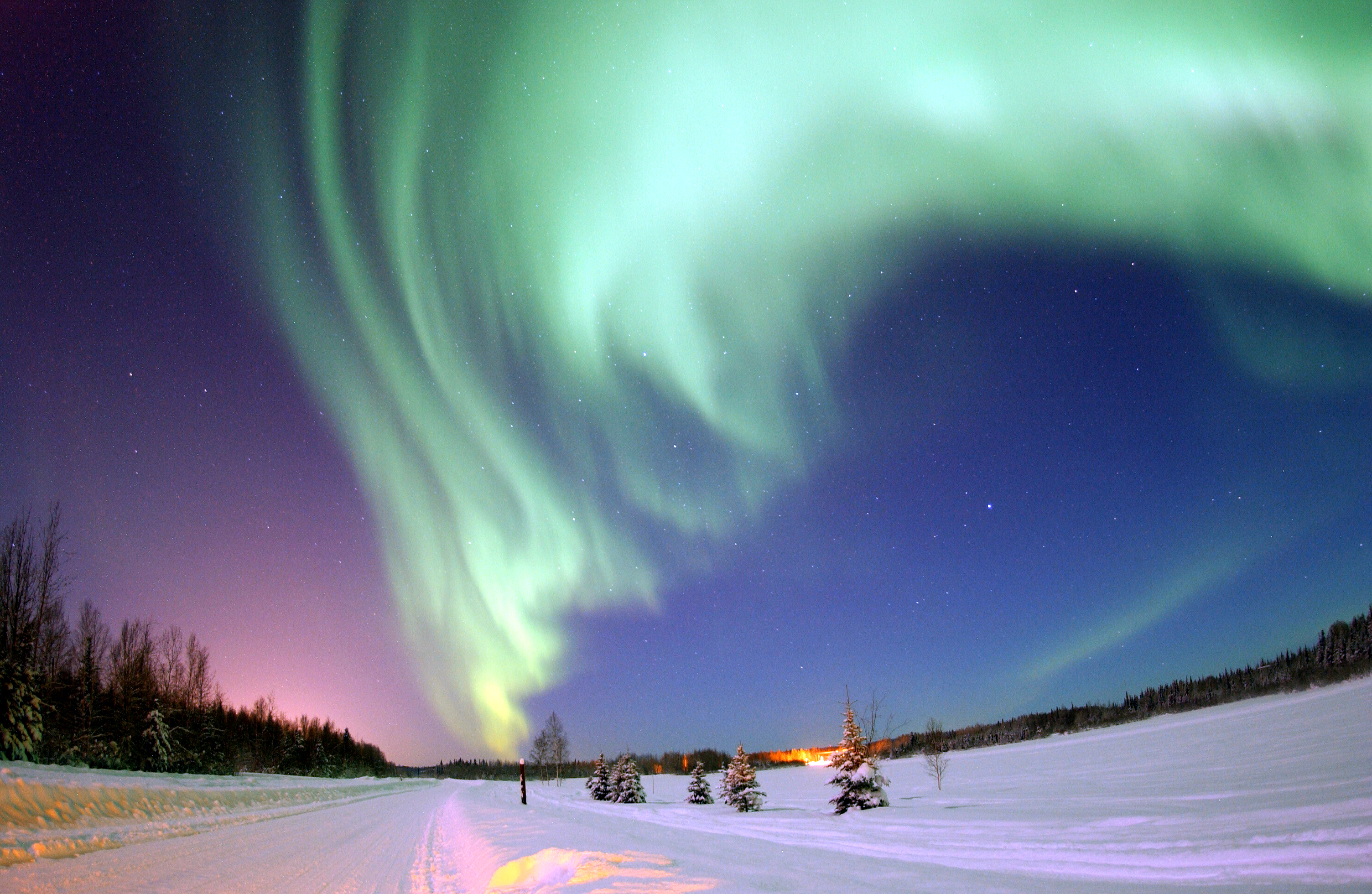
最高峰の山よりも高く、最高高度の飛行機よりも高いところに、オーロラの領域が広がっています。オーロラはめったに高度60キロメートル以下に達することはなく、最大で1000キロメートルに及ぶこともあります。オーロラの光は、太陽からの衝撃波によって発生した高エネルギーの電子と陽子が地球の大気中の分子に衝突することで生じます。宇宙から見ると、完全なオーロラは地球の磁極の1つを囲む円として現れることがよくあります。上のデジタル加工された写真は、2005年1月に撮影されたもので、アメリカ合衆国アラスカ州ベア湖の凍った風景の上に広がる壮大なオーロラを捉えています。この画像は、2006年のウィキペディア・コモンズの年間最優秀写真に選ばれました。
原文(English)
Higher than the highest mountain, higher than the highest airplane, lies the realm of the aurora. Aurora rarely reach below 60 kilometers, and can range up to 1000 kilometers. Aurora light results from solar shockwave causing energetic electrons and protons to striking molecules in the Earth's atmosphere. Frequently, when viewed from space, a complete aurora will appear as a circle around one of the Earth's magnetic poles. The above digitally enhanced photograph was taken in 2005 January shows a spectacular aurora borealis above the frozen landscape of Bear Lake, Alaska, USA. The above image was voted Wikipedia Commons Picture of the Year for 2006.
\ この感動を宇宙仲間にシェア /
宇宙をXでシェア
© NASA / APOD