M2-9の監視
Monitoring M2-9
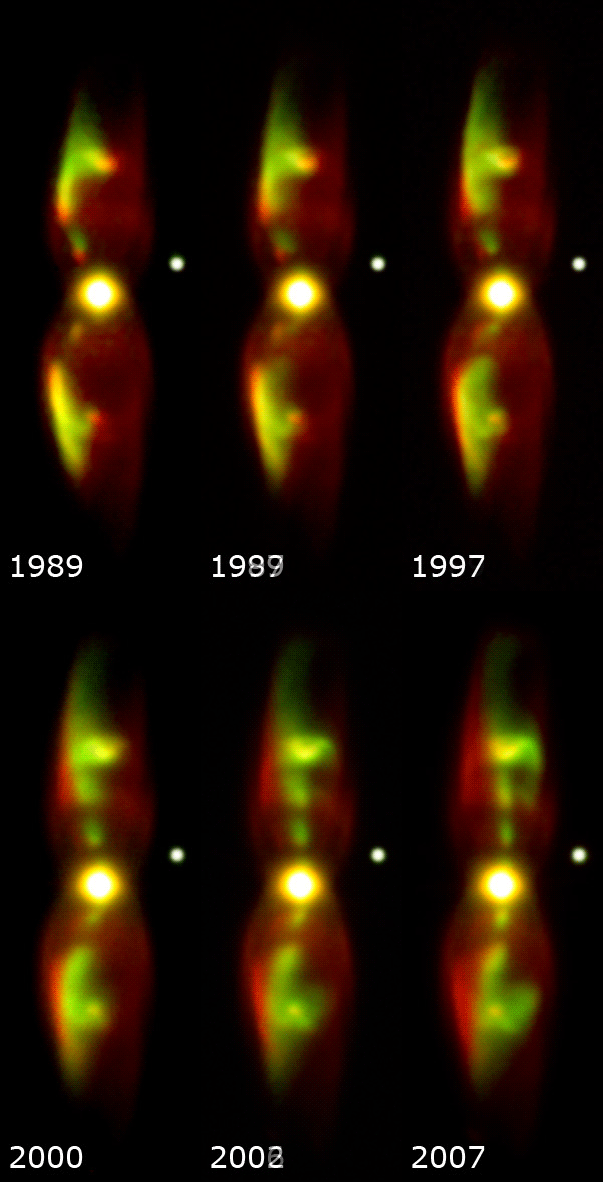
宇宙に存在する無数の形状を持つ惑星状星雲の中でも、一部の天文学者はM2-9という興味深い例に注目しています。地球から約2,100光年離れたところにあり、直径が1光年以上もあるM2-9は、その際立った双極対称性から、ツインジェット星雲またはバタフライ星雲として知られています。地上望遠鏡による長年のM2-9の観測により、このコラージュに示されている特徴が西から東(左から右)へと劇的に変化していることが明らかになりました。この見かけ上の動きは、星雲物質を横切る高エネルギーの回転ビームによって引き起こされている可能性があります。天文学者たちは、このビームはM2-9の中心にある連星系における相互作用する恒星風によってコリメートされていると主張しています。巨星と高温の白色矮星からなるこの連星系は、約120年ごとに互いの周りを公転しています。画像をクリックすると、M2-9のアニメーションGIFをご覧いただけます。
原文(English)
ring the myriad shapes found in the cosmic zoo of planetary nebulae, some astronomers have focused on the intriguing example of M2-9. About 2,100 light-years away and over one light-year across, M2-9 is known as a twin jet or butterfly nebula in reference to its striking bipolar symmetry. Monitoring M2-9 over many years from ground based telescopes has revealed the dramatic west to east (left to right) progression of features illustrated in this collage. The apparent motion could well be caused by an energetic rotating beam sweeping across the nebular material. Astronomers argue that the beam is collimated by interacting stellar winds in a double star system at the center of M2-9. The binary system of a giant star and hot white dwarf star orbit each other about once every 120 years. Click on the image to watch an animated gif of M2-9.
\ この感動を宇宙仲間にシェア /
宇宙をXでシェア
© NASA / APOD