ロゼッタ探査機が小惑星ステインを通過
Rosetta Spacecraft Passes Asteroid Steins
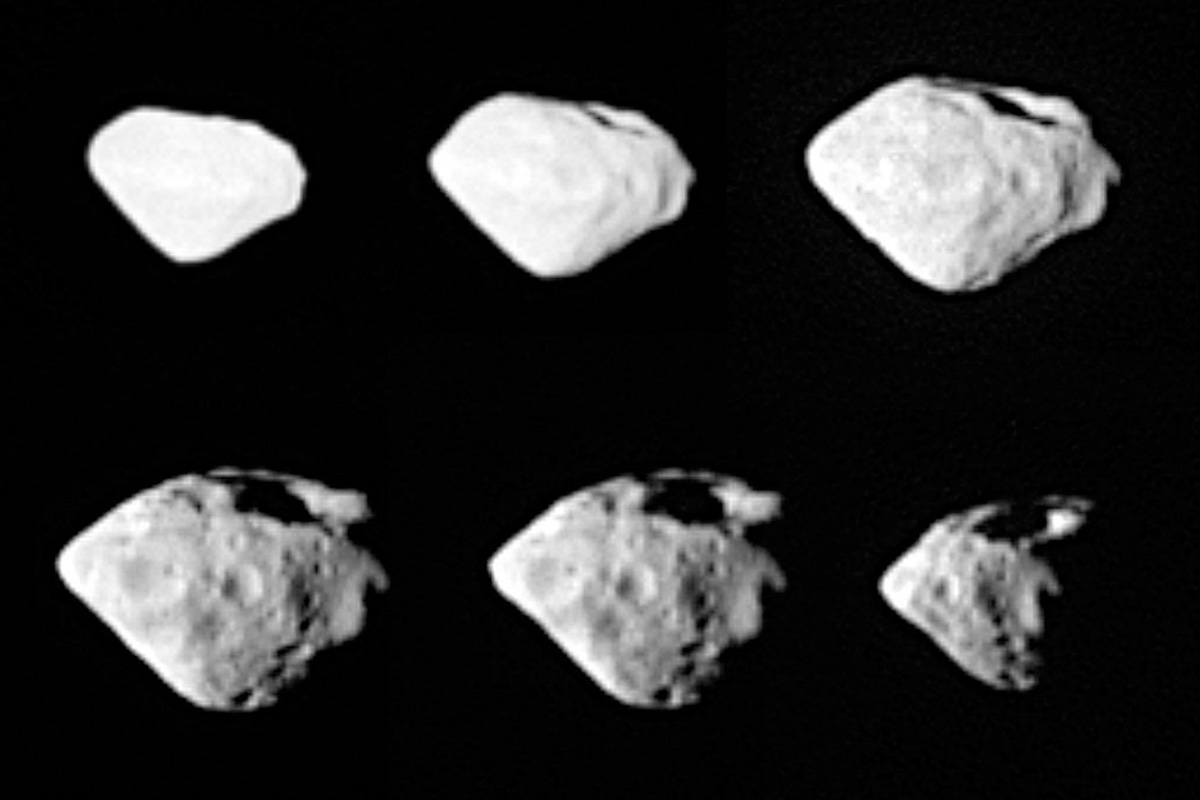
空に浮かぶあのダイヤモンドは何だろう?宇宙を航行していると、時折、珍しい天体に出会うことがある。2014年、チュリュモフ・ゲラシメンコ彗星に向かう途中のESAのロゼッタ探査機が金曜日に遭遇したのもまさにそうだった。ロボット探査機ロゼッタは、小惑星帯の小惑星2867 シュタインズのすぐそばを通過し、多くの写真を撮影した。そのうちのいくつかは短い動画にまとめられている。一見すると、シュタインズは幅5キロメートルのダイヤモンドのように見えたが、ロゼッタが通過するにつれて、クレーターやより細長い形状が明らかになった。上の6枚の画像では、小惑星の表面に垂直に並んだ目立つクレーターの列がはっきりと確認でき、これはおそらく流星群との偶然の衝突によって生じたものと考えられる。宇宙科学者たちは、ロゼッタが撮影した小惑星シュタインズのデータを研究し、その組成、起源、そしてなぜこの小惑星が光をこれほどよく反射するのかをより深く理解しようとしている。地球上の科学者たちが懸命に研究を進める一方で、ロゼッタ探査機自体は太陽系を高速で移動し続け、2009年11月に再び地球に接近し、2010年7月には小惑星21ルテティアをフライバイし、そして2014年11月にはチュリュモフ・ゲラシメンコ彗星に着陸する予定だ。
原文(English)
What's that diamond in the sky? Cruising though space, sometimes you'll come across an unusual object. Such was the case on Friday for ESA's Rosetta spacecraft on its way to comet Churyumov-Gerasimenko in 2014. Robotic Rosetta buzzed right by the main belt asteroid 2867 �teins, taking many pictures, some of which have been compiled into a short video. At first glance, Steins looked like a 5-kilometer wide diamond, but as Rosetta shot by, craters and a more extended shape become evident. In the above sequence of six images, a notable chain of craters is evident vertically on the asteroid's surface, most probably caused by a chance collision with a stream of meteors. Space scientists will now study the data taken by Rosetta of asteroid Steins in an effort to better understand its composition, origin, and why the asteroid reflects light so well. As the Earth-bound scientists toil, Rosetta itself will continue to zoom across our Solar System, next swooping again by the Earth in 2009 November, flying by asteroid 21 Lutetia in 2010 July, and finally landing on comet Churyumov-Gerasimenko in 2014 November.
\ この感動を宇宙仲間にシェア /
宇宙をXでシェア
© Rosetta Team,
ESA / APOD