惑星状星雲NGC 2818
Planetary Nebula NGC 2818
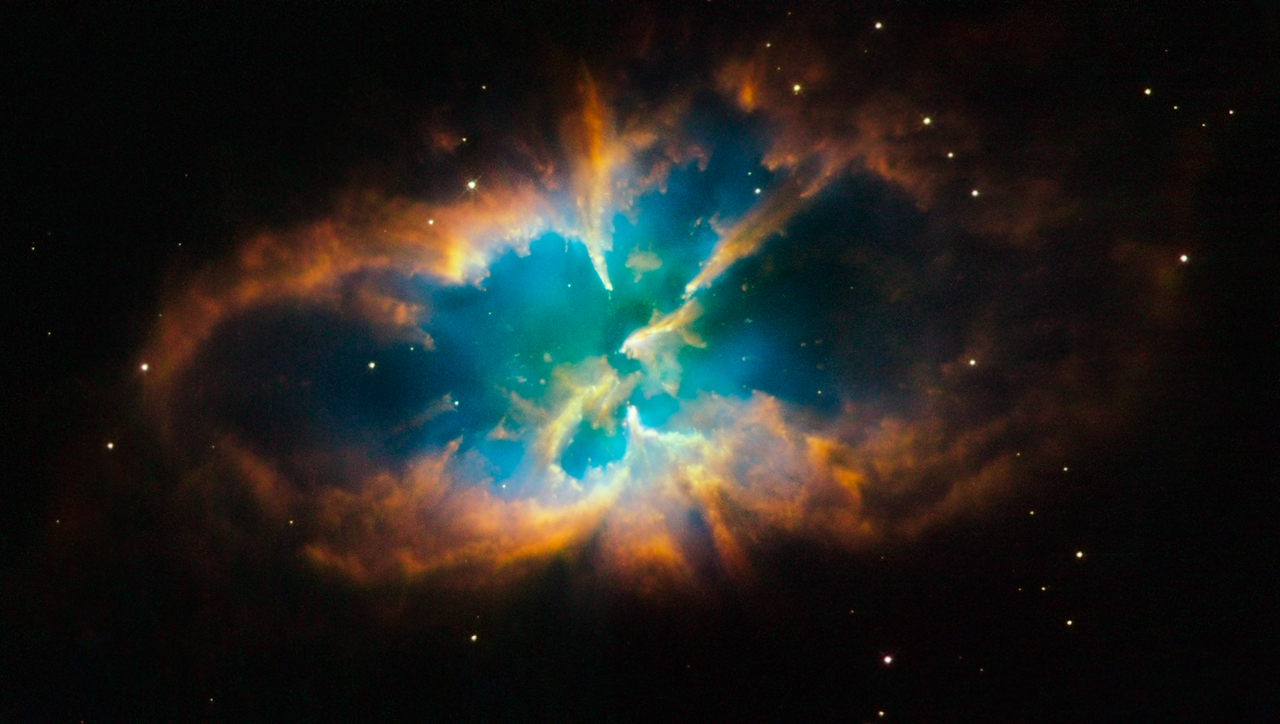
NGC 2818は、死にゆく太陽のような恒星のガス状の覆いである美しい惑星状星雲です。これは、今後50億年ほどかけて中心部の水素、そして最終的には核融合の燃料であるヘリウムを徐々に消費していく私たちの太陽の未来を垣間見せてくれるかもしれません。興味深いことに、NGC 2818は、南天の星座である羅針座の方向へ約1万光年離れた散開星団NGC 2818Aの中に位置しているようです。この星団までの距離では、星雲の直径は約4光年になります。しかし、正確な速度測定によると、星雲自体の速度は星団の恒星の速度とは大きく異なっています。この結果、NGC 2818は偶然にも星団への視線上に位置しているだけであり、星団と同じ距離や年齢ではない可能性が高いという強い証拠が得られました。ハッブル宇宙望遠鏡の画像は、狭帯域フィルターを通して撮影された複数の画像を合成したもので、星雲内の窒素、水素、酸素原子からの放射が赤、緑、青の色合いで表現されています。編集者注(2009年1月26日):訂正をしてくださったダニエル・マジェス氏(セントメアリーズ大学、ハリファックス)に感謝いたします。
原文(English)
NGC 2818 is a beautiful planetary nebula, the gaseous shroud of a dying sun-like star. It could well offer a glimpse of the future that awaits our own Sun after spending another 5 billion years or so steadily using up hydrogen at its core, and then finally helium, as fuel for nuclear fusion. Curiously, NGC 2818 seems to lie within an open star cluster, NGC 2818A, that is some 10,000 light-years distant toward the southern constellation Pyxis (the Compass). At the distance of the star cluster, the nebula would be about 4 light-years across. But accurate velocity measurements show that the nebula's own velocity is very different from the cluster's member stars. The result is strong evidence that NGC 2818 is only by chance found along the line of sight to the star cluster and so may not share the cluster's distance or age. The Hubble image is a composite of exposures through narrow-band filters, presenting emission from nitrogen, hydrogen, and oxygen atoms in the nebula as red, green, and blue hues. Editor's Note (Jan. 26, 2009): Thanks to Daniel Majaess (St. Mary's Univ., Halifax) for corrections.
\ この感動を宇宙仲間にシェア /
宇宙をXでシェア
© NASA / APOD