ペルセウス座のペルセウス座
Perseids from Perseus
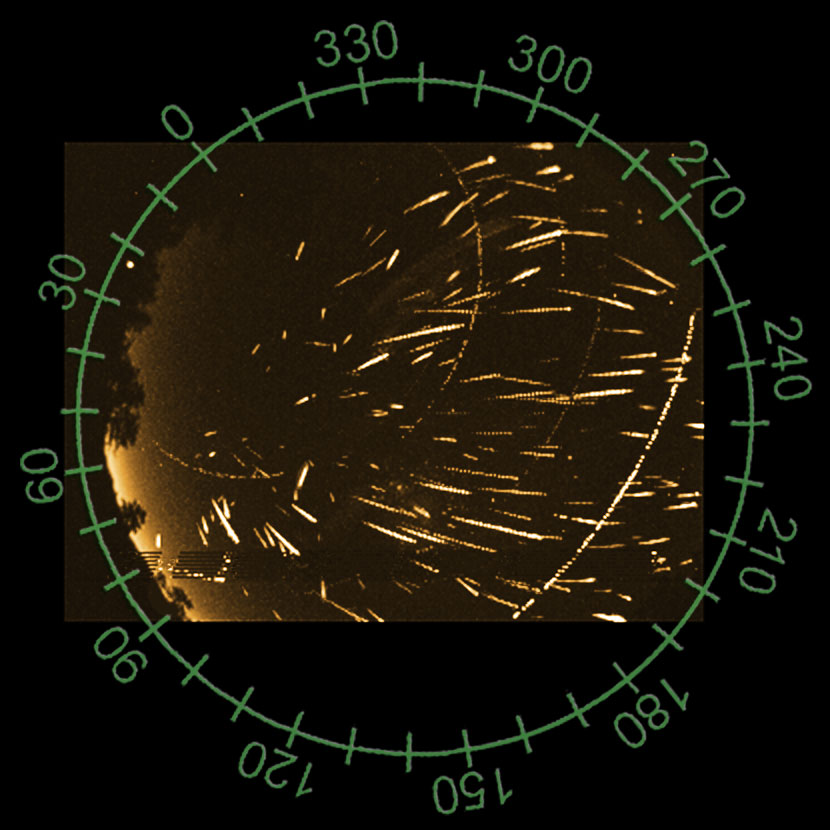
これらの流星は一体どこから来ているのでしょうか? 空の方向で言えば、答えはペルセウス座です。先週の流星群がペルセウス座流星群と呼ばれたのはそのためです。流星はすべてペルセウス座の方向から放射点を持って飛来するように見えるからです。しかし、三次元的に見ると、スウィフト・タットル彗星から放出された砂粒サイズの塵は、太陽の周りを明確な軌道で周回しており、地球に近づく軌道の部分はペルセウス座の手前に重なっています。そのため、地球がこの軌道を横切ると、落下する塵の放射点がペルセウス座に現れるのです。上の画像は、今年のペルセウス座流星群の合成画像で、8月12日に空を横切った多くの明るい流星が写っています。多くの人が驚いたことに、8月13日の夜にも多くの流星が見られました。上の画像にカーソルを合わせると、その様子がわかります。今年の11月に見られるしし座流星群は、例年以上に活発になると予想されており、1時間に最大500個もの流星が見られる可能性もある。
原文(English)
Where are all of these meteors coming from? In terms of direction on the sky, the pointed answer is the constellation of Perseus. That is why the last week's meteor shower was known as the Perseids -- the meteors all appear to come from a radiant toward Perseus. Three dimensionally, however, sand-sized debris expelled from Comet Swift-Tuttle follows a well-defined orbit about our Sun, and the part of the orbit that approaches Earth is superposed in front of the Perseus. Therefore, when Earth crosses this orbit, the radiant point of falling debris appears in Perseus. Pictured above, a composite image of this year's Pereids meteor shower shows many bright meteors that streaked through the sky on August 12. To the surprise of many, the next night, August 13, also showed many meteors, as demonstrated by rolling one's cursor over the above image. This year's Leonids meteor shower in November is expected by some to be exceptionally active, perhaps producing as many as 500 meteors per hour.
\ この感動を宇宙仲間にシェア /
宇宙をXでシェア
© Chris Peterson
(Cloudbait Observatory) / APOD