CoRoT衛星が岩石惑星を発見
CoRoT Satellite Discovers Rocky Planet
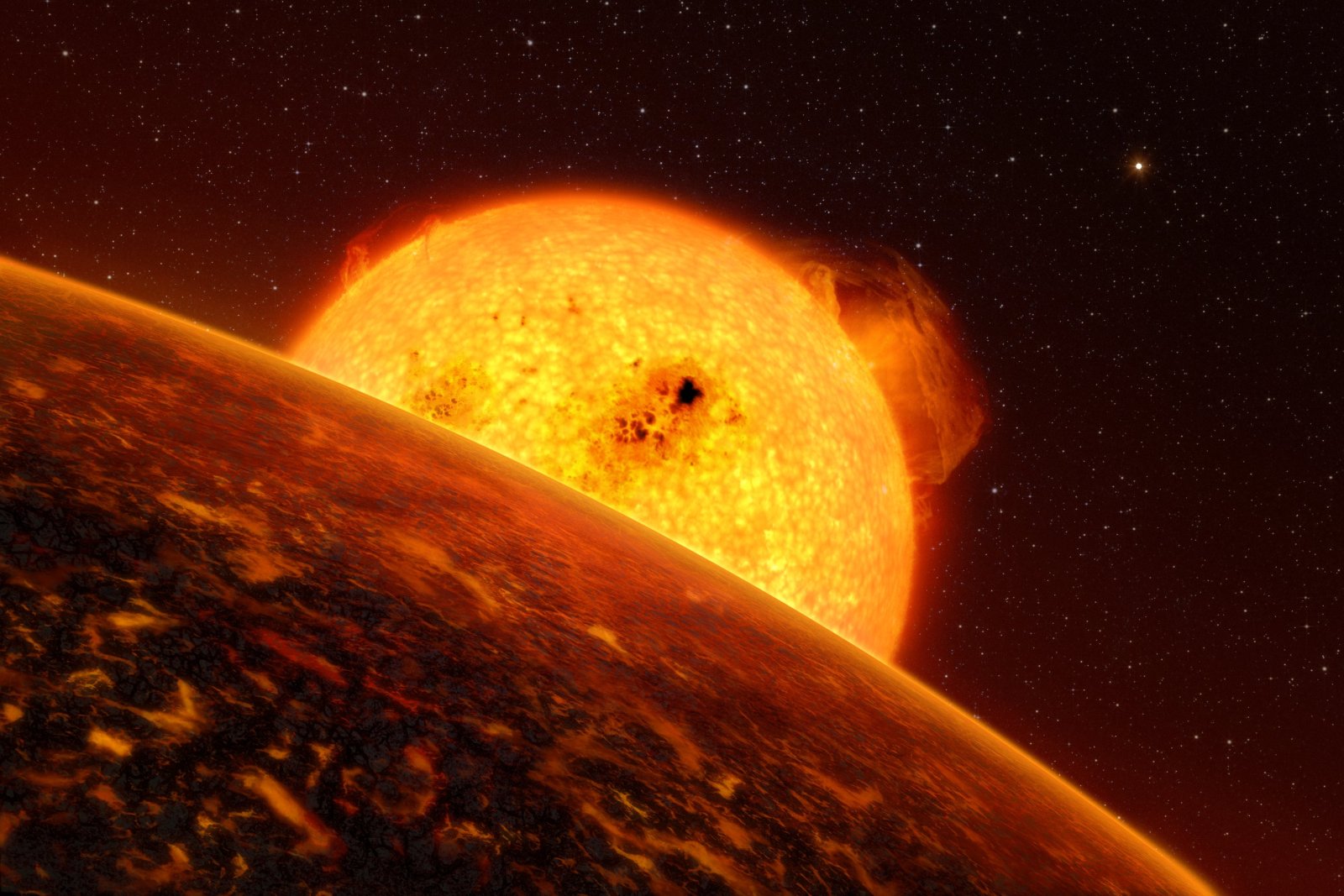
系外惑星CoRoT-7bは地球とどれくらい似ているのでしょうか?新たに発見されたこの太陽系外惑星は、質量が地球の約5倍、半径が地球の約1.7倍と、これまでに発見された中で最も近い物理的特徴を持っています。また、CoRoT-7bの主星は500光年離れていますが、私たちの太陽と非常によく似ています。残念ながら、類似点はここまででしょう。CoRoT-7bは主星の周りを水星の軌道の内側を公転しているため、1年はわずか20時間しかなく、最高気温は人間が快適に感じるよりもはるかに高温になります。CoRoT-7bは、主星の明るさがわずかに低下するという予測可能な現象を観測することで、2月に発見されました。上の画像は、CoRoT-7bが主星の前にどのように見えるかを示す想像図です。CoRoT-7bの組成はまだ不明ですが、その大きさや質量から、木星のようなガス惑星ではないと考えられ、岩石が主成分である可能性が非常に高いです。今後の観測によって、太陽系外で発見された最初の岩石惑星の一つであるこの惑星の組成が、より詳細に解明される可能性が高い。
原文(English)
How similar is exoplanet CoRoT-7b to Earth? The newly discovered extra-solar planet is the closest physical match yet, with a mass about five Earths and a radius of about 1.7 Earths. Also, the home star to CoRoT-7b, although 500 light years distant, is very similar to our Sun. Unfortunately, the similarities likely end there, as CoRoT-7b orbits its home star well inside the orbit of Mercury, making its year last only 20 hours, and making its peak temperature much hotter than humans might find comfortable. CoRoT-7b was discovered in February by noting a predictable slight decrease in the brightness of its parent star. Pictured above, an artist's depiction shows how CoRoT-7b might appear in front of its parent star. The composition of CoRoT-7b remains unknown, but given its size and mass, it cannot be a gas giant like Jupiter, and is very likely composed predominantly of rock. Future observations will likely narrow the composition of one of the first known rocky planets discovered outside of our Solar System.
\ この感動を宇宙仲間にシェア /
宇宙をXでシェア
© NASA / APOD