スティックニー・クレーター
Stickney Crater
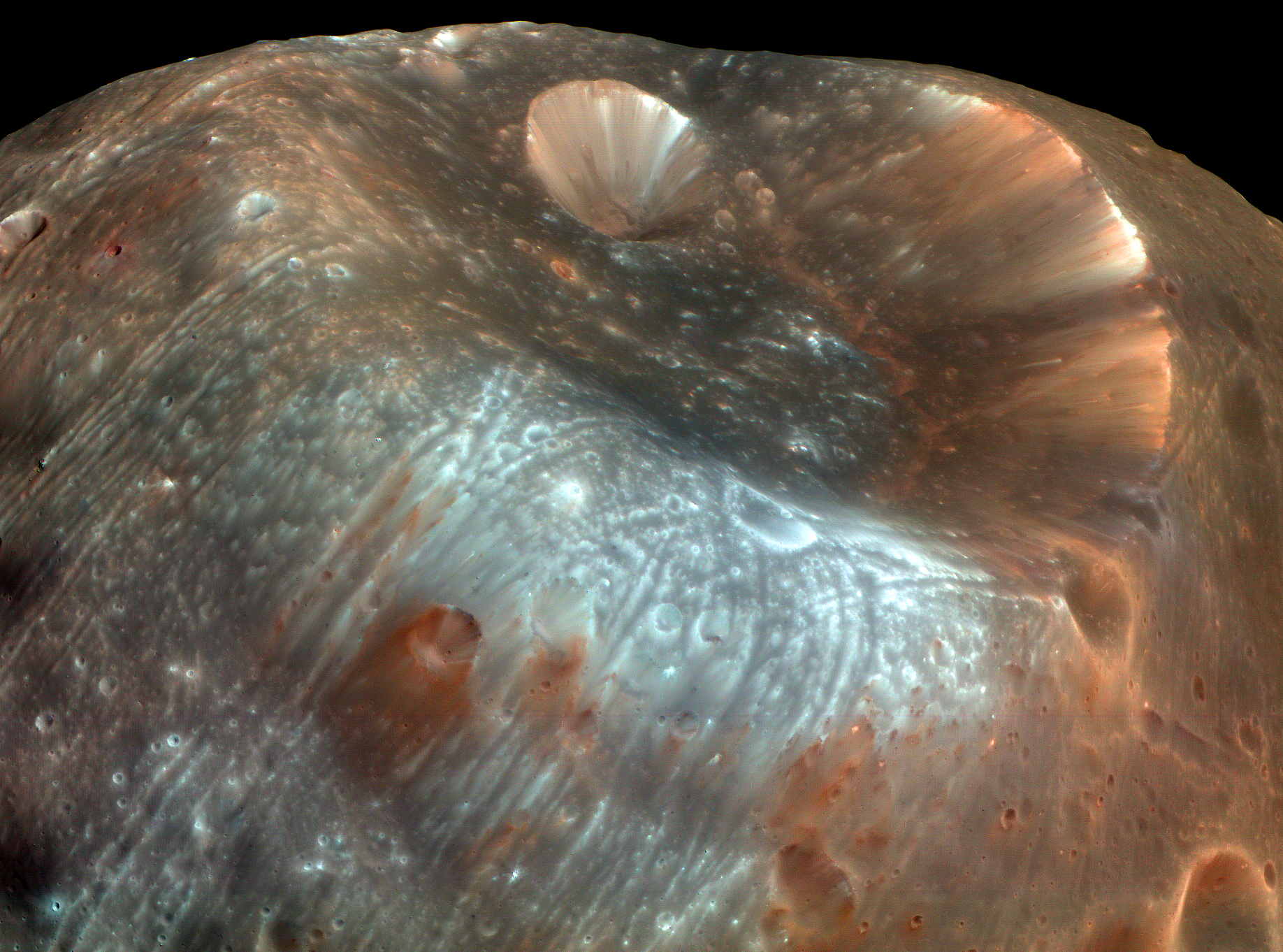
火星の衛星フォボスにある最大のクレーター、スティックニー・クレーターは、数学者で天文学者アサフ・ホールの妻であるクロエ・アンジェリン・スティックニー・ホールにちなんで名付けられました。アサフ・ホールは1877年に火星の2つの衛星を発見しました。直径9キロメートルを超えるスティックニーは、フォボス自体の直径のほぼ半分に相当し、クレーターを吹き飛ばした衝突は、小さな衛星を粉々に砕きそうになるほど巨大です。このスティックニーとその周辺の素晴らしいカラー強調画像は、2008年3月に火星偵察オービターがフォボスから約6000キロメートル以内を通過した際に、搭載されたHiRISEカメラによって撮影されました。小惑星のようなフォボスの表面重力は地球の重力の1000分の1以下ですが、筋状の模様は、緩い物質が時間の経過とともにクレーターの壁の内側に滑り落ちたことを示唆しています。クレーターの縁付近の淡い青色の領域は、比較的最近露出した表面を示している可能性があります。地表に沿って見られる奇妙な溝の起源は謎に包まれているが、クレーターを形成した衝突と関連している可能性がある。
原文(English)
Stickney Crater, the largest crater on the martian moon Phobos, is named for Chloe Angeline Stickney Hall, mathematician and wife of astronomer Asaph Hall. Asaph Hall discovered both the Red Planet's moons in 1877. Over 9 kilometers across, Stickney is nearly half the diameter of Phobos itself, so large that the impact that blasted out the crater likely came close to shattering the tiny moon. This stunning, enhanced-color image of Stickney and surroundings was recorded by the HiRISE camera onboard the Mars Reconnaissance Orbiter as it passed within some six thousand kilometers of Phobos in March of 2008. Even though the surface gravity of asteroid-like Phobos is less than 1/1000th Earth's gravity, streaks suggest loose material has slid down inside the crater walls over time. Light bluish regions near the crater's rim could indicate a relatively freshly exposed surface. The origin of the curious grooves along the surface is mysterious but may be related to the crater-forming impact.
\ この感動を宇宙仲間にシェア /
宇宙をXでシェア
© NASA / APOD