モニュメントバレー上空に現れたふたご座流星群
Geminid Meteor over Monument Valley
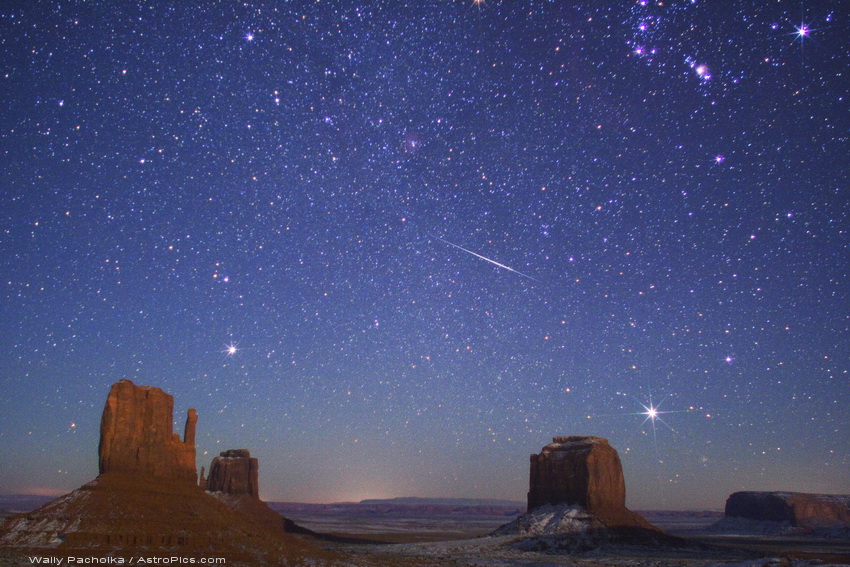
ふたご座流星群は今年も素晴らしいショーを見せてくれると期待されています。地球が消滅した彗星ファエトンの塵の残骸の中を通過する際に発生する毎年恒例のふたご座流星群は、12月14日午前5時10分(協定世界時)(東部標準時午前0時10分)頃にピークを迎えると予測されています。北半球の観測者にとっては見やすいため、夜空を流れるふたご座流星群の写真には、2007年にアメリカ南西部のモニュメントバレー地域の丘陵地帯上空を流れたふたご座流星群の雪景色のような冬の風景が写っているかもしれません。流星の軌跡はふたご座を指し示しており、流星群の放射点は画面の左上端付近にあります。右上にはリゲルとともにオリオン座の剣と三つ星が見えます。東の地平線近くには明るい星プロキオン(左)とシリウスがあります。一番左にある2つの岩山は「ミトン」と呼ばれている。これは、寒い12月の夜に流星群を見たいなら、ミトンを着用するのが良いということを明確に示している。
原文(English)
The Geminids are expected to put on a good show this year. Created as planet Earth sweeps through dusty debris from extinct comet Phaethon, the annual Geminid meteor shower is predicted to peak on December 14th, around 0510 UT (12:10am EST). With better viewing for northern hemisphere observers, pictures of Geminids streaking through the night could include wintery landscapes, like this snow-tinged image of a 2007 Geminid meteor over buttes of the Monument Valley region in the southwestern US. The meteor streak points back to the constellation Gemini and the shower's radiant point, just off the upper left edge of the scene. Along with Rigel, the sword and belt stars of Orion are at the upper right. Near the eastern horizon are bright stars Procyon (left) and Sirius. The two buttes at the far left are known as The Mittens - clearly a reminder that if you want to watch a meteor shower on a cold December night, wearing mittens would be a good idea.
\ この感動を宇宙仲間にシェア /
宇宙をXでシェア
© Wally Pacholka / APOD