P/2010 A2:異常な小惑星の尾は強力な衝突を示唆
P/2010 A2: Unusual Asteroid Tail Implies Powerful Collision
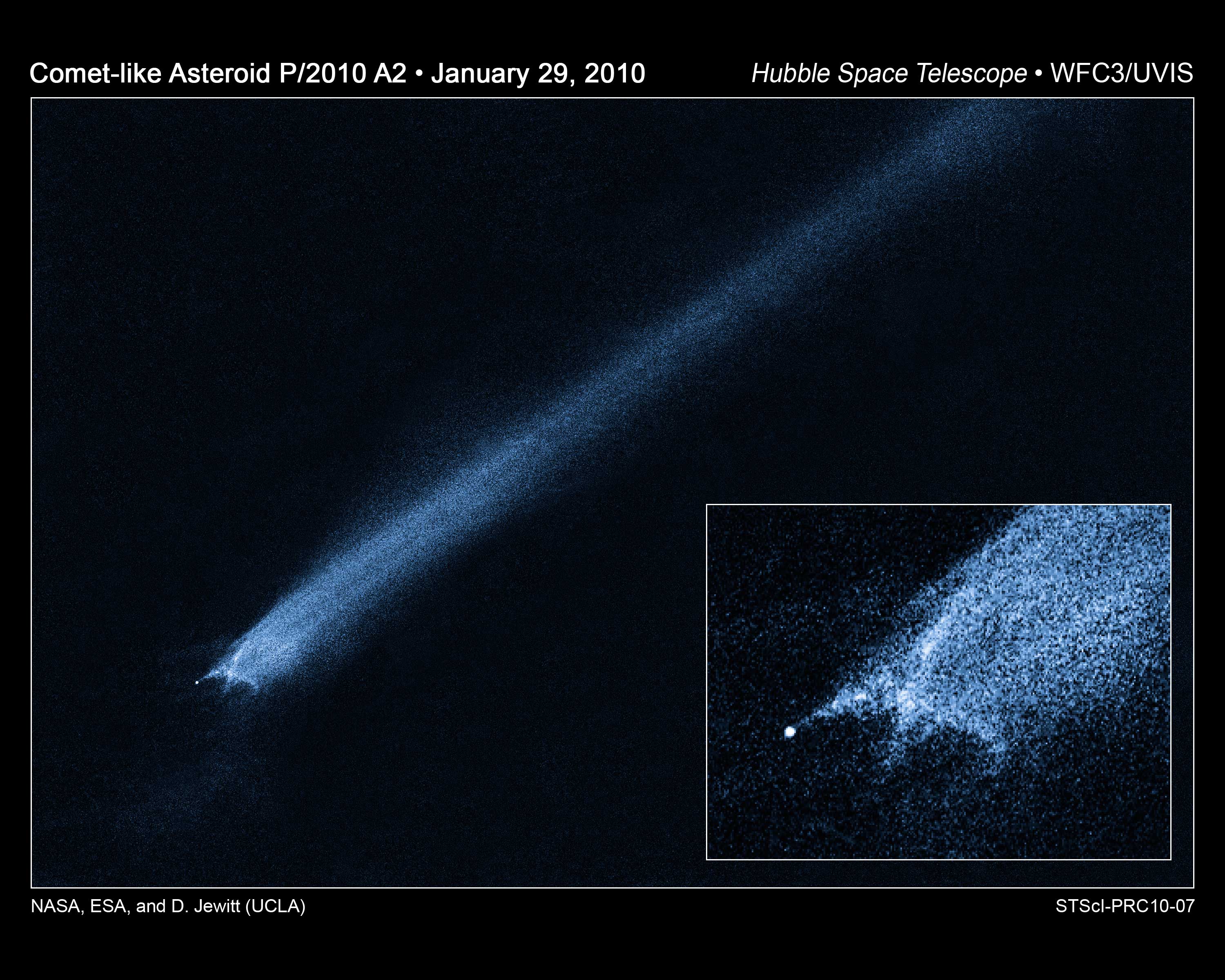
この奇妙な物体は何だろうか?1月6日に地上からのLINEAR画像で初めて発見されたこの物体は、先週ハッブル宇宙望遠鏡でさらに調査されるほど異例に見えた。上の画像に示されているように、ハッブルが捉えたP/2010 A2は、これまで観測されたどの物体とも異なる。一見すると、この物体は彗星の尾を持っているように見える。しかし、詳しく調べると、尾の中心から140メートルずれた核、核付近の非常に珍しい構造、そして尾には目立ったガスがないことがわかる。この物体が火星と木星の間の小惑星帯を公転していることを考えると、既知の手がかりすべてを説明できると思われる予備的な仮説は、P/2010 A2は最近発生した2つの小惑星の衝突で残った残骸であるというものだ。もしこれが事実であれば、衝突は時速15,000キロメートル以上(ライフル弾の5倍の速度)で発生し、核爆弾を超えるエネルギーを放出したと考えられる。太陽光の圧力によって、破片は尾のように広がり、尾部を形成する。P/2010 A2の今後の研究によって、衝突の起源となった天体の性質がより明確になり、同様の衝突が数多く発生した太陽系初期の時代を人類がより深く理解するのに役立つ可能性がある。
原文(English)
What is this strange object? First discovered on ground based LINEAR images on January 6, the object appeared unusual enough to investigate further with the Hubble Space Telescope last week. Pictured above, what Hubble saw indicates that P/2010 A2 is unlike any object ever seen before. At first glance, the object appears to have the tail of a comet. Close inspection, however, shows a 140-meter nucleus offset from the tail center, very unusual structure near the nucleus, and no discernable gas in the tail. Knowing that the object orbits in the asteroid belt between Mars and Jupiter, a preliminary hypothesis that appears to explain all of the known clues is that P/2010 A2 is the debris left over from a recent collision between two small asteroids. If true, the collision likely occurred at over 15,000 kilometers per hour -- five times the speed of a rifle bullet -- and liberated energy in excess of a nuclear bomb. Pressure from sunlight would then spread out the debris into a trailing tail. Future study of P/2010 A2 may better indicate the nature of the progenitor collision and may help humanity better understand the early years of our Solar System, when many similar collisions occurred.
\ この感動を宇宙仲間にシェア /
宇宙をXでシェア
© NASA / APOD