球状星団M53のブルーストランギュラー星
Blue Straggler Stars in Globular Cluster M53
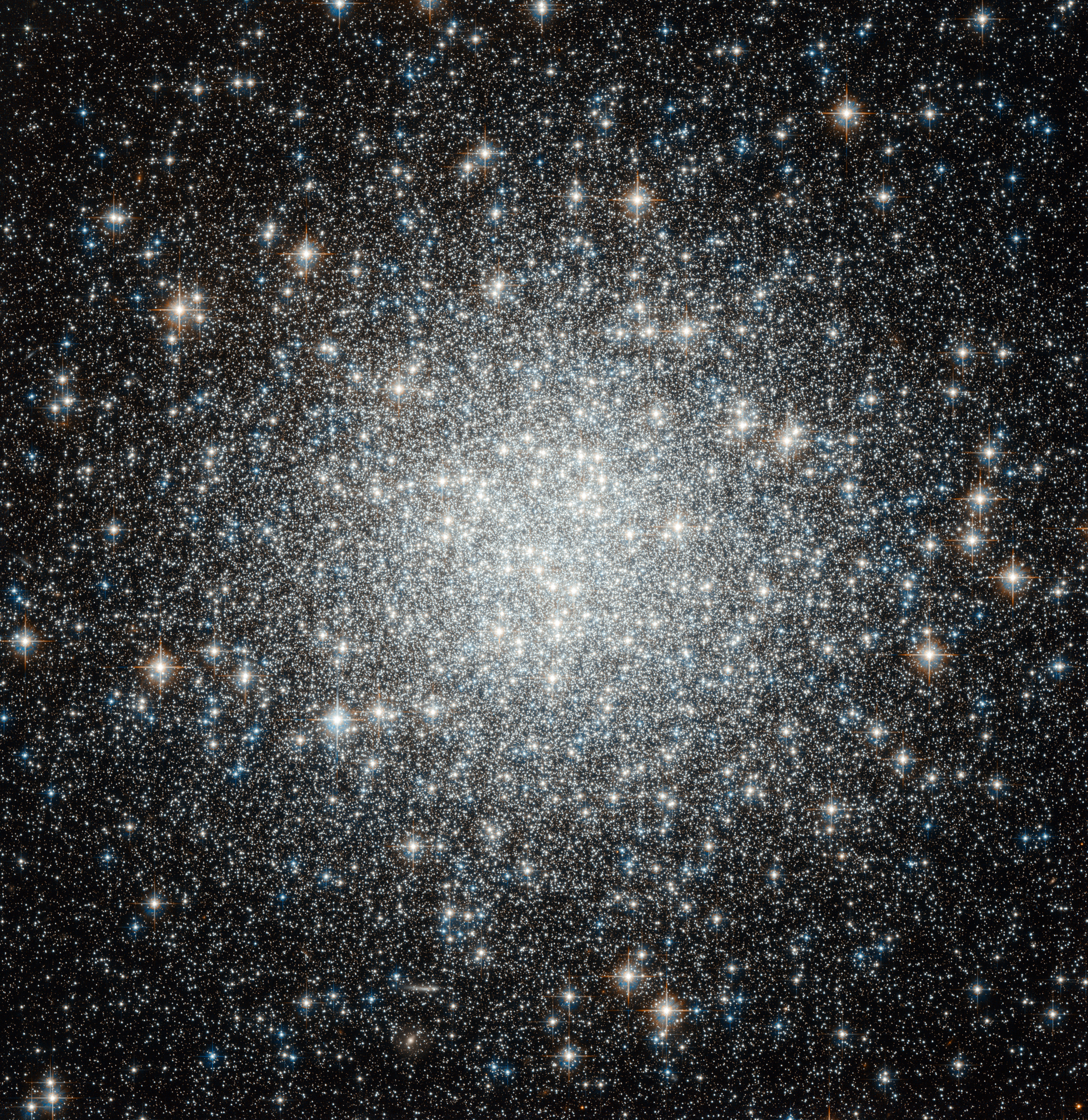
もし私たちの太陽がM53の一部だったら、夜空は明るい星々の宝石箱のように輝くでしょう。NGC 5024としても知られるM53は、私たちの銀河系に現存する約250個の球状星団の1つです。M53の星のほとんどは私たちの太陽よりも古く、赤いですが、謎めいた星の中には、より青く若いものもあります。これらの若い星は、M53のすべての星がほぼ同時に形成されたという仮説と矛盾するかもしれません。これらの珍しい星はブルーストラグラーとして知られており、M53では異常に多く見られます。多くの議論を経て、ブルーストラグラーは現在、連星の伴星から落下してきた新鮮な物質によって若返った星であると考えられています。ハッブル宇宙望遠鏡で撮影された上記の画像のような球状星団の画像を分析することで、天文学者はブルーストラグラーのような星の豊富さを利用して、球状星団の年齢、ひいては宇宙の年齢の上限を決定するのに役立てています。 M53は、かみのけ座(ベルニケの髪)の方向に双眼鏡で見ることができ、25万個以上の星を含み、銀河系の中心から最も遠い球状星団の一つです。
原文(English)
If our Sun were part of M53, the night sky would glow like a jewel box of bright stars. M53, also known as NGC 5024, is one of about 250 globular clusters that survive in our Galaxy. Most of the stars in M53 are older and redder than our Sun, but some enigmatic stars appear to be bluer and younger. These young stars might contradict the hypothesis that all the stars in M53 formed at nearly the same time. These unusual stars are known as blue stragglers and are unusually common in M53. After much debate, blue stragglers are now thought to be stars rejuvenated by fresh matter falling in from a binary star companion. By analyzing pictures of globular clusters like the above image taken by the Hubble Space Telescope, astronomers use the abundance of stars like blue stragglers to help determine the age of the globular cluster and hence a limit on the age of the universe. M53, visible with a binoculars towards the constellation of Bernice's Hair (Coma Berenices), contains over 250,000 stars and is one of the furthest globulars from the center of our Galaxy.
\ この感動を宇宙仲間にシェア /
宇宙をXでシェア
© NASA / APOD