ペルセウス座の下
Perseid Below
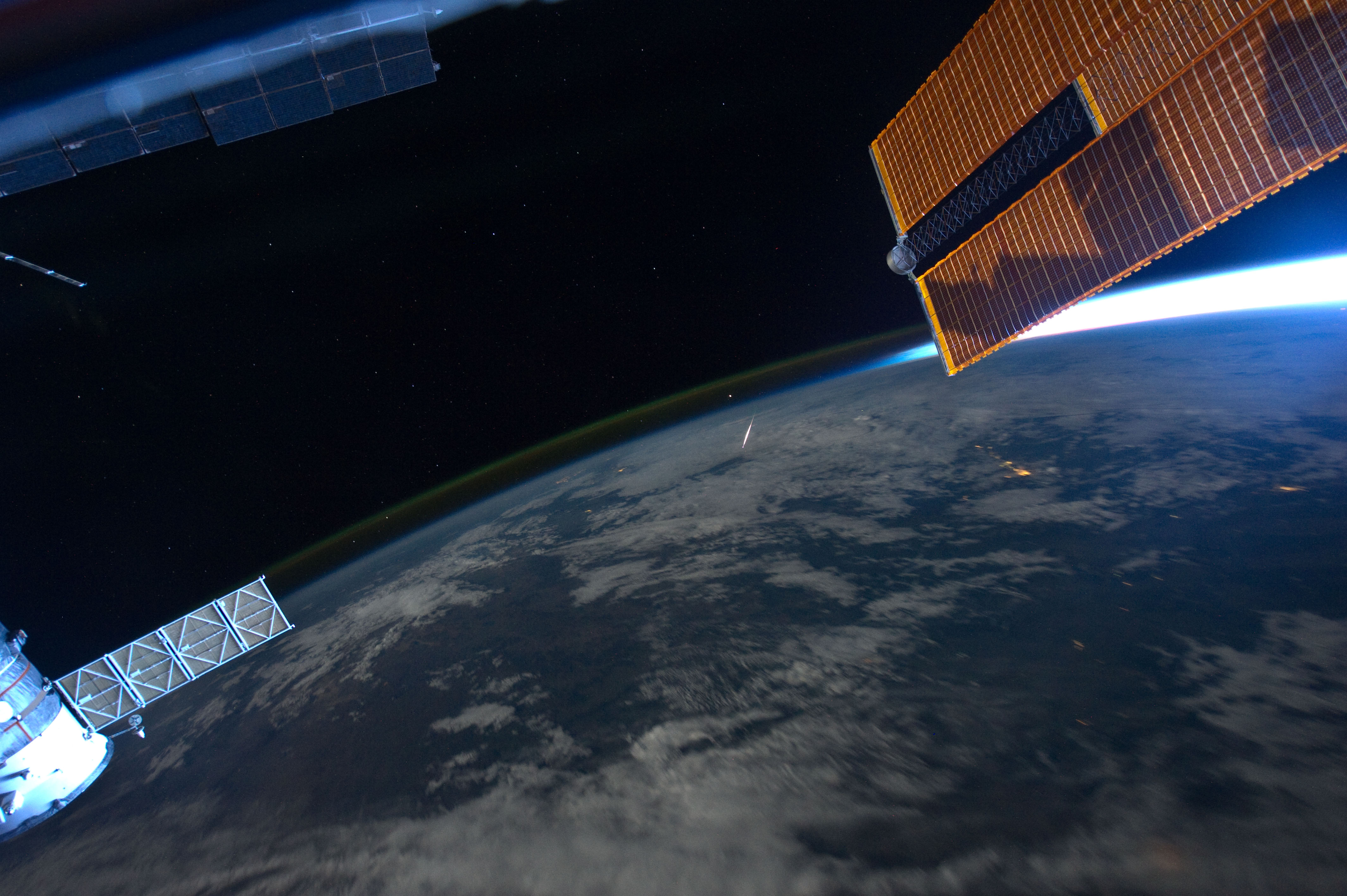
地球の住人は昨年のペルセウス座流星群を明るい月明かりの夜空を見上げて観測しました。しかし、宇宙飛行士ロン・ガランが2011年8月13日に撮影したこの素晴らしい写真は、ペルセウス座流星群を上から捉えたものです。高度約380キロメートルを周回する国際宇宙ステーションに搭乗しているガランから見ると、ペルセウス座流星群は、スウィフト・タットル彗星が残した塵を巻き上げ、白熱して下を流れていきます。輝く彗星の塵の粒は、地球表面から約100キロメートル上空のより密度の高い大気中を秒速約60キロメートルで移動しています。この場合、短縮された流星の閃光は、地球の湾曲した縁と緑がかった大気光の層の下、明るい星アークトゥルスのすぐ下の、画面中央より右にあります。今年のペルセウス座流星群を見上げたいですか?幸運ですね。今週末は流星群がピークに近づく見込みで、太陽が昇る数時間前に三日月が欠けていくため、その影響は少なくなるでしょう。キュリオシティ探査機による新たな画像:ゲール・クレーターのカラー画像を含む
原文(English)
Denizens of planet Earth watched last year's Perseid meteor shower by looking up into the bright moonlit night sky. But this remarkable view captured on August 13, 2011 by astronaut Ron Garan looks down on a Perseid meteor. From Garan's perspective onboard the International Space Station orbiting at an altitude of about 380 kilometers, the Perseid meteors streak below, swept up dust left from comet Swift-Tuttle heated to incandescence. The glowing comet dust grains are traveling at about 60 kilometers per second through the denser atmosphere around 100 kilometers above Earth's surface. In this case, the foreshortened meteor flash is right of frame center, below the curving limb of the Earth and a layer of greenish airglow, just below bright star Arcturus. Want to look up at this year's Perseid meteor shower? You're in luck. This weekend the shower should be near its peak, with less interference from a waning crescent Moon rising a few hours before the Sun. New Curiosity Images: Including a color Gale Crater vista
\ この感動を宇宙仲間にシェア /
宇宙をXでシェア
© NASA / APOD