反射星雲 vdB1
Reflection Nebula vdB1
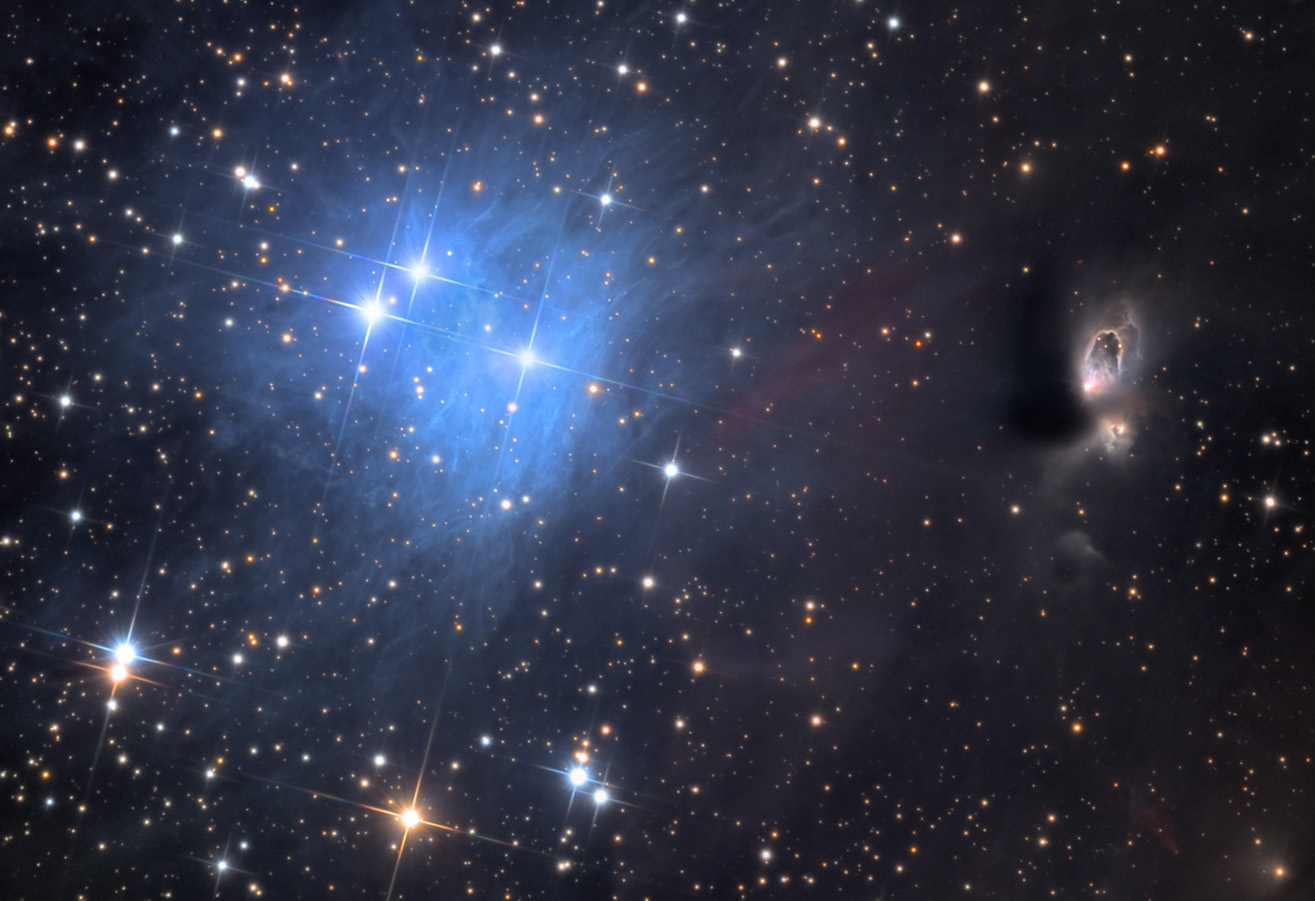
どの本にも最初のページがあり、どのカタログにも最初の項目があります。そして、この美しい青い宇宙雲は、反射星雲に囲まれた星のファン・デン・ベルフ・カタログ(vdB)の始まりです。星間塵の雲が近くの星の光を反射しているため、星雲は通常、塵の粒子による散乱が短い(青い)波長でより効果的であるため、青く見えます。同じ種類の散乱が、地球の昼間の青い空を生み出しています。ファン・デン・ベルフの1966年のリストには、北半球からより容易に見える合計158の項目が含まれており、明るいプレアデス星団の星や天体撮影者の他の人気ターゲットが含まれています。直径5光年未満のVdB1は、カシオペヤ座にあり、約1,600光年離れています。また、このシーンでは、右側の2つの興味深い星雲が、星形成のエネルギー過程に関連するループと流出の特徴を示しています。その中には、非常に若い変光星であるV633 Cas(上)とV376 Casが含まれている。
原文(English)
very book has a first page and every catalog a first entry. And so this lovely blue cosmic cloud begins the van den Bergh Catalog (vdB) of stars surrounded by reflection nebulae. Interstellar dust clouds reflecting the light of the nearby stars, the nebulae usually appear blue because scattering by the dust grains is more effective at shorter (bluer) wavelengths. The same type of scattering gives planet Earth its blue daytime skies. Van den Bergh's 1966 list contains a total of 158 entries more easily visible from the northern hemisphere, including bright Pleiades cluster stars and other popular targets for astroimagers. Less than 5 light-years across, VdB1 lies about 1,600 light-years distant in the constellation Cassiopeia. Also on this scene, two intriguing nebulae at the right show loops and outflow features associated with the energetic process of star formation. Within are extremely young variable stars V633 Cas (top) and V376 Cas.
\ この感動を宇宙仲間にシェア /
宇宙をXでシェア
© Adam Block / APOD