M44との遭遇
Close Encounter with M44
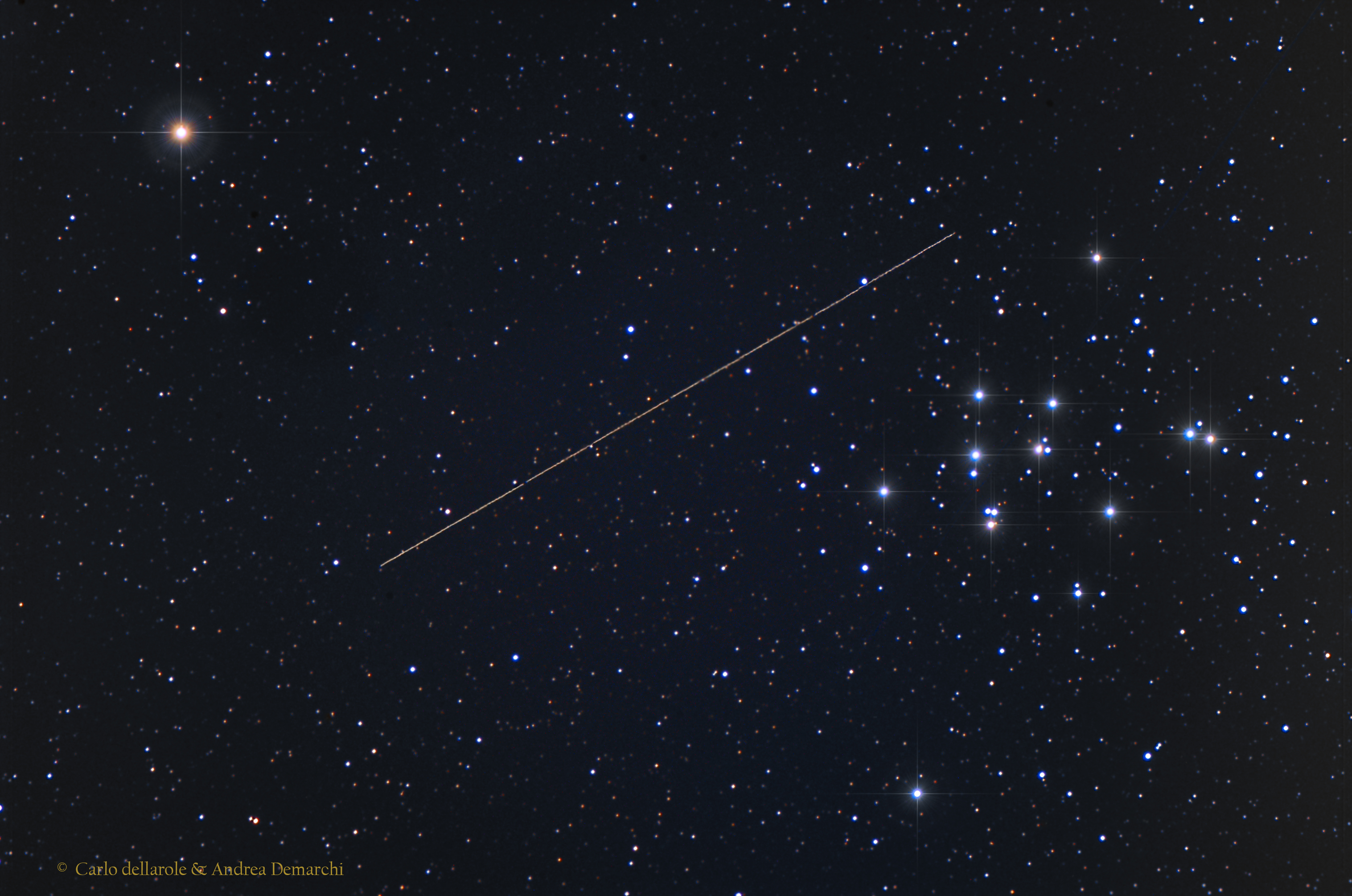
1月26日月曜日、追跡調査が行われている小惑星2004 BL86が地球に最接近し、わずか120万キロメートルの距離まで近づきました。これは地球と月の距離の約3.1倍、つまり4光秒の距離です。地球の夜空を高速で移動したこの小惑星は、1月27日にイタリアのピエモンテで撮影された40分間の長時間露光画像に、この光の筋を残しました。驚くほど美しい望遠鏡の視野には、かに座のプレセペ星団としても知られるM44星団が含まれています。もちろん、M44星団との接近は見かけ上のものに過ぎず、星団は地球近傍小惑星とほぼ同じ視線上に位置しています。星団と小惑星の実際の距離は約600光年です。それでも、地球への接近により、カリフォルニア州ゴールドストーンにあるNASAの深宇宙ネットワークアンテナから詳細なレーダー画像が得られ、この小惑星が衛星を持っていることが明らかになりました。
原文(English)
On Monday, January 26, well-tracked asteroid 2004 BL86 made its closest approach, a mere 1.2 million kilometers from our fair planet. That's about 3.1 times the Earth-Moon distance or 4 light-seconds away. Moving quickly through Earth's night sky, it left this streak in a 40 minute long exposure on January 27 made from Piemonte, Italy. The remarkably pretty telescopic field of view includes M44, also known as the Beehive or Praesepe star cluster in Cancer. Of course, its close encounter with M44 is only an apparent one, with the cluster nearly along the same line-of-sight to the near-earth asteroid. The actual distance between star cluster and asteroid is around 600 light-years. Still, the close approach to planet Earth allowed detailed radar imaging from NASA's Deep Space Network antenna at Goldstone, California and revealed the asteroid to have its own moon.
\ この感動を宇宙仲間にシェア /
宇宙をXでシェア
© Carlo Dellarole,
Andrea Demarchi / APOD