北斗七星強化版
The Big Dipper Enhanced
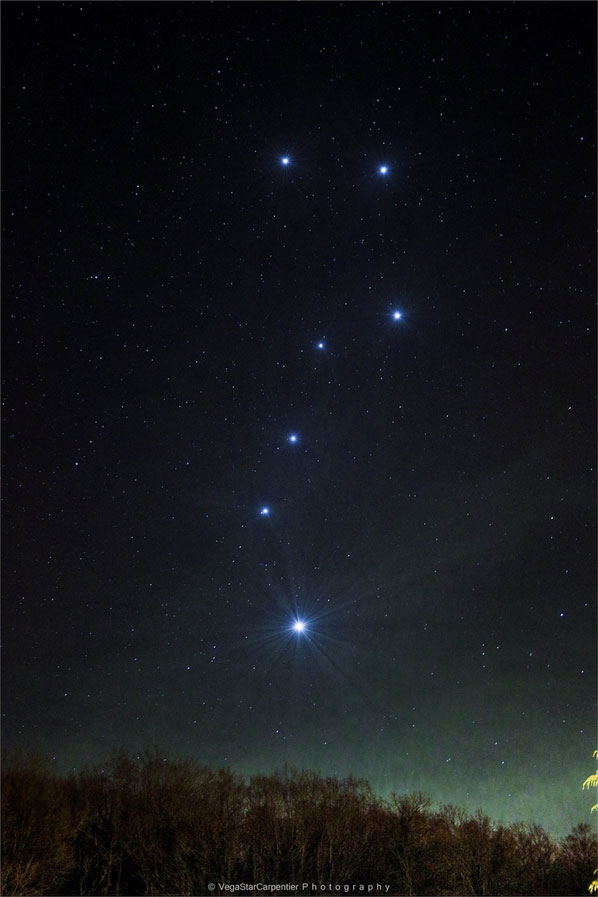
見えますか?このよくある質問は、北の空で最もよく知られている星の配置の一つ、北斗七星の再発見に先立ってよく聞かれるものです。この星の集まりは、おそらくあらゆる世代の人々が目にしてきた、そしてこれからも目にするであろう数少ないものの1つです。しかし、この特集画像では、北斗七星の星はデジタル処理で強調されています。実際には、近くの星よりもこれほど明るく見えるわけではありません。この画像は今月初めにフランスで撮影されました。北斗七星はそれ自体が星座ではありません。おおぐま座の一部ではありますが、北斗七星は様々な社会で異なる名前で知られている星群です。北斗七星の5つの星は実際には宇宙空間で互いに近く、ほぼ同時に形成されたと考えられています。恒星の相対的な動きにより、北斗七星は今後10万年かけて見かけ上の配置をゆっくりと変化させていきます。APODをフォローするには、Facebook、Google Plus、またはTwitterをご覧ください。
原文(English)
Do you see it? This common question frequently precedes the rediscovery of one of the most commonly recognized configurations of stars on the northern sky: the Big Dipper. This grouping of stars is one of the few things that has likely been seen, and will be seen, by every human generation. In this featured image, however, the stars of the Big Dipper have been digitally enhanced -- they do not really appear this much brighter than nearby stars. The image was taken earlier this month from France. The Big Dipper is not by itself a constellation. Although part of the constellation of the Great Bear (Ursa Major), the Big Dipper is an asterism that has been known by different names to different societies. Five of the Big Dipper stars are actually near each other in space and were likely formed at nearly the same time. Relative stellar motions will cause the Big Dipper to slowly change its apparent configuration over the next 100,000 years. Follow APOD on: Facebook, Google Plus, or Twitter
\ この感動を宇宙仲間にシェア /
宇宙をXでシェア
© VegaStar Carpentier / APOD