地球の影に覆われた満月
Full Moon in Earth's Shadow
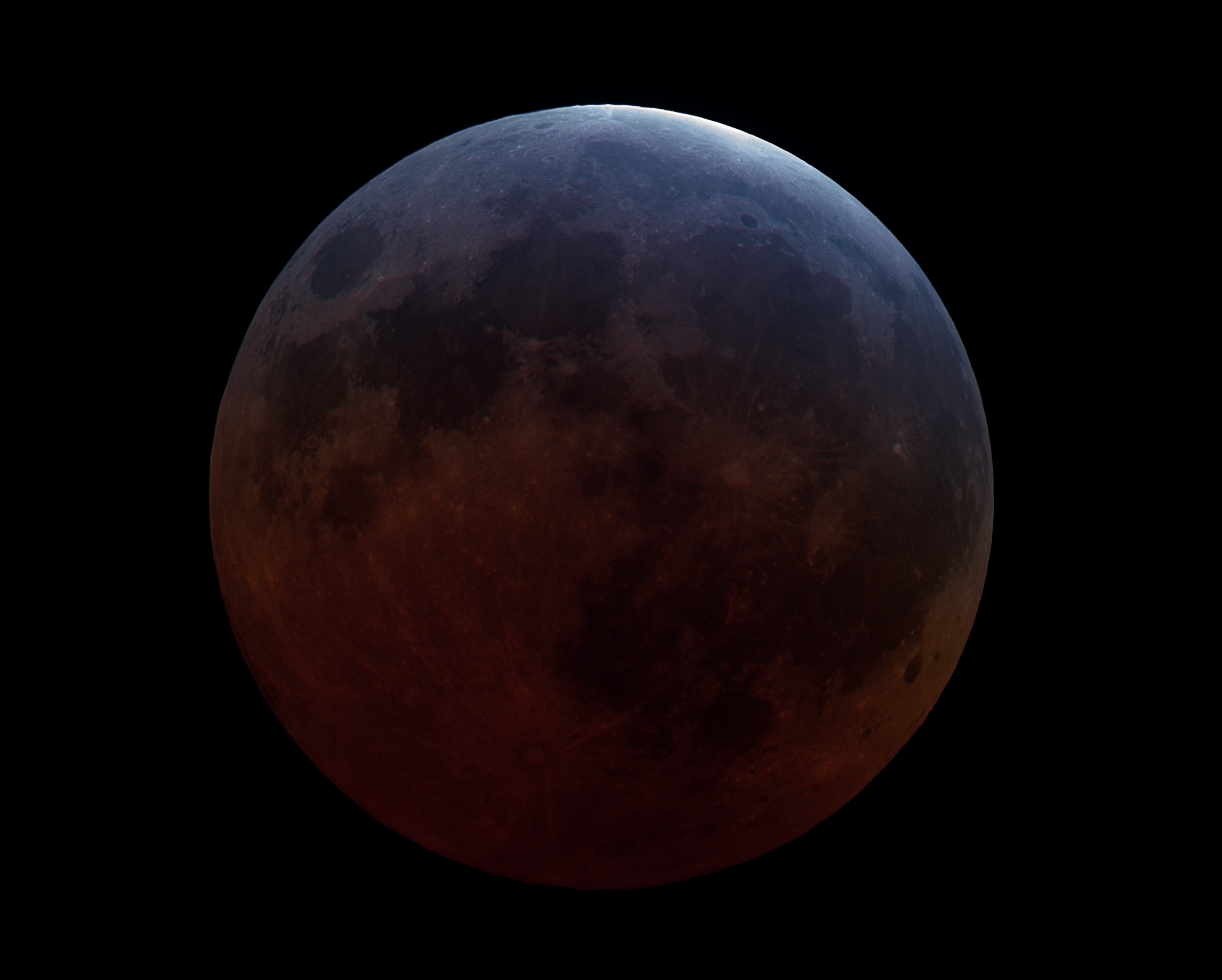
先週、満月は地球の暗い本影に完全に覆われましたが、それはほんの短い間でした。2015年4月4日の皆既月食の皆既相は5分未満で、今世紀最短の皆既月食となりました。実際、地球の本影の北端のすぐ内側を移動したため、月の北側は比較的明るいままでしたが、地球に面した月の残りの半球には美しい青と赤の色合いが現れました。影の中の赤みがかった光が月面に到達すると、下層大気によって濾過されます。月面から見ると、それはシルエットになった地球の縁の周りのすべての日没と日の出から来ています。影の縁に近いところでは、より青い光も地球の大気によって濾過されますが、これは太陽光線が成層圏上部の層を通過するときに発生します。その光は、赤い光を吸収して青い色合いを透過するオゾンによって着色されます。ニュージーランドのオークランドから望遠鏡で撮影された、地球上の皆既日食の鮮明な画像では、月の北極が画面上部に回転して表示されています。
原文(English)
Last week the Full Moon was completely immersed in Earth's dark umbral shadow, just briefly though. The total phase of the April 4, 2015 lunar eclipse lasted less than 5 minutes, the shortest total lunar eclipse of the century. In fact, sliding just within the Earth's umbral shadow's northern edge, the lunar north stayed relatively bright, while a beautiful range of blue and red hues emerged across the rest of the Moon's Earth-facing hemisphere. The reddened light within the shadow that reaches the lunar surface is filtered through the lower atmosphere. Seen from a lunar perspective it comes from all the sunsets and sunrises around the edges of the silhouetted Earth. Close to the shadow's edge, the bluer light is still filtered through Earth's atmosphere, but originates as rays of sunlight pass through layers high in the upper stratosphere. That light is colored by ozone that absorbs red light and transmits bluer hues. In this sharp telescopic view of totality from Auckland, New Zealand, planet Earth, the Moon's north pole has been rotated to the top of the frame.
\ この感動を宇宙仲間にシェア /
宇宙をXでシェア
© Rolf Olsen / APOD