三日月形をしたチュリュモフ・ゲラシメンコ彗星
Comet Churyumov Gerasimenko in Crescent
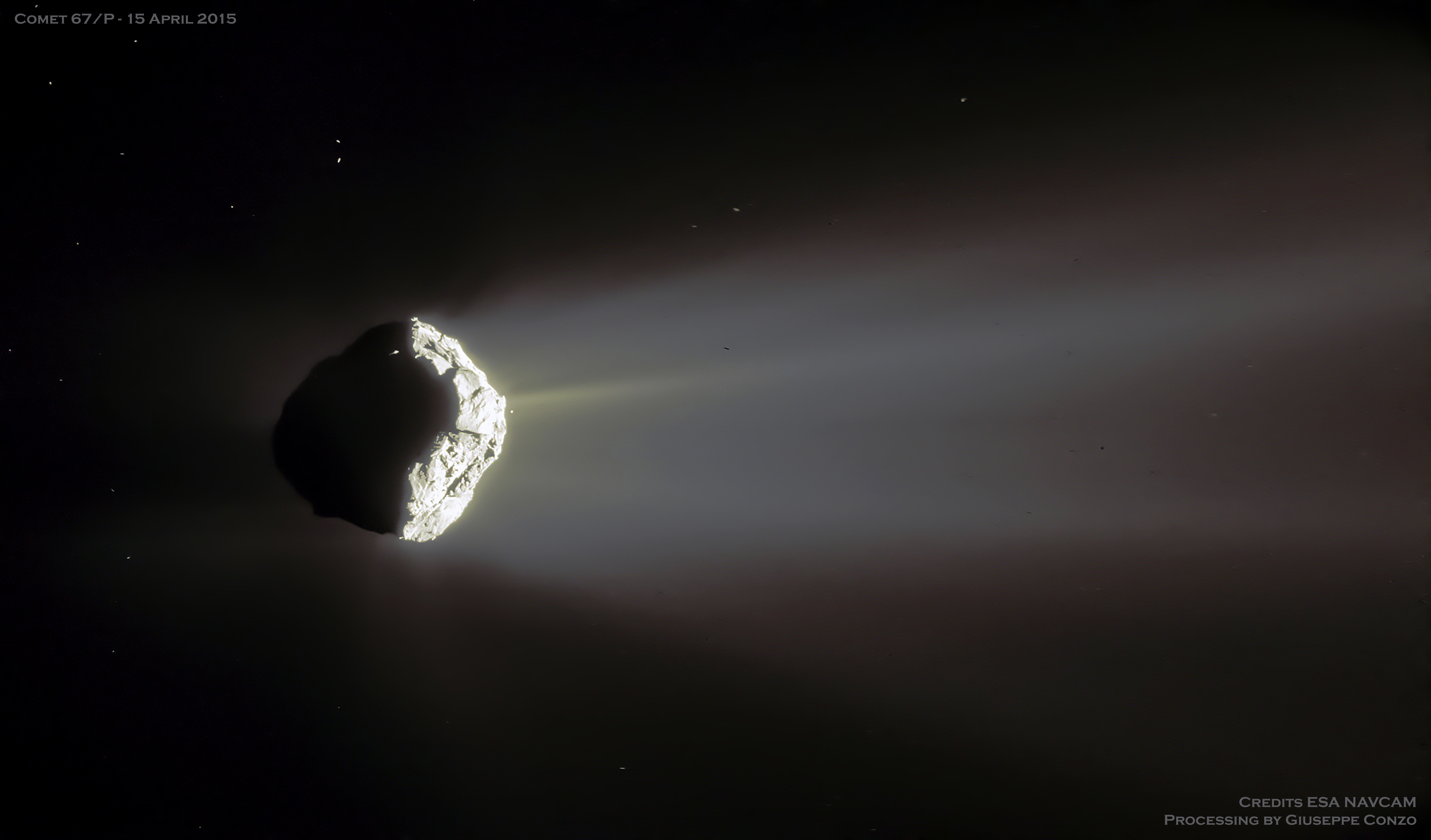
彗星67P/チュリュモフ・ゲラシメンコに何が起こっているのか? 直径3kmのこの彗星が太陽に近づくにつれて、熱によって核からガスと塵が放出される。ロゼッタ探査機は昨年7月にこの彗星のゴツゴツした二重核に到着し、現在は巨大な暗い氷山とともに太陽の周回軌道を回っている。ロゼッタ探査機から地球に送られてきたデータの最近の分析によると、67Pから放出されている水は地球の水とは大きく異なり、地球の水は67Pのような彗星との古代の衝突に由来するものではないことが示唆されている。さらに、ロゼッタもフィラエ着陸機も彗星核の周囲に磁場を検出しておらず、磁気は初期の太陽系の進化において重要ではなかった可能性がある。擬似カラーで三日月形として示されている彗星67Pは、2015年8月に太陽に最接近するにつれて蒸発率が上昇すると予想されている。その際、彗星は地球から太陽までの距離よりもわずかに遠い位置まで接近する。
原文(English)
What's happening to Comet 67P/Churyumov�Gerasimenko? As the 3-km wide comet moves closer to the Sun, heat causes the nucleus to expel gas and dust. The Rosetta spacecraft arrived at the comet's craggily double nucleus last July and now is co-orbiting the Sun with the giant dark iceberg. Recent analysis of data beamed back to Earth from the robotic Rosetta spacecraft has shown that water being expelled by 67P has a significant difference with water on Earth, indicating that Earth's water could not have originated from ancient collisions with comets like 67P. Additionally, neither Rosetta nor its Philae lander detected a magnetic field around the comet nucleus, indicating that magnetism might have been unimportant in the evolution of the early Solar System. Comet 67P, shown in a crescent phase in false color, should increase its evaporation rate as it nears its closest approach to the Sun in 2015 August, when it reaches a Sun distance just a bit further out than the Earth.
\ この感動を宇宙仲間にシェア /
宇宙をXでシェア
© NASA / APOD