メッセンジャー号の水星での最後の日
MESSENGER's Last Day on Mercury
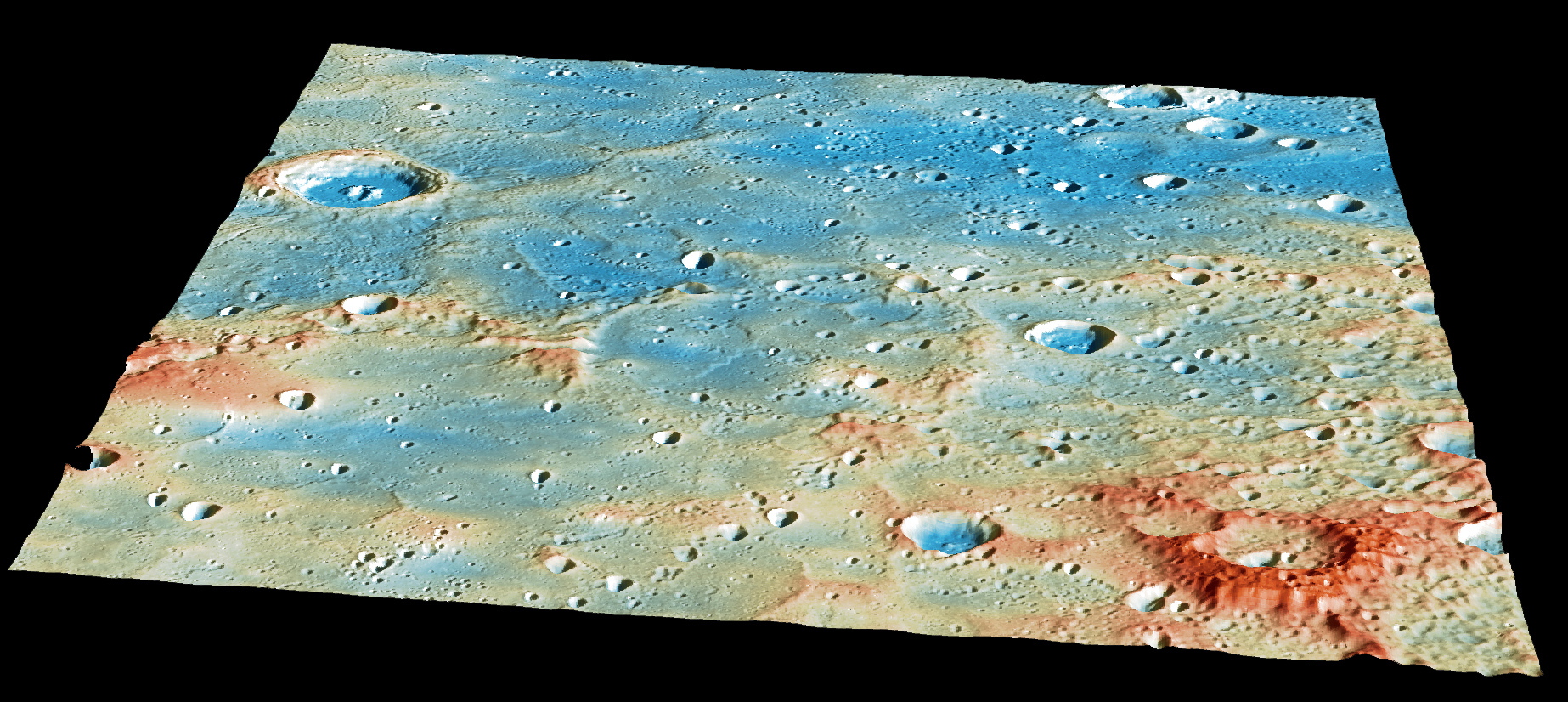
水星を周回した最初の探査機であるMESSENGERは、昨日、水星表面のこの領域に着陸した。MESSENGERの画像とレーザー高度計のデータから作成されたこの画像は、溶岩で満たされた広大なシェイクスピア盆地の北東の縁を北から見たものである。直径48キロメートル(30マイル)の大きなクレーター、ヤナチェクは左上の端付近にある。地形の高さは色分けされており、赤い領域は青い領域より約3キロメートル高い。MESSENGERの最終軌道は中心付近で終了すると予測されており、探査機は秒速約4キロメートル(時速8,700マイル以上)で表面に衝突し、直径約16メートル(52フィート)の新しいクレーターを作った。水星の裏側での衝突は望遠鏡では観測されなかったが、探査機が惑星の裏側から出てくるまでの間に信号が検出されなかったことで確認された。 2004年に打ち上げられた水星表面・宇宙環境・地球化学・測距探査機(MErcury Surface, Space ENvironment, GEochemisty and Ranging)は、2011年に太陽系最内側の惑星である水星に到達した後、4000周以上の軌道周回を完了した。
原文(English)
The first to orbit Mercury, the MESSENGER spacecraft came to rest on this region of Mercury's surface yesterday. Constructed from MESSENGER image and laser altimeter data, the scene looks north over the northeastern rim of the broad, lava filled Shakespeare basin. The large, 48 kilometer (30 mile) wide crater Janacek is near the upper left edge. Terrain height is color coded with red regions about 3 kilometers above blue ones. MESSENGER'S final orbit was predicted to end near the center, with the spacecraft impacting the surface at nearly 4 kilometers per second (over 8,700 miles per hour) and creating a new crater about 16 meters (52 feet) in diameter. The impact on the far side of Mercury was not observed by telescopes, but confirmed when no signal was detected from the spacecraft given time to emerge from behind the planet. Launched in 2004, the MErcury Surface, Space ENvironment, GEochemisty and Ranging spacecraft completed over 4,000 orbits after reaching the Solar System's innermost planet in 2011.
\ この感動を宇宙仲間にシェア /
宇宙をXでシェア
© NASA / APOD