彗星の尾と星の軌跡
Comet Tails and Star Trails
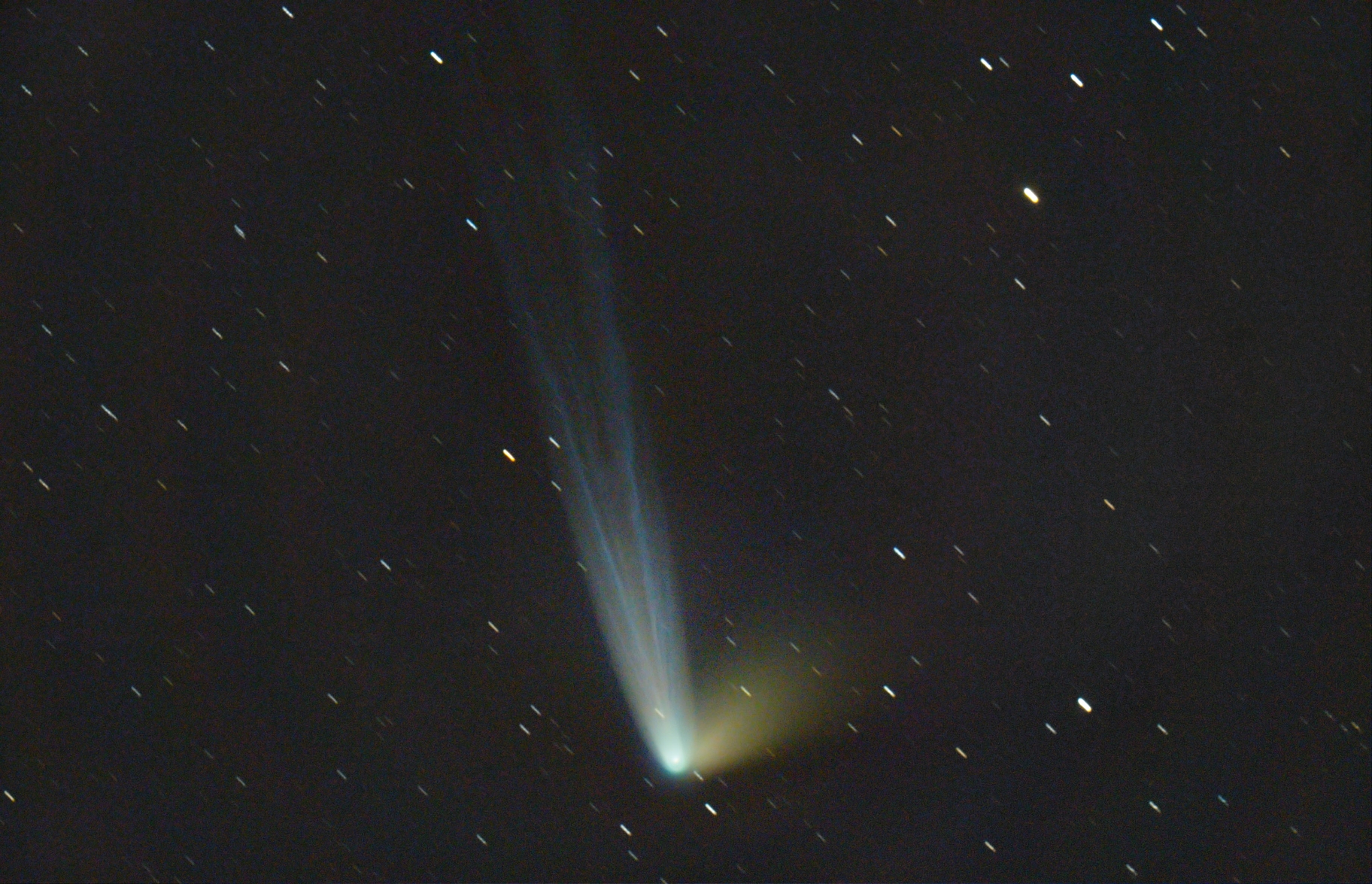
北半球の夏の夕方に西の地平線をかすめた後、パンスターズ彗星(C/2014 Q1としても知られる)は南半球の冬の空でさらに高く昇った。太陽系内側を訪れたこの彗星は、2014年8月に大規模なパンスターズ調査によって発見され、7月17日にここで捉えられた。彗星と色鮮やかな尾は、オーストラリア、クイーンズランド州マッカイのホーム天文台から撮影された。視野は1度強に及ぶ。空を急速に横切るこのパンスターズ彗星は、約2日後に地球に最も接近した。それでも、かに座のかすかな星々は、彗星の急速な動きを追跡するように調整された望遠鏡の画像に短い軌跡を残した。パンスターズの青みがかったイオンの尾は太陽風に吹き飛ばされ、太陽から離れて流れている。太陽光の圧力によって、より拡散した黄色の塵の尾は外側に押し出され、彗星の軌道から遅れている。南半球の緯度から双眼鏡で観測するのに最適なこの彗星は、今後数日間で金星、木星、そして明るい星レグルス付近の空を横切るだろう。
原文(English)
After grazing the western horizon on northern summer evenings Comet PanSTARRS (also known as C/2014 Q1) climbed higher in southern winter skies. A visitor to the inner Solar System discovered in August 2014 by the prolific panSTARRS survey, the comet was captured here on July 17. Comet and colorful tails were imaged from Home Observatory in Mackay, Queensland, Australia. The field of view spans just over 1 degree. Sweeping quickly across a the sky this comet PanSTARRS was closest to planet Earth about 2 days later. Still, the faint stars of the constellation Cancer left short trails in the telescopic image aligned to track the comet's rapid motion. PanSTARRS' bluish ion tails stream away from the Sun, buffetted by the solar wind. Driven by the pressure of sunlight, its more diffuse yellowish dust tail is pushed outward and lags behind the comet's orbit. A good target for binoculars from southern latitudes, in the next few days the comet will sweep through skies near Venus, Jupiter, and bright star Regulus.
\ この感動を宇宙仲間にシェア /
宇宙をXでシェア
© Kevin Parker / APOD