カロンと冥王星の小さな衛星たち
Charon and the Small Moons of Pluto
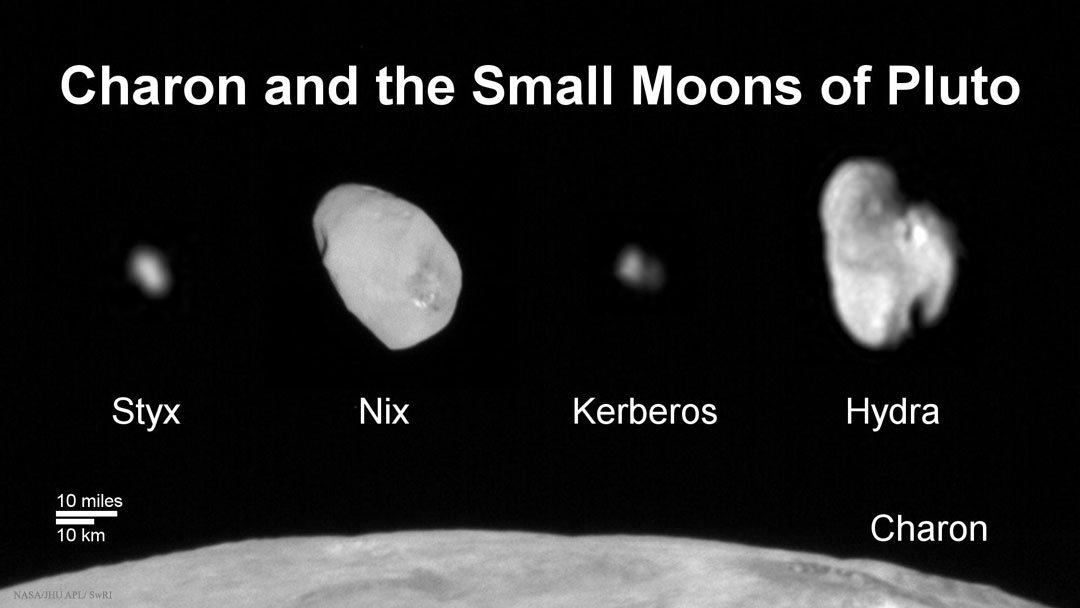
冥王星の衛星はどんな姿をしているのでしょうか?10年前までは、最大の衛星カロンしか知られておらず、画像化されたことはありませんでした。探査機ニュー・ホライズンズの準備と打ち上げが進むにつれ、ハッブル宇宙望遠鏡の画像で他の衛星も確認されましたが、それらは光の点に過ぎませんでした。そしてついに昨年の夏、ニュー・ホライズンズは冥王星のすぐそばを通過し、冥王星とカロンを詳細に撮影し、スティクス、ニクス、ケルベロス、ヒドラの可能な限り最高の画像を撮影しました。掲載されている合成画像はその結果を示しています。それぞれの衛星は独特の形状をしており、その複雑な構造はかすかに示唆されているだけです。解像度は十分とは言えませんが、これらの画像はしばらくの間、人類が入手できる最良の画像となるでしょう。なぜなら、これらの衛星は小さすぎて遠すぎるため、現代の地球上の望遠鏡では解像できず、また冥王星系への新たな探査ミッションも計画されていないからです。ギャラリー:10月の金星、木星、火星の接近
原文(English)
What do the moons of Pluto look like? Before a decade ago, only the largest moon Charon was known, but never imaged. As the robotic New Horizons spacecraft was prepared and launched, other moons were identified on Hubble images but remained only specks of light. Finally, this past summer, New Horizons swept right past Pluto, photographed Pluto and Charon in detail, and took the best images of Styx, Nix, Kerberos, and Hydra that it could. The featured image composite shows the results -- each moon is seen to have a distinct shape, while underlying complexity is only hinted. Even though not satisfyingly resolved, these images are likely to be the best available to humanity for some time. This is because the moons are too small and distant for contemporary Earth-based telescopes to resolve, and no new missions to the Pluto system are planned. Gallery: October's Venus, Jupiter, & Mars Conjunction
\ この感動を宇宙仲間にシェア /
宇宙をXでシェア
© NASA / APOD