射手座の三つ子
A Sagittarius Triplet
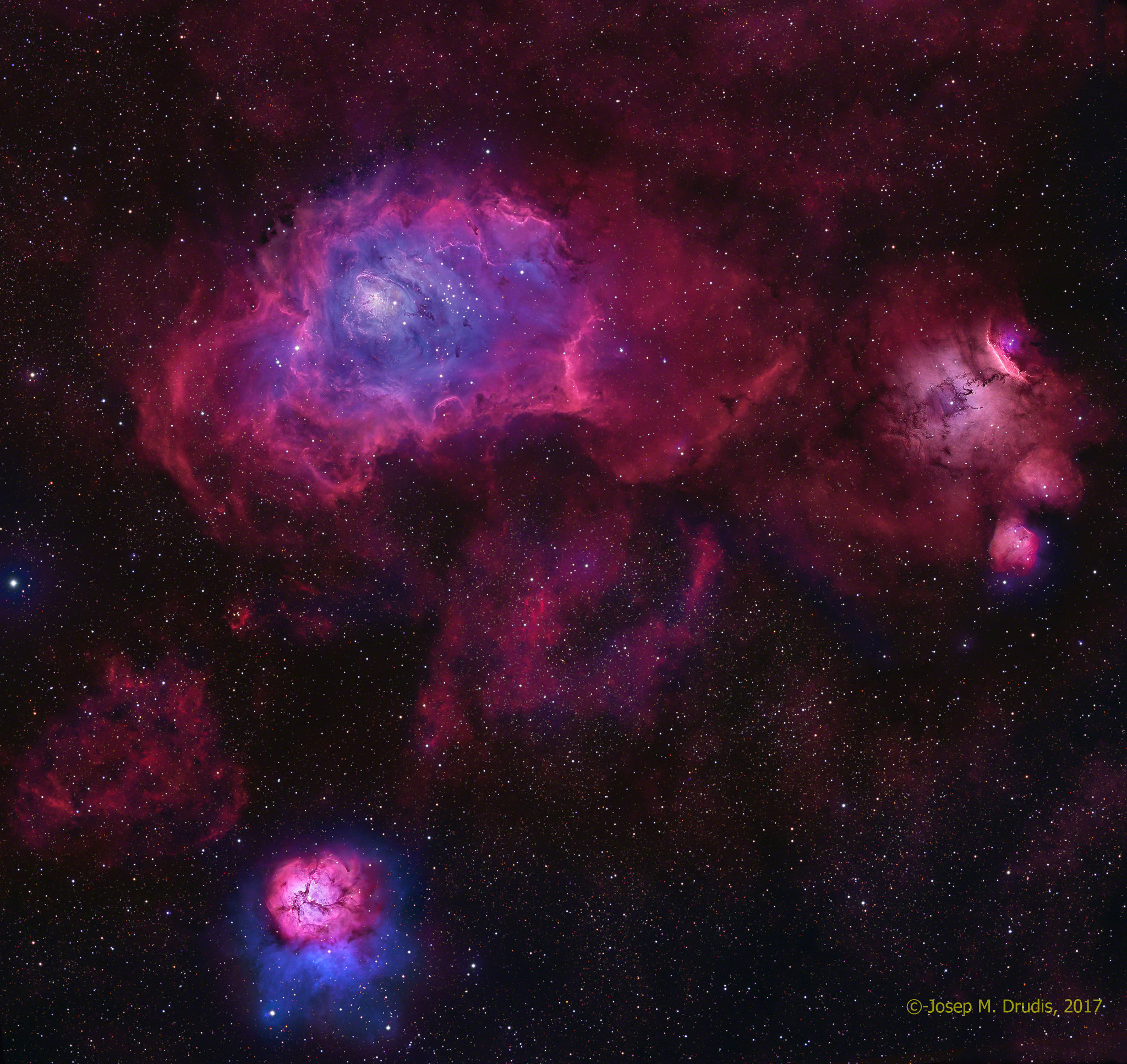
これら3つの明るい星雲は、いて座や天の川銀河中心部の星が密集した領域を望遠鏡で巡るツアーでよく取り上げられます。実際、18世紀の宇宙旅行者シャルル・メシエは、そのうちの2つ、中央の左上にある大きな星雲M8と、フレームの下部近くにある色鮮やかなM20をカタログ化しました。3つ目の輝線領域には、M8の右側にあり、暗い塵の帯によって大きな星雲から隔てられているNGC 6559が含まれます。これら3つはすべて、約5000光年ほど離れた星形成領域です。広大なM8は、100光年以上にわたってラグーン星雲としても知られています。M20の一般的な愛称はトリフィドです。輝く水素ガスが輝線星雲の支配的な赤色を作り出しています。対照的に、トリフィドの青い色合いは、星の光が塵によって反射されたものです。この色彩豊かな合成空景は、2種類の異なる望遠鏡を用いて撮影されたもので、広視野画像と高解像度での個々のクローズアップ画像を捉えている。
原文(English)
These three bright nebulae are often featured on telescopic tours of the constellation Sagittarius and the crowded starfields of the central Milky Way. In fact, 18th century cosmic tourist Charles Messier cataloged two of them; M8, the large nebula above and left of center, and colorful M20 near the bottom of the frame. The third emission region includes NGC 6559, right of M8 and separated from the larger nebula by a dark dust lane. All three are stellar nurseries about five thousand light-years or so distant. Over a hundred light-years across the expansive M8 is also known as the Lagoon Nebula. M20's popular moniker is the Trifid. Glowing hydrogen gas creates the dominant red color of the emission nebulae. In striking contrast, blue hues in the Trifid are due to dust reflected starlight. The colorful composite skyscape was recorded with two different telescopes to capture a widefield image of the area and individual close-ups at higher resolution.
\ この感動を宇宙仲間にシェア /
宇宙をXでシェア
© Josep Drudis / APOD