2つの彗星と星団
Two Comets and a Star Cluster
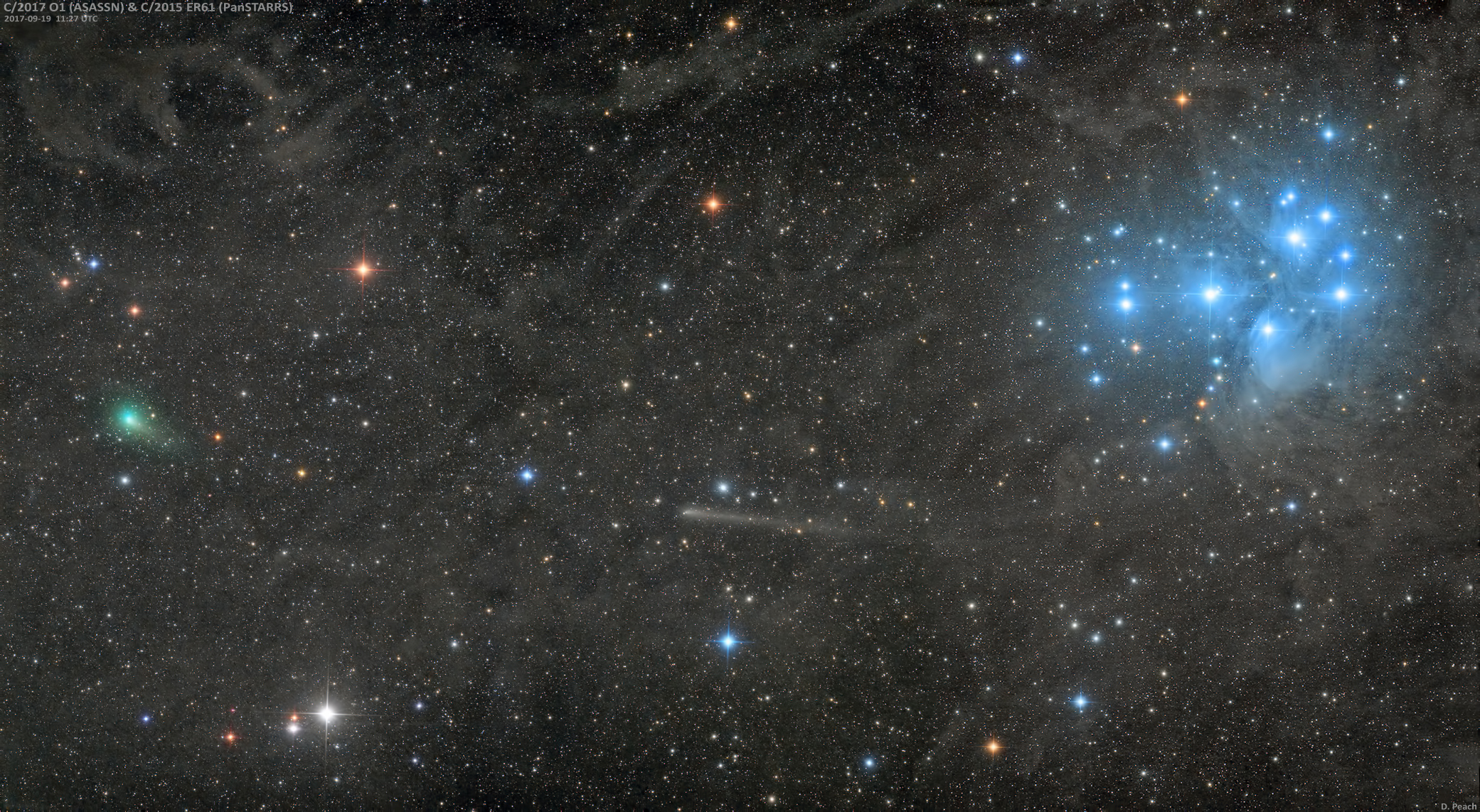
有名なプレアデス星団の近くで、2つの珍しい点が移動しています。毎晩わずかに移動するこれらの点は、実際には太陽系の近くの彗星で、偶然にも何光年も離れた星々の領域に迷い込んだものです。左端にあるのは彗星C/2017 O1 ASAS-SNで、数キロメートルに及ぶ蒸発する氷の塊で、緑色に輝く炭素が主成分の明るいコマを周囲にまとっています。彗星ASAS-SN1は右下にわずかな尾を持っています。フレームの中央付近にあるのは彗星C/2015 ER61 PanSTARRSで、これも巨大な蒸発する氷の塊ですが、右側にかなり長い尾を持っています。右上にはプレアデス星団があり、明るい青い星々が近くの反射する塵を照らしている散開星団です。約2週間前に撮影されたこの露出は非常に深く、フィラメント状の星間塵が視野全体に広がっているのがわかります。プレアデス星団は肉眼でも見えるが、彗星を見るには双眼鏡が必要だ。
原文(English)
Two unusual spots are on the move near the famous Pleiades star cluster. Shifting only a small amount per night, these spots are actually comets in our nearby Solar System that by chance wandered into the field of the light-years distant stars. On the far left is comet C/2017 O1 ASAS-SN, a multi-kilometer block of evaporating ice sporting a bright coma of surrounding gas dominated by green-glowing carbon. Comet ASAS-SN1 shows a slight tail to its lower right. Near the frame center is comet C/2015 ER61 PanSTARRS, also a giant block of evaporating ice, but sporting a rather long tail to its right. On the upper right is the Pleiades, an open cluster dominated by bright blue stars illuminating nearby reflecting dust. This exposure, taken about two weeks ago, is so deep that the filamentary interstellar dust can be traced across the entire field. The Pleiades is visible to the unaided eye, but it should require binoculars to see the comets.
\ この感動を宇宙仲間にシェア /
宇宙をXでシェア
© Damian Peach / APOD