マリウス・ヒルズと月の穴
Marius Hills and a Hole in the Moon
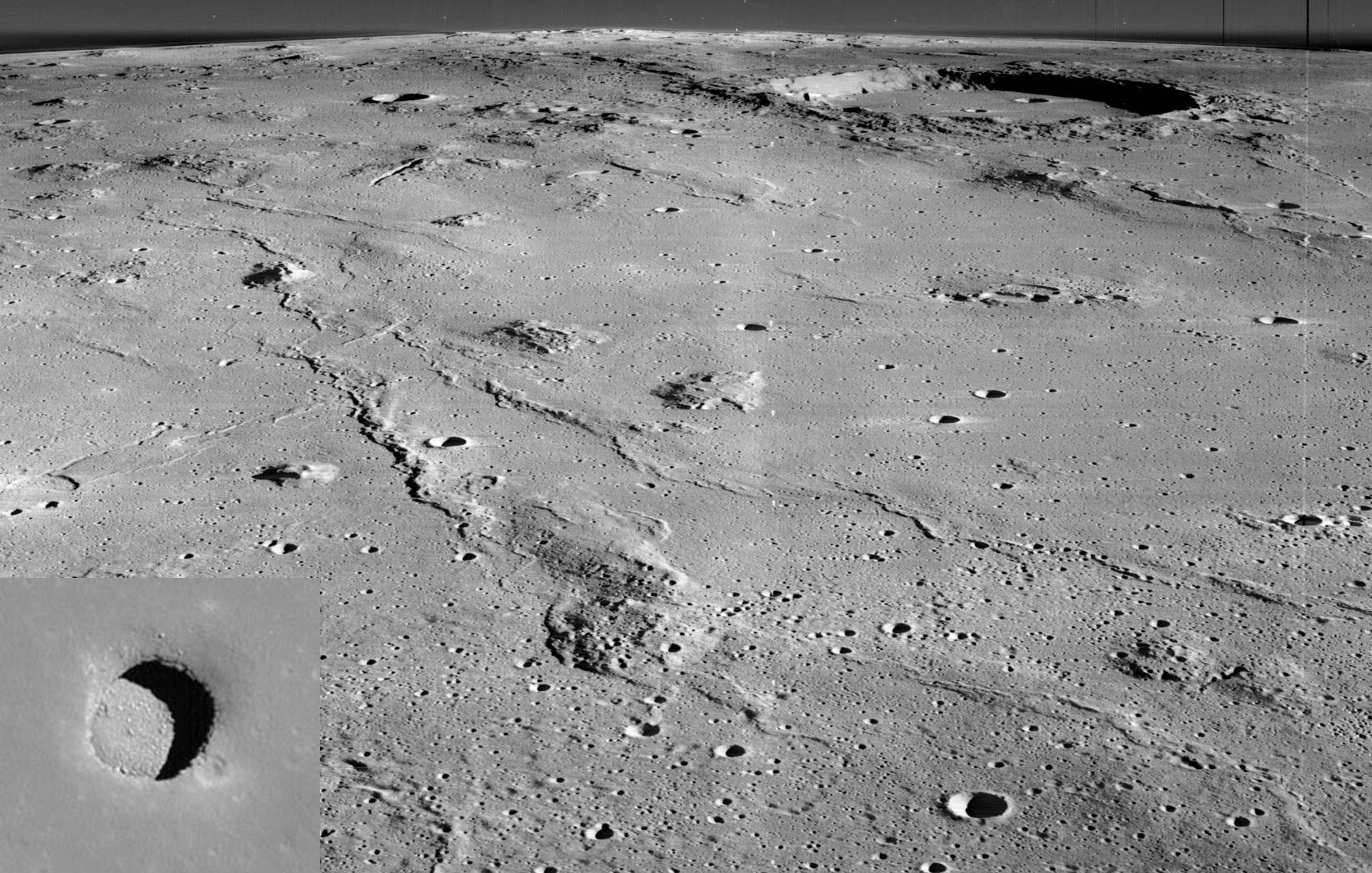
人類は月の表面下で生活できるのだろうか?この興味深い可能性は、2009年に日本の月周回探査機SELENEが月のマリウス丘陵地帯の地下に奇妙な穴を撮影したことでさらに強まった。この穴は地下溶岩洞への天窓である可能性が示唆された。NASAの月探査機LROによる追跡観測では、マリウス丘陵の穴(MHH)は視覚的に約100メートルの深さまで伸び、幅は数百メートルに及ぶことが示された。ごく最近では、SELENEによる地中レーダーデータが再解析され、一連の興味深い二次エコーが明らかになった。これは、マリウス丘陵の下に広がる溶岩洞が数キロメートルもの深さまで伸び、都市を建設できるほどの大きさになる可能性を示唆している。このような溶岩洞は、将来の月面コロニーを大きな温度変化、微小隕石の衝突、有害な太陽放射から守ることができるかもしれない。さらに、地下の溶岩洞は密閉され、呼吸可能な空気を閉じ込めることができる可能性もある。これらの溶岩洞は、数十億年前の月の火山活動期に形成されたと考えられています。写真に写っているのは、1960年代にNASAの月探査機ルナ・オービター2号が撮影したマリウス丘陵地域の表面です。挿入図は、NASAが現在も継続している月探査機LROが撮影したマリウス丘陵地域の画像です。いくつかの火山ドームが見られ、右上にはマリウス・クレーターが見えます。
原文(English)
Could humans live beneath the surface of the Moon? This intriguing possibility was bolstered in 2009 when Japan's Moon-orbiting SELENE spacecraft imaged a curious hole beneath the Marius Hills region on the Moon, possibly a skylight to an underground lava tube. Follow-up observations by NASA's Lunar Reconnaissance Orbiter (LRO) indicated that the Marius Hills Hole (MHH) visually extends down nearly 100 meters and is several hundred meters wide. Most recently, ground penetrating radar data from SELENE has been re-analyzed to reveal a series of intriguing second echoes -- indicators that the extensive lava tubes exist under Marius Hills might extend down even kilometers and be large enough to house cities. Such tubes could shelter a future Moon colony from large temperature swings, micro-meteor impacts, and harmful solar radiation. Potentially, underground lava tubes might even be sealed to contain breathable air. These lava tubes likely formed when lunar volcanos were active billions of years ago. Pictured, the surface of Marius Hills region was captured in the 1960s by NASA's Lunar Orbiter 2 mission, while an inset image of the MHH is shown from NASA's continuing LRO. Several volcanic domes are visible, while Marius Crater is visible on the upper right.
\ この感動を宇宙仲間にシェア /
宇宙をXでシェア
© NASA / APOD