A/2017 U1:星間からの訪問者
A/2017 U1: An Interstellar Visitor
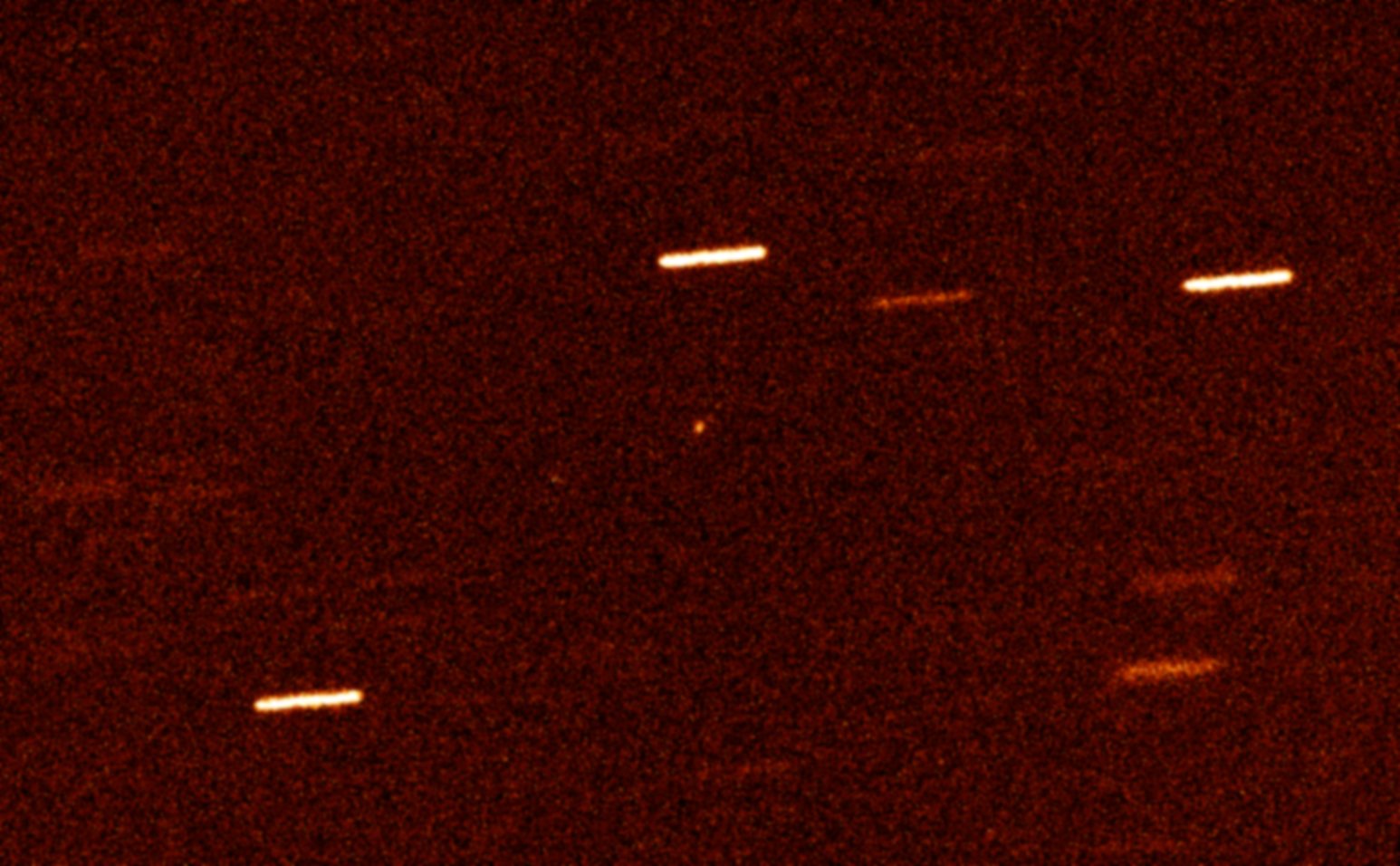
極めて双曲線軌道に沿って高速で移動し、太陽を通過する際に急旋回する、現在A/2017 U1と命名されているこの天体は、星間空間から来た最初の既知の小天体です。10月28日にカナリア諸島のウィリアム・ハーシェル望遠鏡で撮影されたこの5分間の露光画像の中央にある光点であるこの星間天体は、彗星活動の兆候がなく、小惑星に似ています。直径4.2メートルの巨大な望遠鏡が視野内で急速に移動するA/2017 U1を追跡しているため、背景のかすかな星が筋状に見えます。天文学者のロブ・ウェリック(IfA)は、10月19日に夜間のPan-STARRS全天サーベイデータでこの移動天体を初めて認識しました。A/2017は現在太陽系外に向かっており、二度と太陽系に戻ることはなく、すでに地球からは大型光学望遠鏡でしか見ることができません。軌道から恒星間起源であることは確定しているものの、この天体が天の川銀河の星々の間をどれくらいの期間漂っていたのかはまだ分かっていない。しかし、恒星間空間での巡航速度は約26キロメートル毎秒と推定される。ちなみに、人類の探査機ボイジャー1号は恒星間空間を約17キロメートル毎秒で航行する。
原文(English)
Traveling at high velocity along an extreme hyperbolic orbit and making a hairpin turn as it swung past the Sun, the now designated A/2017 U1 is the first known small body from interstellar space. A point of light centered in this 5 minute exposure recorded with the William Herschel Telescope in the Canary Islands on October 28, the interstellar visitor is asteroid-like with no signs of cometary activity. Faint background stars appear streaked because the massive 4.2 meter diameter telescope is tracking the rapidly moving A/2017 U1 in the field of view. Astronomer Rob Weryk (IfA) first recognized the moving object in nightly Pan-STARRS sky survey data on October 19. A/2017 is presently outbound, never to return to the Solar System, and already only visible from planet Earth in large optical telescopes. Though an interstellar origin has been established based on its orbit, it is still unknown how long the object could have drifted among the stars of the Milky Way. But its interstellar cruise speed would be about 26 kilometers per second. By comparison humanity's Voyager 1 spacecraft travels about 17 kilometers per second through interstellar space.
\ この感動を宇宙仲間にシェア /
宇宙をXでシェア
© NASA / APOD