マッハホルツ彗星が太陽に接近
Comet Machholz Approaches the Sun
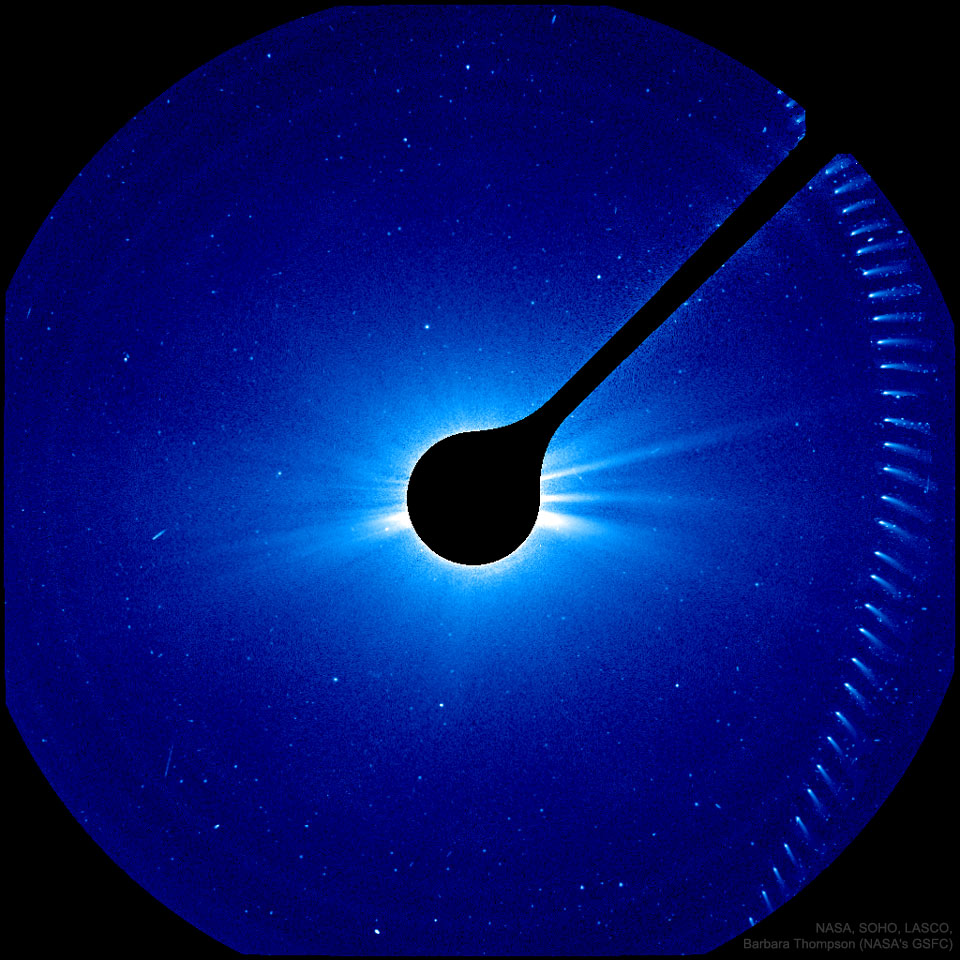
マッハホルツ彗星はなぜ炭素含有化学物質がこれほど少ないのでしょうか? マッハホルツ彗星(96P/Machholz)が最初に有名になったのは、他のどの短周期彗星よりも太陽に接近し、水星の半分の距離まで近づくという特徴があり、しかも5年ごとに接近するという点です。この特異な彗星をより深く理解するために、NASAの太陽観測衛星SOHOは、10月に行われた最新の太陽接近時に彗星を追跡しました。掲載されている合成画像は、尾が強調された彗星が太陽のそばを通過する様子を示しています。太陽の明るい表面は暗い遮蔽物によって隠されていますが、太陽のコロナの一部は見えています。背景には近隣の星々が点在しています。ある仮説では、こうした太陽への接近が何らかの原因でマッハホルツ彗星から炭素が失われると考えられていますが、別の仮説では、彗星ははるか遠く、おそらく別の恒星系で、この組成で形成されたとされています。APOD無料講演会:1月5日ニューヨーク、1月9日ワシントンD.C.
原文(English)
Why is Comet Maccholz so depleted of carbon-containing chemicals? Comet 96P/Machholz's original fame derives from its getting closer to the Sun than any other short period comet -- half as close as Mercury -- and doing so every five years. To better understand this unusual comet, NASA's Sun-monitoring SOHO spacecraft tracked the comet during its latest approach to the Sun in October. The featured image composite shows the tail-enhanced comet swooping past the Sun. The Sun's bright surface is hidden from view behind a dark occulter, although parts of the Sun's extended corona are visible. Neighboring stars dot the background. One hypothesis holds that these close solar approaches somehow cause Comet Machholz to shed its carbon, while another hypothesis posits that the comet formed with this composition far away -- possibly even in another star system. Free APOD Lectures: January 5 in NYC & January 9 in DC
\ この感動を宇宙仲間にシェア /
宇宙をXでシェア
© NASA / APOD