ハッブル宇宙望遠鏡が捉えた明るい惑星状星雲NGC 7027
Bright Planetary Nebula NGC 7027 from Hubble
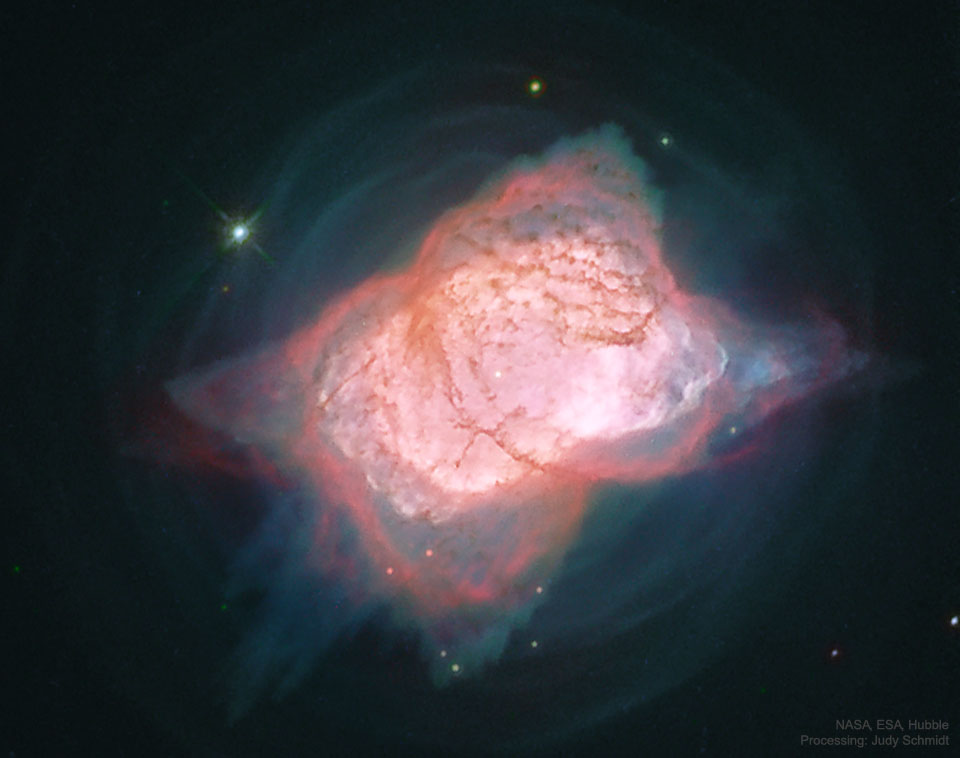
空で最も明るい惑星状星雲の一つであるNGC 7027は、何と名付けられるべきでしょうか? 1878年に初めて発見された星雲NGC 7027は、標準的な家庭用望遠鏡で白鳥座(はくちょう座)の方向に見ることができます。しかし、そこではぼんやりとした点としてしか見えないため、名前で呼ばれることはほとんどありません。ところが、地球を周回するハッブル宇宙望遠鏡で撮影すると、非常に詳細な構造が明らかになります。ハッブル望遠鏡で撮影されたNGC 7027の画像を研究した結果、この星雲は約600年前に膨張し始めた惑星状星雲であり、ガスと塵の雲は太陽の約3倍の質量を持つとみられるほど異常に巨大であることが分かりました。ここに色分けして示されているNGC 7027の分解された層状構造と塵が散りばめられた特徴は、天体観測愛好家にとって馴染みのあるアイコンを思い起こさせ、非公式な名前の由来となるかもしれません。以前の有力候補は枕星雲でしたが、オンラインのAPODディスカッションフォーラムなどで、新しい提案をぜひお寄せください。ワシントンDC近郊で今夜、無料のAPOD講演会が開催されます。ナショナルハーバーにて午後7時開始。
原文(English)
It is one of the brightest planetary nebulae on the sky -- what should it be named? First discovered in 1878, nebula NGC 7027 can be seen toward the constellation of the Swan (Cygnus) with a standard backyard telescope. Partly because it appears there as only an indistinct spot, it is rarely referred to with a moniker. When imaged with the Earth-orbiting Hubble Space Telescope, however, great details are revealed. Studying Hubble images of NGC 7027 have led to the understanding that it is a planetary nebula that began expanding about 600 years ago, and that the cloud of gas and dust is unusually massive as it appears to contain about three times the mass of our Sun. Pictured here in assigned colors, the resolved, layered, and dust-laced features of NGC 7027 might remind sky enthusiasts of a familiar icon that could be the basis for an informal name. A leading previous suggestion was the Pillow Nebula, but please feel free to make new suggestions -- for example, in an online APOD discussion forum. Free APOD Lecture Tonight near Washington, DC: Starting at 7 pm at the National Harbor
\ この感動を宇宙仲間にシェア /
宇宙をXでシェア
© NASA / APOD