ヒアデス星団の月
Moon in the Hyades
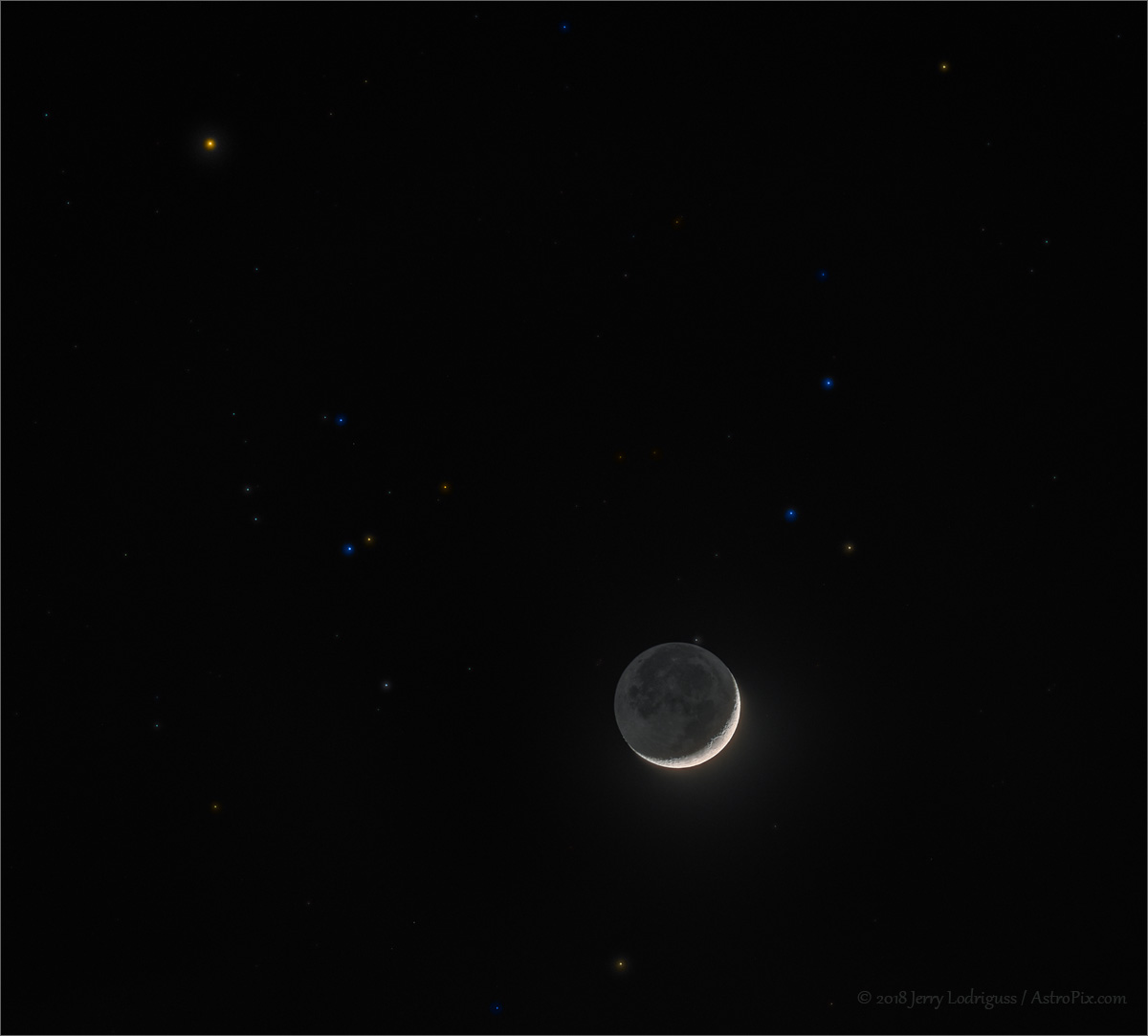
最近、月をご覧になりましたか?4月18日、太陽に照らされた三日月が、ヒアデス星団の星々を背景に、地球の夜空を横切って移動しました。この望遠写真には、明るい星アルデバランを中心とする、近くにあるV字型の星団と、完全な月が写っています。この魅力的な空の眺めは、実は様々な露出で撮影された一連の画像をデジタル合成したものです。最も短い1/60秒の露光時間で撮影された画像には、明るい三日月が鮮明に写っています。最大15秒の長時間露光では、より暗い背景の星々や、地球照(地球に照らされた月の夜側として肉眼で見える)が捉えられています。
原文(English)
Have you seen the Moon lately? On April 18, its waxing sunlit crescent moved through planet Earth's night across a background of stars in the Hyades. Anchored by bright star Aldebaran, the nearby, V-shaped star cluster and complete lunar orb appear in this telephoto image. The engaging skyview is actually digitally composed from a series of varying exposures. Recorded in 1/60th of a second, the shortest in the series captures the Moon's bright crescent in sharp detail. Longer exposures, ranging up to 15 seconds, capture fainter background stars as well as earthshine, visible to the eye as the earthlit lunar night side.
\ この感動を宇宙仲間にシェア /
宇宙をXでシェア
© Catching the Light / APOD