フォボス:火星の運命の衛星
Phobos: Doomed Moon of Mars
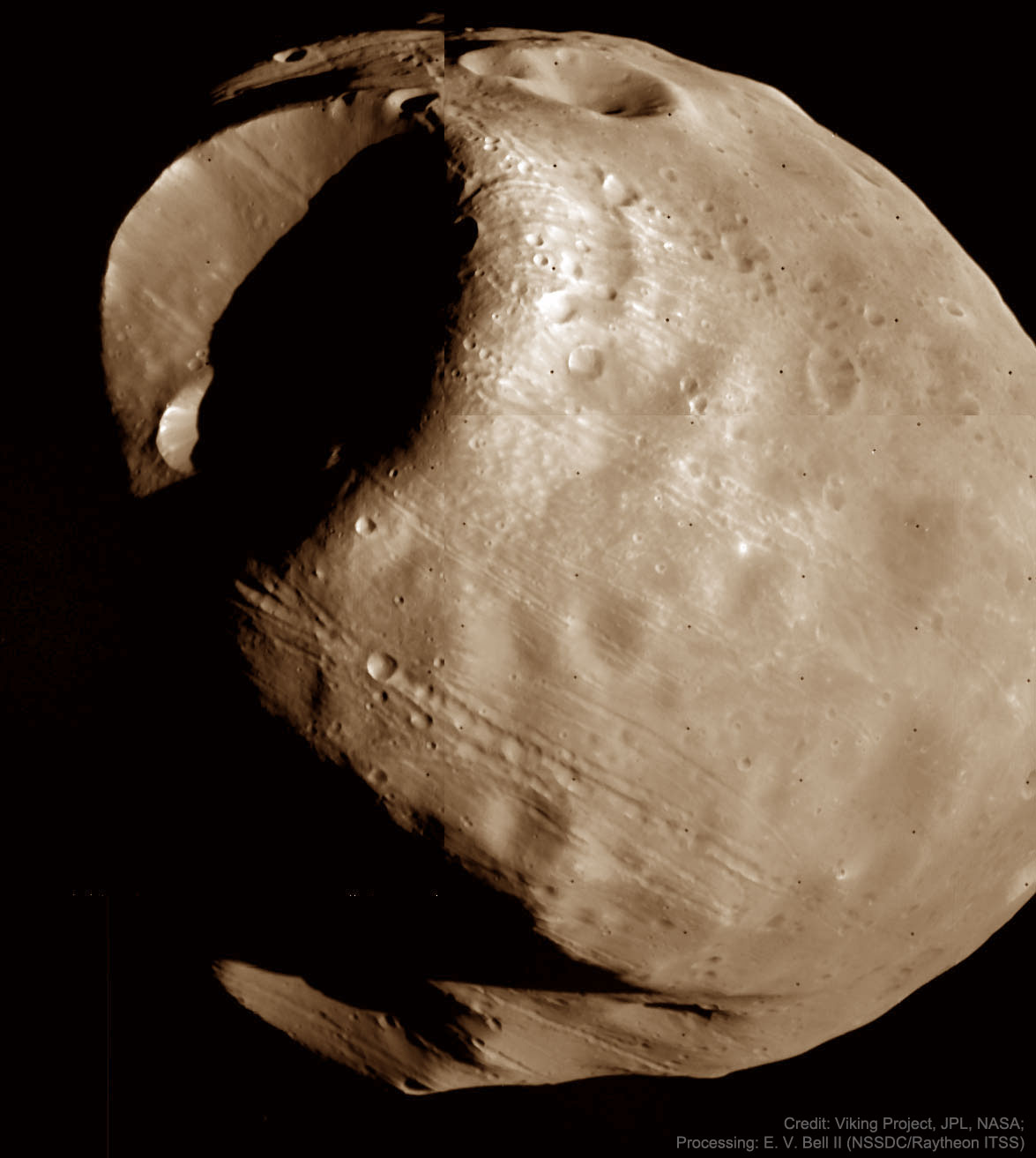
この衛星は滅びる運命にある。ローマ神話の戦いの神にちなんで名付けられた赤い惑星火星には、フォボスとダイモスという2つの小さな衛星があり、その名前はギリシャ語で恐怖とパニックを意味する言葉に由来している。火星の衛星の起源は不明だが、有力な仮説は捕獲された小惑星だというものだ。直径25キロメートルの大きな衛星はフォボスで、1978年にロボット探査機バイキング1号が撮影したこの偽色画像モザイクでは、確かにクレーターのある小惑星のような物体として写っている。フォボスに見られる珍しい長い溝の最近の分析によると、それらは左上のクレーター(スティックニー・クレーター)を作った巨大な衝突から転がり落ちた岩石によって生じた可能性がある。フォボスは火星に非常に近い軌道を周回しており、月が40万キロメートルであるのに対し、表面から約5,800キロメートル上空を周回しているため、重力潮汐力によって引きずり下ろされている。最終的には、フォボスは軌道上で分解し、約5000万年後に火星の表面に落下するだろう。それよりもずっと前、実際には明日(計画通りに進めば)、NASAのロボット着陸機インサイトが火星に着陸し、内部構造の調査を開始する。最新情報:インサイト、明日火星に着陸へ
原文(English)
This moon is doomed. Mars, the red planet named for the Roman god of war, has two tiny moons, Phobos and Deimos, whose names are derived from the Greek for Fear and Panic. The origin of the Martian moons is unknown, though, with a leading hypothesis holding that they are captured asteroids. The larger moon, at 25-kilometers across, is Phobos, and is indeed seen to be a cratered, asteroid-like object in this false-colored image mosaic taken by the robotic Viking 1 mission in 1978. A recent analysis of the unusual long grooves seen on Phobos indicates that they may result from boulders rolling away from the giant impact that created the crater on the upper left: Stickney Crater. Phobos orbits so close to Mars - about 5,800 kilometers above the surface compared to 400,000 kilometers for our Moon - that gravitational tidal forces are dragging it down. The ultimate result will be for Phobos to break up in orbit and then crash down onto the Martian surface in about 50 million years. Well before that -- tomorrow, in fact, if everything goes according to plan -- NASA's robotic InSight lander will touch down on Mars and begin investigating its internal structure. Latest: Insight to Land on Mars Tomorrow
\ この感動を宇宙仲間にシェア /
宇宙をXでシェア
© NASA / APOD