ヘニゼ70:大マゼラン雲におけるスーパーバブル
Henize 70: A Superbubble in the LMC
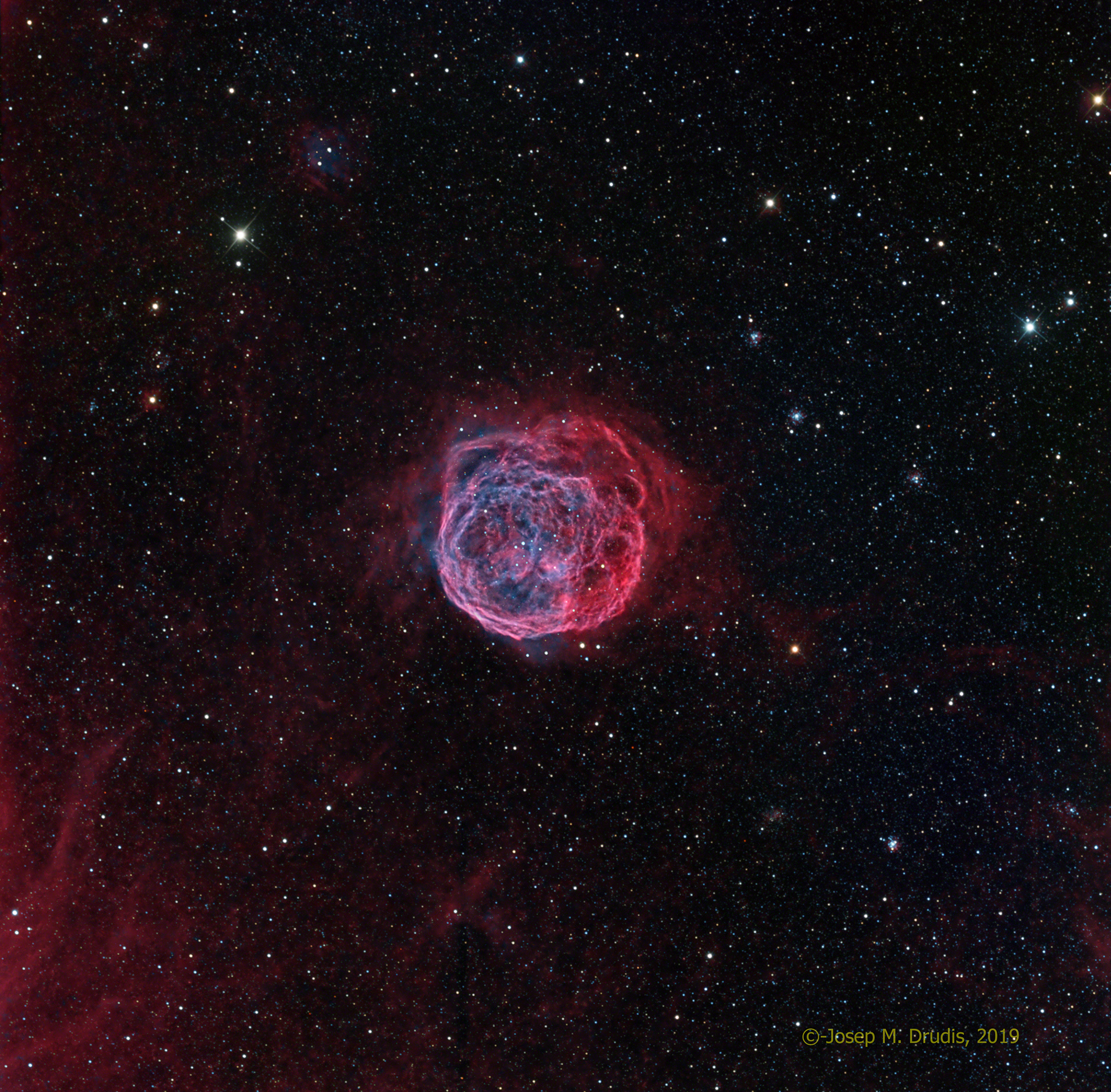
巨大な恒星は、銀河の環境に大きな影響を与えます。恒星、特に太陽の数十倍以上の質量を持つ恒星は、星間ガスと塵の雲をかき混ぜ、未来の世代の恒星の構成と位置に痕跡を残します。この劇的な証拠は、私たちの隣の銀河である大マゼラン雲(LMC)にあるヘナイズ70(N70、DEM301とも呼ばれる)という星雲に示されています。ヘナイズ70は実際には、高温の巨大な恒星や超新星爆発からの恒星風によって吹き飛ばされた、直径約300光年の輝く超巨大星間ガスの泡で、その内部は希薄で高温の膨張ガスで満たされています。超巨大星は銀河全体に広がる可能性があるため、恒星のライフサイクルと銀河の進化の関連性を探る機会を人類に提供します。
原文(English)
Massive stars profoundly affect their galactic environments. Churning and mixing interstellar clouds of gas and dust, stars -- most notably those upwards of tens of times the mass of our Sun -- leave their mark on the compositions and locations of future generations of stars. Dramatic evidence of this is illustrated in our neighboring galaxy, the Large Magellanic Cloud (LMC), by the featured nebula, Henize 70 (also known as N70 and DEM301). Henize 70 is actually a luminous superbubble of interstellar gas about 300 light-years in diameter, blown by winds from hot, massive stars and supernova explosions, with its interior filled with tenuous hot and expanding gas. Because superbubbles can expand through an entire galaxy, they offer humanity a chance to explore the connection between the lifecycles of stars and the evolution of galaxies.
\ この感動を宇宙仲間にシェア /
宇宙をXでシェア
© Josep M. Drudis / APOD