ラグーンを越えたパンスターズ
Pan-STARRS Across the Lagoon
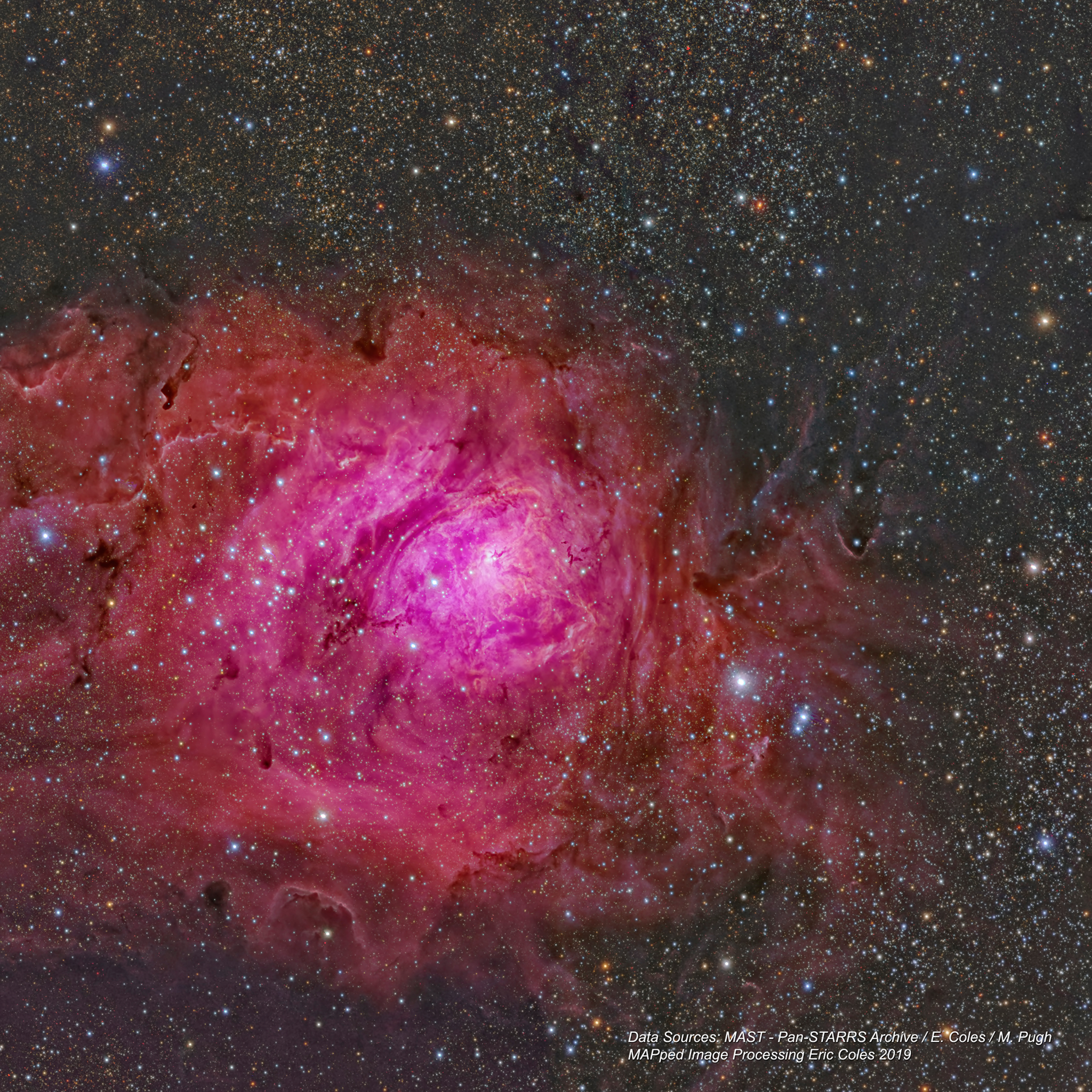
輝く星間ガスと暗い塵の雲の尾根が、ラグーン星雲の激動する宇宙の深淵に広がっている。M8としても知られるこの明るい星形成領域は、地球から約5000光年離れている。しかし、それでもなお、天の川銀河の中心に向かういて座の望遠鏡ツアーで人気のスポットとなっている。電離した水素原子が剥ぎ取られた電子と再結合する際の、特徴的な赤い放射が支配的なこのラグーン星雲の壮大な眺めは、100光年以上も広がっている。その中心部では、明るくコンパクトな砂時計型のガスが、巨大な若い星からの高エネルギー放射と極端な恒星風によって電離され、形作られている。実際、数百万年前にラグーン星雲で形成されたばかりの散開星団NGC 6530の多くの明るい星々は、この星雲の中を漂っている。 Pan-STARRS(パノラマサーベイ望遠鏡・迅速対応システム)による広帯域画像データと、アマチュア望遠鏡による狭帯域データを組み合わせることで、ラグーン星雲の広角かつ奥行きのある画像が作成されました。
原文(English)
Ridges of glowing interstellar gas and dark dust clouds inhabit the turbulent, cosmic depths of the Lagoon Nebula. Also known as M8, the bright star forming region is about 5,000 light-years distant. But it still makes for a popular stop on telescopic tours of the constellation Sagittarius, toward the center of our Milky Way Galaxy. Dominated by the telltale red emission of ionized hydrogen atoms recombining with stripped electrons, this stunning view of the Lagoon is over 100 light-years across. At its center, the bright, compact, hourglass shape is gas ionized and sculpted by energetic radiation and extreme stellar winds from a massive young star. In fact, the many bright stars of open cluster NGC 6530 drift within the nebula, just formed in the Lagoon several million years ago. Broadband image data from Pan-STARRS (Panoramic Survey Telescope & Rapid Response System) was combined with narrowband data from amateur telescopes to create this wide and deep portrait of the Lagoon Nebula.
\ この感動を宇宙仲間にシェア /
宇宙をXでシェア
© NASA / APOD