オーストラリアから撮影したレナード彗星のクローズアップ
Comet Leonard Closeup from Australia
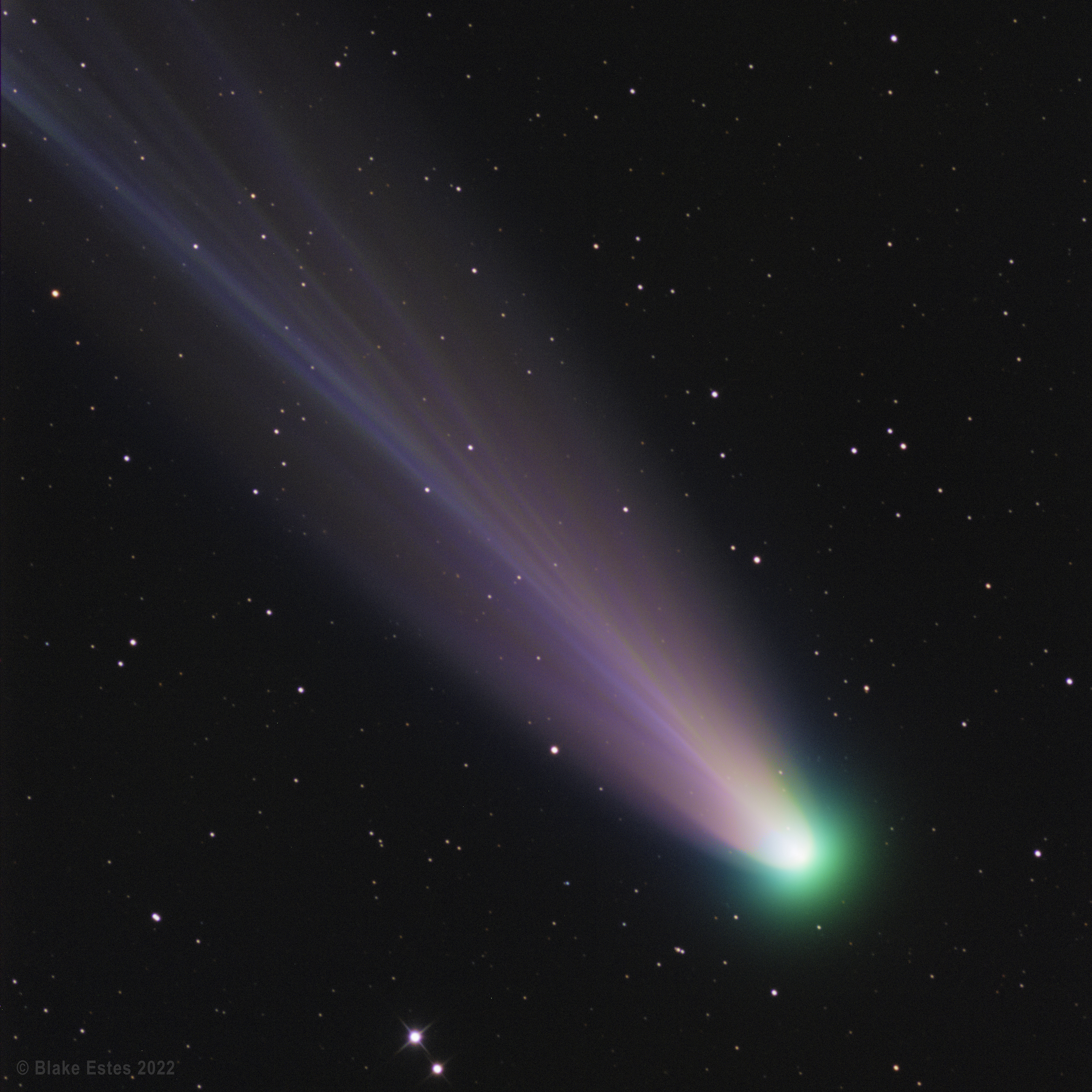
レナード彗星を間近で見るとどんな姿でしょうか?実際にそこへ行くことはできませんが、小型望遠鏡で彗星のコマと内側の尾を撮影することで、その様子をある程度把握できます。名前が示すように、イオンの尾は電離ガスでできています。このガスは太陽からの紫外線によってエネルギーを与えられ、太陽風によって外側に押し出されます。太陽風は、太陽の複雑で絶えず変化する磁場によって、非常に構造化され、形作られています。変動する太陽風と、彗星の核から噴出するさまざまなガスジェットが組み合わさることで、尾の複雑な構造が生まれます。太陽風に沿って、レナード彗星の尾の構造は太陽から外側に向かって移動し、時間の経過とともに波打つような外観も変化します。イオンの尾の青色は、主に再結合する一酸化炭素分子によるものですが、彗星の頭部を取り囲むコマの緑色は、主に少量の再結合する二原子炭素分子によって作られています。二原子炭素は太陽光によって約50時間で破壊されるため、その緑色の光はイオンテイルの奥深くまで届きません。掲載されている画像は、1月2日にオーストラリアのサイディング・スプリング天文台で撮影されたものです。現在、地球の南半球から最もよく見えるレナード彗星は、太陽を一周し、太陽系外へと向かっています。
原文(English)
What does Comet Leonard look like up close? Although we can't go there, imaging the comet's coma and inner tails through a small telescope gives us a good idea. As the name implies, the ion tail is made of ionized gas -- gas energized by ultraviolet light from the Sun and pushed outward by the solar wind. The solar wind is quite structured and sculpted by the Sun's complex and ever changing magnetic field. The effect of the variable solar wind combined with different gas jets venting from the comet's nucleus accounts for the tail's complex structure. Following the wind, structure in Comet Leonard's tail can be seen to move outward from the Sun even alter its wavy appearance over time. The blue color of the ion tail is dominated by recombining carbon monoxide molecules, while the green color of the coma surrounding the head of the comet is created mostly by a slight amount of recombining diatomic carbon molecules. Diatomic carbon is destroyed by sunlight in about 50 hours -- which is why its green glow does not make it far into the ion tail. The featured image was taken on January 2 from Siding Spring Observatory in Australia. Comet Leonard, presently best viewed from Earth's Southern Hemisphere, has rounded the Sun and is now headed out of the Solar System.
\ この感動を宇宙仲間にシェア /
宇宙をXでシェア
© Blake Estes
(itelescope.net) / APOD