M44:ビーハイブ・クラスター
M44: The Beehive Cluster
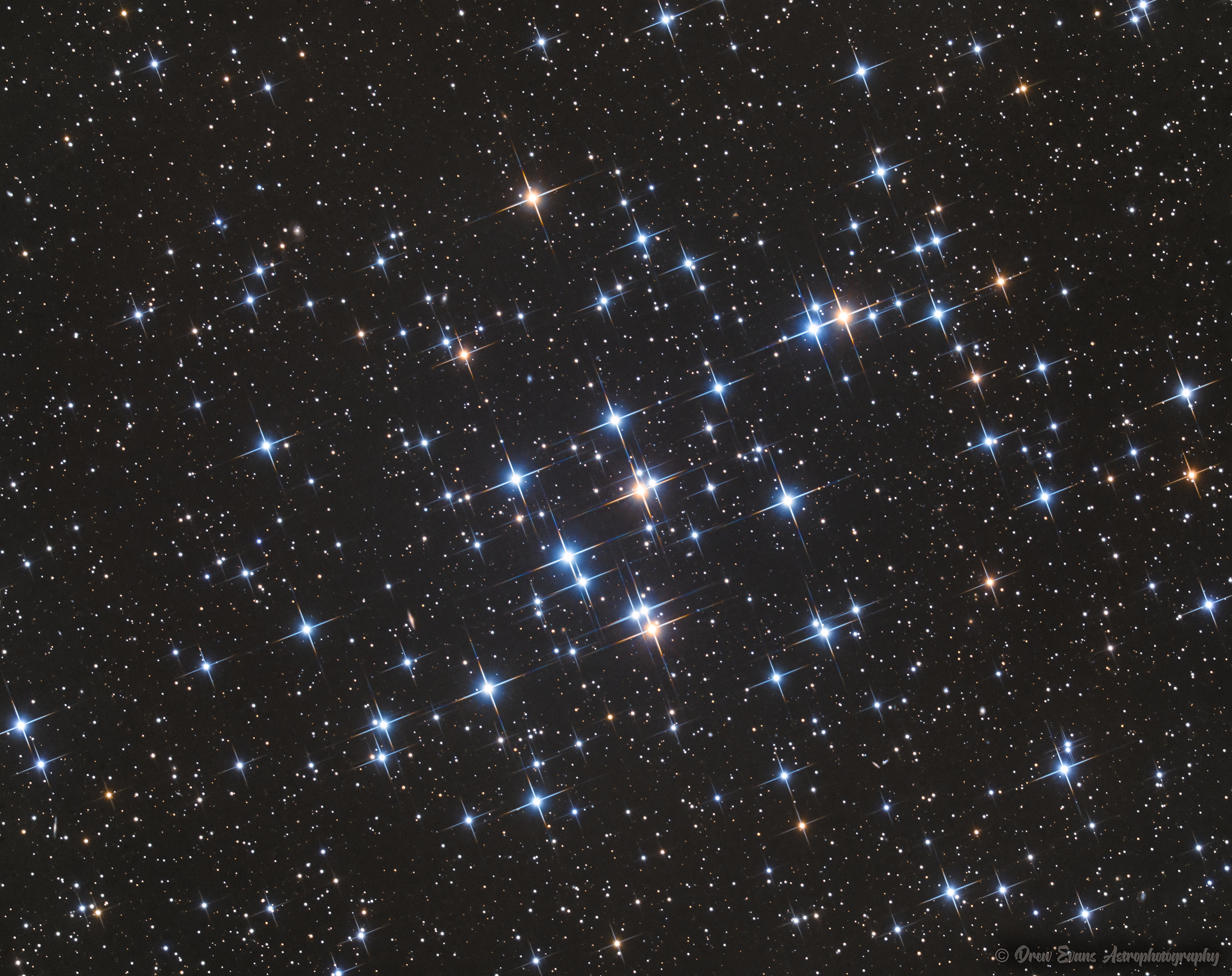
わずか600光年離れたM44は、太陽系に最も近い星団の1つです。プレセペ星団またはプレセペ星団としても知られていますが、その星々は若く、太陽の45億年に比べると約6億歳です。年齢と宇宙空間での運動が似ていることから、M44と、おうし座にあるさらに近いヒアデス星団は、同じ大きな分子雲の中で一緒に誕生したと考えられています。約15光年に及ぶ散開星団M44には、約1,000個の星があり、かに座の空で満月3回分(1.5度)ほどの面積を占めています。肉眼で見えるM44は、古代から認識されていました。シャルル・メシエの18世紀のカタログに44番目の項目として掲載されるずっと前から、かすかな雲または天の霧として記述されていましたが、望遠鏡が利用可能になるまで、この星団は個々の星に分解されませんでした。現代の双眼鏡を携えた天体観測者にとって人気の高いこの星団は、望遠鏡で撮影された写真では、明るい青色の主系列星群の中に、わずかに黄色みを帯びた低温の赤色巨星が点在しているのが確認できる。明るい星団メンバーを際立たせる印象的な回折スパイクは、望遠鏡の対物レンズの前に張った紐によって作り出されたものである。
原文(English)
A mere 600 light-years away, M44 is one of the closest star clusters to our solar system. Also known as the Praesepe or the Beehive cluster its stars are young though, about 600 million years old compared to our Sun's 4.5 billion years. Based on similar ages and motion through space, M44 and the even closer Hyades star cluster in Taurus are thought to have been born together in the same large molecular cloud. An open cluster spanning some 15 light-years, M44 holds 1,000 stars or so and covers about 3 full moons (1.5 degrees) on the sky in the constellation Cancer. Visible to the unaided eye, M44 has been recognized since antiquity. Described as a faint cloud or celestial mist long before being included as the 44th entry in Charles Messier's 18th century catalog, the cluster was not resolved into its individual stars until telescopes were available. A popular target for modern, binocular-equipped sky gazers, the cluster's few yellowish tinted, cool, red giants are scattered through the field of its brighter hot blue main sequence stars in this telescopic group snapshot. Dramatic diffraction spikes highlighting the brighter cluster members were created with string crossed in front of the telescope's objective lens.
\ この感動を宇宙仲間にシェア /
宇宙をXでシェア
© Drew Evans / APOD