ピナクルズの背後にある衛星
Satellites Behind Pinnacles
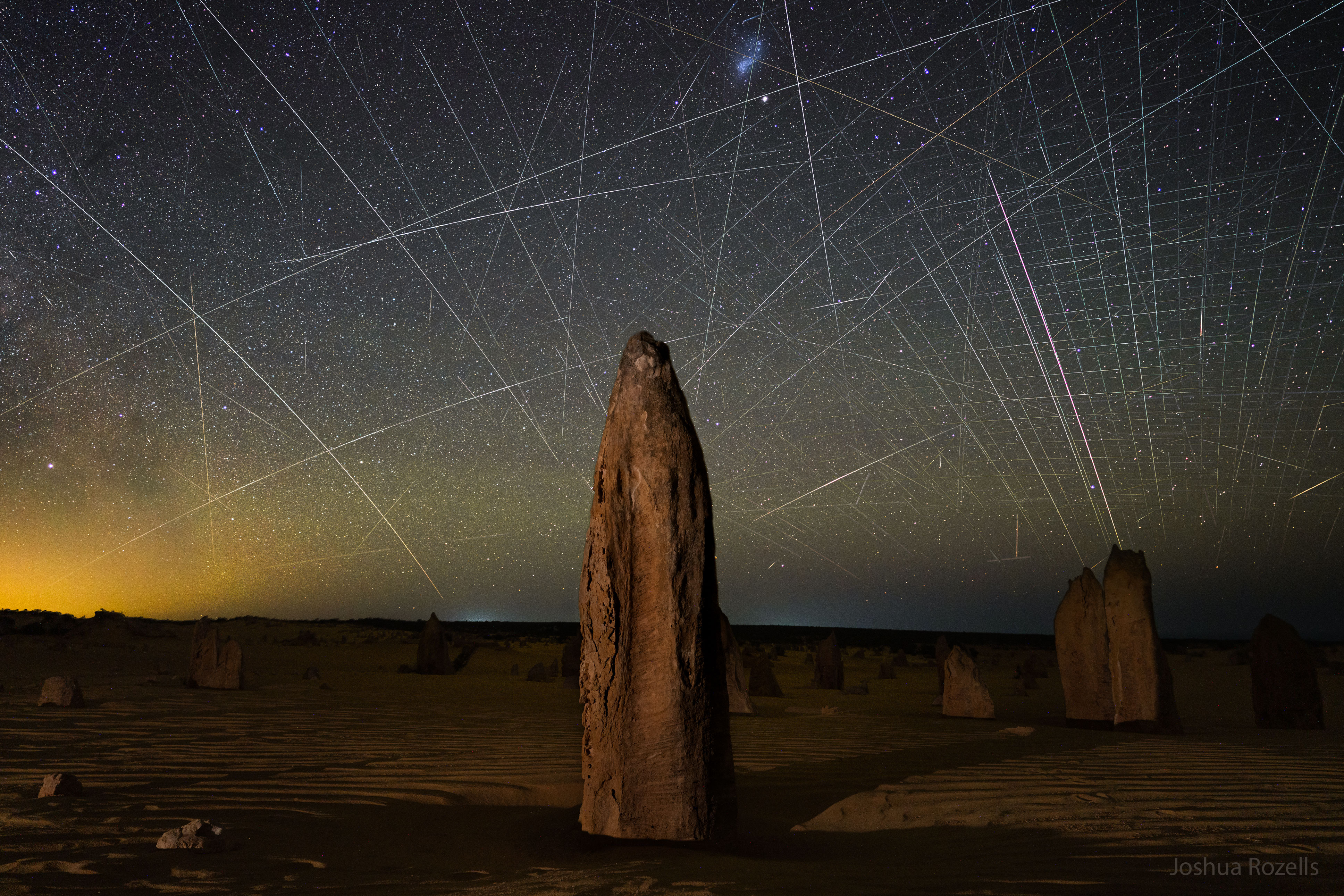
背景に写っている筋状の模様は何でしょう?それは衛星の軌跡です。まず、前景にはピナクルズと呼ばれる絵のように美しい岩山が写っています。西オーストラリア州のナンバン国立公園にあるこれらの人の高さほどの尖塔は、古代の貝殻(石灰岩)が未知のプロセスを経て形成されたものです。しかし、おそらくもっと目を引くのは、その背後の空でしょう。低軌道衛星が太陽光を反射してできたこれらの筋状の模様は、すべて2時間以内に撮影され、デジタル合成によって1枚の画像にまとめられました。前景は同じカメラで同じ場所から連続して撮影されています。これらの筋状の模様のほとんどは、開発中のスターリンク通信衛星群によって作られたものですが、そうでないものもあります。一般的に、これらの筋状の模様は、夕暮れ後から夜明け前までの間、地球上空にほぼ常に見える衛星の数が増加していることを示しています。地球上のカメラや望遠鏡で撮影された画像における衛星の軌跡の影響を理解し、除去することは、洗練された天体写真撮影のためだけでなく、人類が遠方の宇宙を科学的に理解するためにも重要になっています。天体物理学者の皆様:天体物理学ソースコードライブラリにある2,800以上のコードをご覧ください。
原文(English)
What are all those streaks across the background? Satellite trails. First, the foreground features picturesque rock mounds known as Pinnacles. Found in the Nambung National Park in Western Australia, these human-sized spires are made by unknown processes from ancient sea shells (limestone). Perhaps more eye-catching, though, is the sky behind. Created by low-Earth orbit satellites reflecting sunlight, all of these streaks were captured in less than two hours and digitally combined onto the single featured image, with the foreground taken consecutively by the same camera and from the same location. Most of the streaks were made by the developing Starlink constellation of communication satellites, but some are not. In general, the streaks are indicative of an increasing number of satellites nearly continuously visible above the Earth after dusk and before dawn. Understanding and removing the effects of satellite trails on images from Earth's ground-based cameras and telescopes is now important not only for elegant astrophotography, but for humanity's scientific understanding of the distant universe. Astrophysicists: Browse 2,800+ codes in the Astrophysics Source Code Library
\ この感動を宇宙仲間にシェア /
宇宙をXでシェア
© Joshua Rozells / APOD