チリからおはようございます、惑星の皆さん。
Good Morning Planets from Chile
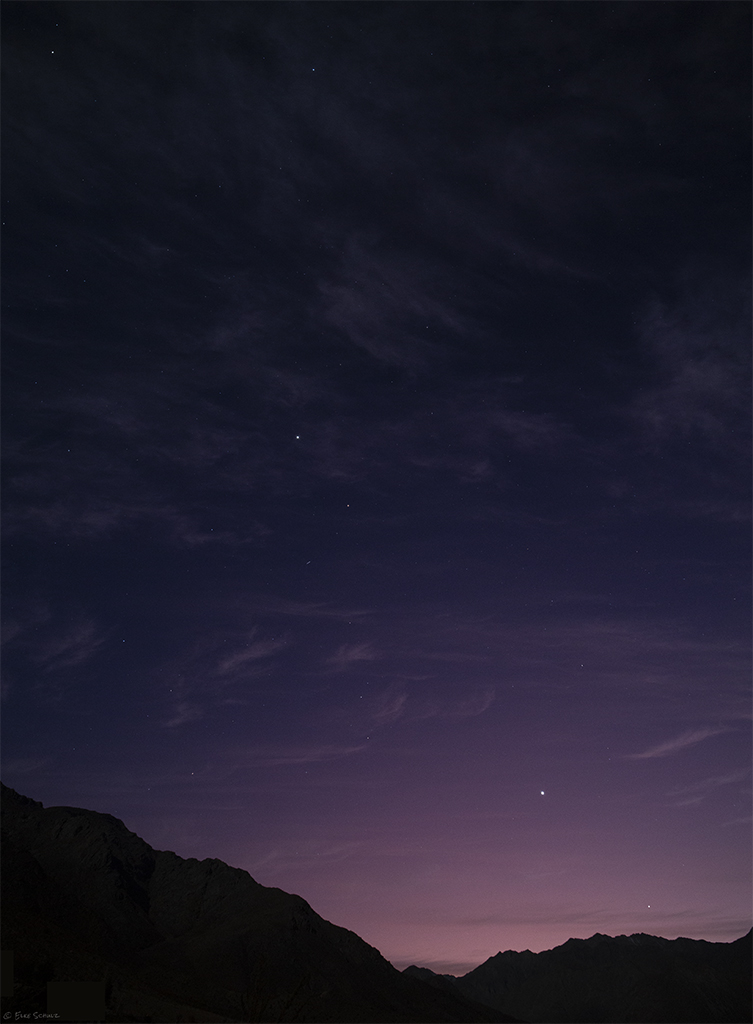
6月15日、最も内側の惑星である水星は、地球の空で太陽から最も遠い位置まで移動しました。日の出直前の東の地平線近くに、チリのリオ・ウルタド渓谷からのこの夜明け前のスナップショットでは、遠くのアンデス山脈の峰の上に水星が立っています。6月の他の朝の惑星は水星の上に並んでおり、太陽系の肉眼で見えるすべての惑星が、単一の広視野で黄道に沿って一列に並んでいます。太陽系の黄道面は北に傾いており、南半球の空を急な弧を描いています。北半球の早朝に起きる人は、黄道に沿って並ぶ惑星が南に傾いたより浅い角度で見えるでしょう。両半球から見て、6月の美しい朝の惑星の光景は、太陽からの距離が増加する順に、見える惑星を見つけます。
原文(English)
On June 15, innermost planet Mercury had wandered about as far from the Sun as it ever gets in planet Earth's sky. Near the eastern horizon just before sunrise it stands over distant Andes mountain peaks in this predawn snapshot from the valley of Rio Hurtado in Chile. June's other morning planets are arrayed above it, as all the naked-eye planets of the Solar System stretch in a line along the ecliptic in the single wide-field view. Tilted toward the north, the Solar System's ecliptic plane arcs steeply through southern hemisphere skies. Northern hemisphere early morning risers will see the lineup of planets along the ecliptic at a shallower angle tilting toward the south. From both hemispheres June's beautiful morning planetary display finds the visible planets in order of their increasing distance from the Sun.
\ この感動を宇宙仲間にシェア /
宇宙をXでシェア
© Elke Schulz / APOD