ウェッブ宇宙望遠鏡から見たカリーナ断崖
Carina Cliffs from the Webb Space Telescope
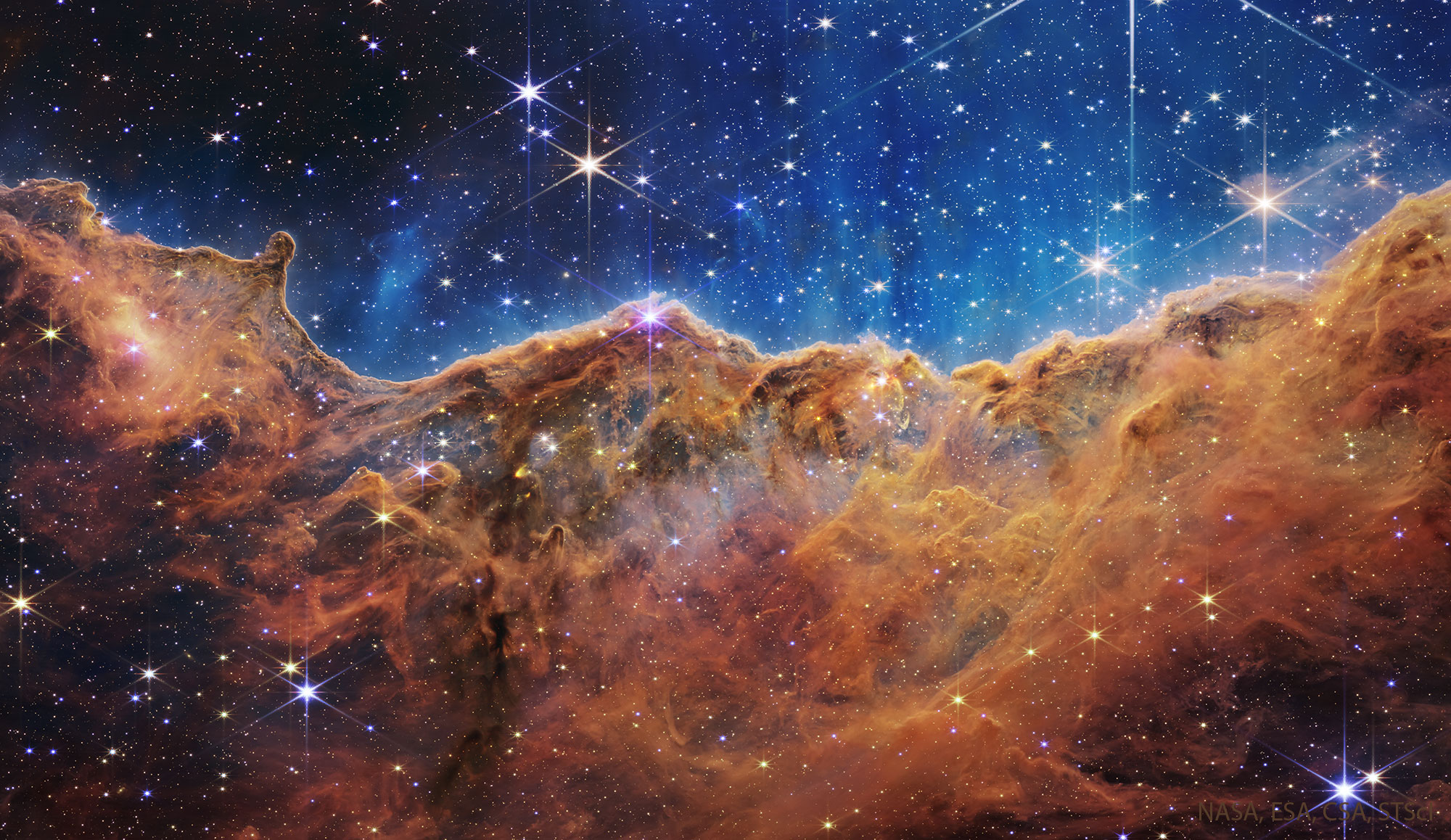
これらの断崖は星々によって形成されました。具体的には、散開星団NGC 3324の星々から放たれる破壊的な風と高エネルギーの光が、りゅうこつ座星雲の北部にある暗い星間塵の山の一部を侵食しました。これらの星のいくつかは、これまで打ち上げられた中で最大の天文望遠鏡であるジェームズ・ウェッブ宇宙望遠鏡によって最近撮影されたこの非常に詳細な画像の上部に見ることができます。ウェッブの大きな鏡と塵を透過する赤外線を捉える能力により、塵の中の魅力的な詳細、これまで隠されていた数百の星、そして遠くにあるいくつかの銀河を捉えることができました。特徴的なギザギザの断崖は、ガブリエラ・ミストラル星雲として知られるりゅうこつ座の一部にあります。これは、別の方向から見ると、有名なチリの詩人の顔の横顔に似ているためです。これらの星雲の断崖は、南の星座であるりゅうこつ座の方向に約7,600光年離れたところにあります。天体物理学者向け:天体物理学ソースコードライブラリで2,800以上のコードを閲覧できます。
原文(English)
Stars created these cliffs. Specifically, the destructive winds and energetic light from the stars in the open cluster NGC 3324 eroded away part of a mountain of dark interstellar dust in the northern part of the Carina Nebula. Several of these stars are visible toward the top of this highly detailed image taken recently by the James Webb Space Telescope, the largest astronomical telescope ever launched. Webb's large mirror and ability to see dust-piercing infrared light has enabled it to capture fascinating details in the dust, hundreds of previously hidden stars, and even some galaxies far in the distance. The featured jagged cliffs occur in part of Carina known as the Gabriela Mistral Nebula -- because when viewed in another orientation, they appear similar to the facial profile of the famous Chilean poet. These nebular cliffs occur about 7,600 light years away toward the southern constellation of Carina. Astrophysicists: Browse 2,800+ codes in the Astrophysics Source Code Library
\ この感動を宇宙仲間にシェア /
宇宙をXでシェア
© NASA / APOD