環を持つ氷の巨人ネプチューン
Ringed Ice Giant Neptune
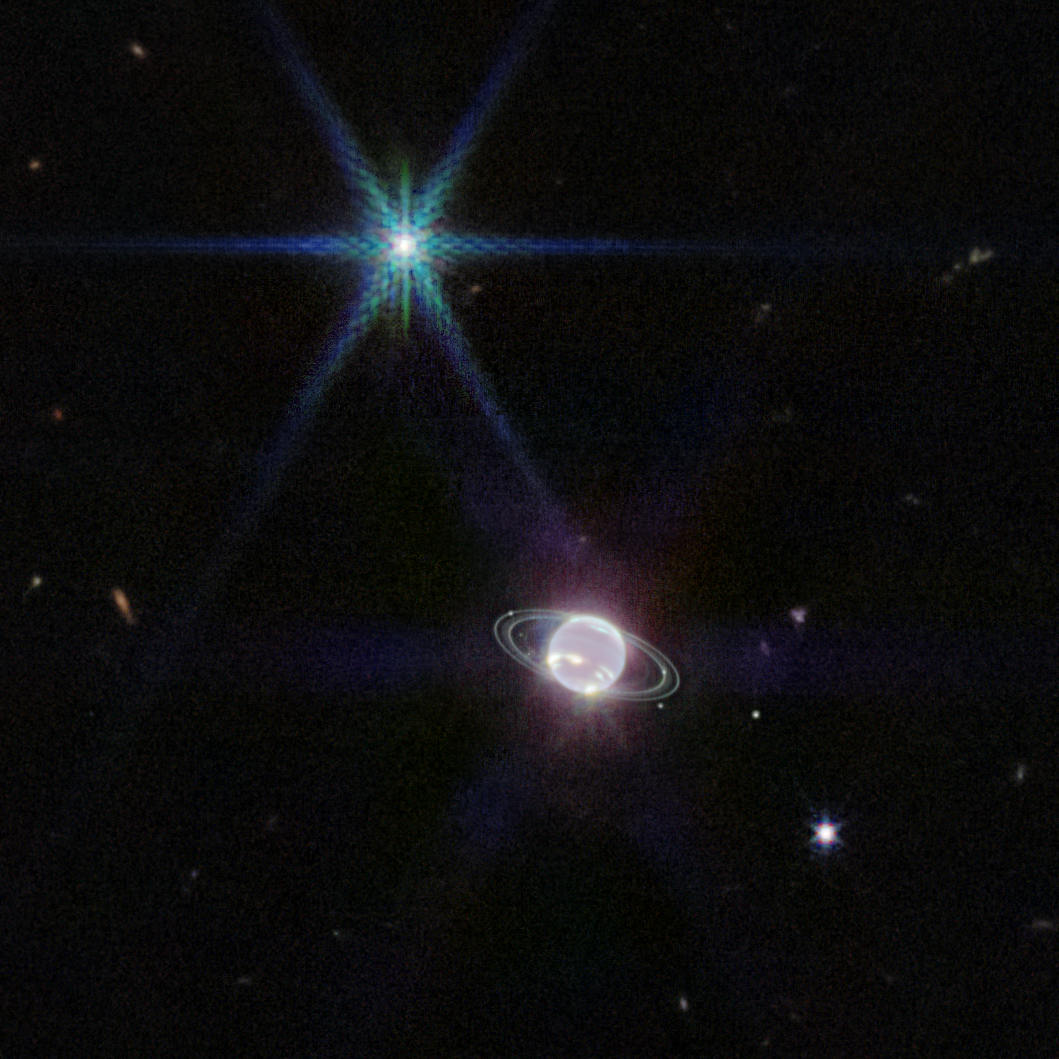
環を持つ氷の巨人、海王星は、ジェームズ・ウェッブ宇宙望遠鏡によるこの鮮明な近赤外線画像の中央付近に位置しています。暗く遠いこの惑星は、太陽から最も遠い惑星で、地球の約30倍の距離にあります。しかし、ウェッブの素晴らしい画像では、惑星の暗く幽玄な外観は、赤外線を吸収する大気中のメタンによるものです。海王星の吸収性メタンの大部分よりも高い高度の雲は、画像の中で容易に際立っています。凍った窒素で覆われた海王星最大の衛星トリトンは、反射した太陽光では海王星よりも明るく、左上にウェッブ特有の回折スパイクを伴って見えます。トリトンを含め、海王星の既知の14個の衛星のうち7個が視野内で識別できます。この新しい宇宙からの惑星像では、海王星の淡い環が印象的です。複雑な環系の詳細は、1989年8月にボイジャー2号探査機が海王星を訪れて以来、初めてここで見ることができます。
原文(English)
Ringed, ice giant Neptune lies near the center of this sharp near-infrared image from the James Webb Space Telescope. The dim and distant world is the farthest planet from the Sun, about 30 times farther away than planet Earth. But in the stunning Webb view the planet's dark and ghostly appearance is due to atmospheric methane that absorbs infrared light. High altitude clouds that reach above most of Neptune's absorbing methane easily stand out in the image though. Coated with frozen nitrogen, Neptune's largest moon Triton is brighter than Neptune in reflected sunlight and is seen at upper left sporting the Webb's characteristic diffraction spikes. Including Triton, seven of Neptune's 14 known moons can be identified in the field of view. Neptune's faint rings are striking in this new space-based planetary portrait. Details of the complex ring system are seen here for the first time since Neptune was visited by the Voyager 2 spacecraft in August 1989.
\ この感動を宇宙仲間にシェア /
宇宙をXでシェア
© NASA / APOD