GRB 221009A
GRB 221009A
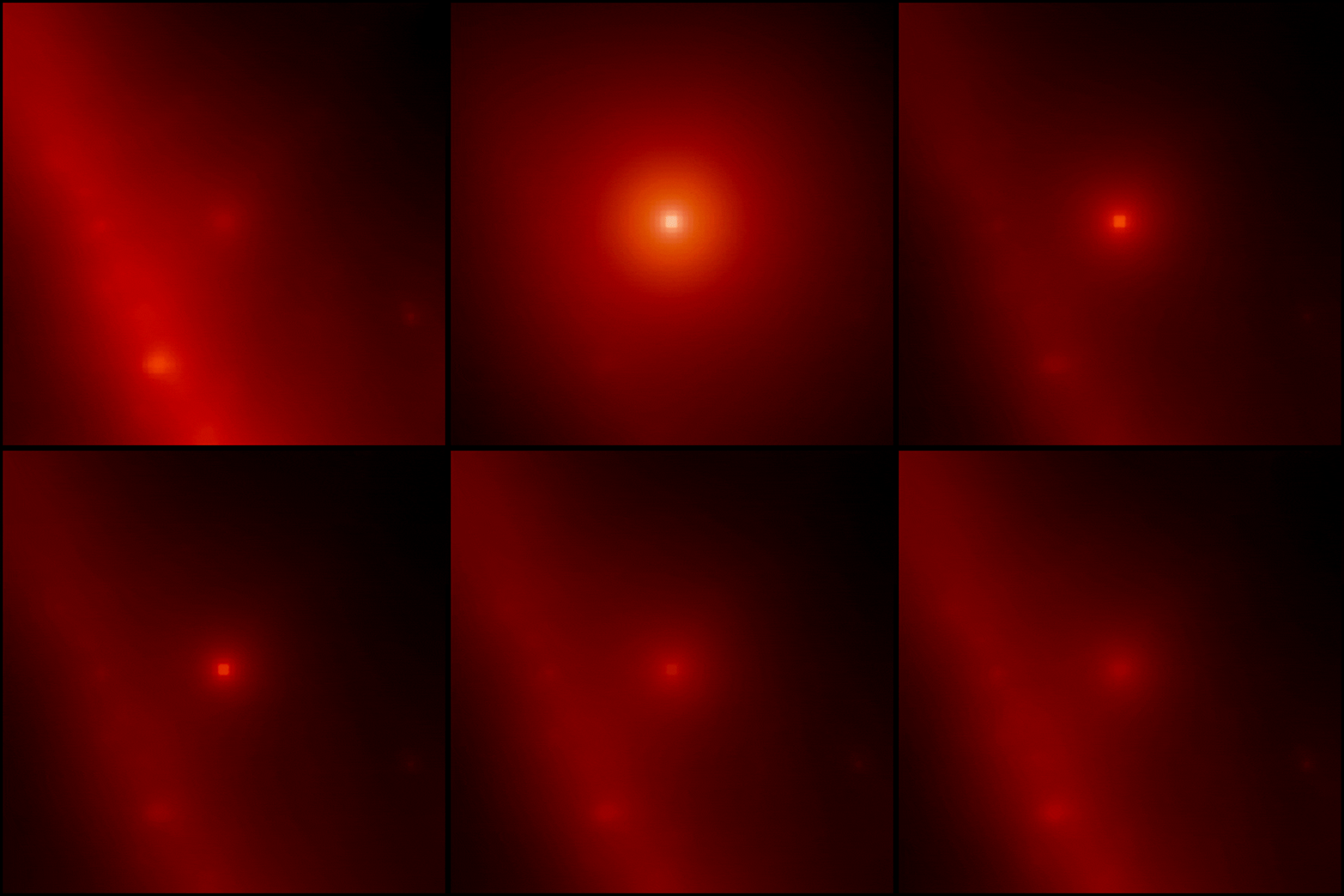
ガンマ線バーストGRB 221009Aは、遠い宇宙でずっと昔に崩壊した星の中心で形成された新しいブラックホールの誕生を示している可能性が高い。この極めて強力な爆発は、フェルミガンマ線宇宙望遠鏡のデータを使用して作成されたこのアニメーションGIFで描かれている。フェルミはガンマ線エネルギーでデータを取得し、1億電子ボルトを超える光子を検出した。比較すると、可視光の光子のエネルギーは約2電子ボルトである。左側の20度幅のフレームを斜めに横切る、天の川銀河の平面からの安定した高エネルギーのガンマ線の光が、GRB 221009Aからの一時的なガンマ線フラッシュが中央に現れ、その後消えていく。これまで検出された中で最も明るいガンマ線バーストの1つであるGRB 221009Aは、ガンマ線バーストとしては近いが、それでも約20億光年離れている。低軌道にあるフェルミ衛星の大型面積望遠鏡は、10月9日(日)にGRB 221009Aからの高エネルギー放射線が地球を襲った際、10時間以上にわたってバーストからのガンマ線光子を記録した。
原文(English)
Gamma-ray burst GRB 221009A likely signals the birth of a new black hole, formed at the core of a collapsing star long ago in the distant universe. The extremely powerful blast is depicted in this animated gif constructed using data from the Fermi Gamma Ray Space Telescope. Fermi captured the data at gamma-ray energies, detecting photons with over 100 million electron volts. In comparison visible light photons have energies of about 2 electron volts. A steady, high energy gamma-ray glow from the plane of our Milky Way galaxy runs diagonally through the 20 degree wide frame at the left, while the transient gamma-ray flash from GRB 221009A appears at center and then fades. One of the brightest gamma-ray bursts ever detected GRB 221009A is also close as far as gamma-ray bursts go, but still lies about 2 billion light-years away. In low Earth orbit Fermi’s Large Area Telescope recorded gamma-ray photons from the burst for more than 10 hours as high-energy radiation from GRB 221009A swept over planet Earth last Sunday, October 9.
\ この感動を宇宙仲間にシェア /
宇宙をXでシェア
© NASA / APOD