ウェッブ宇宙望遠鏡で撮影した星団IC 348
Star Cluster IC 348 from Webb
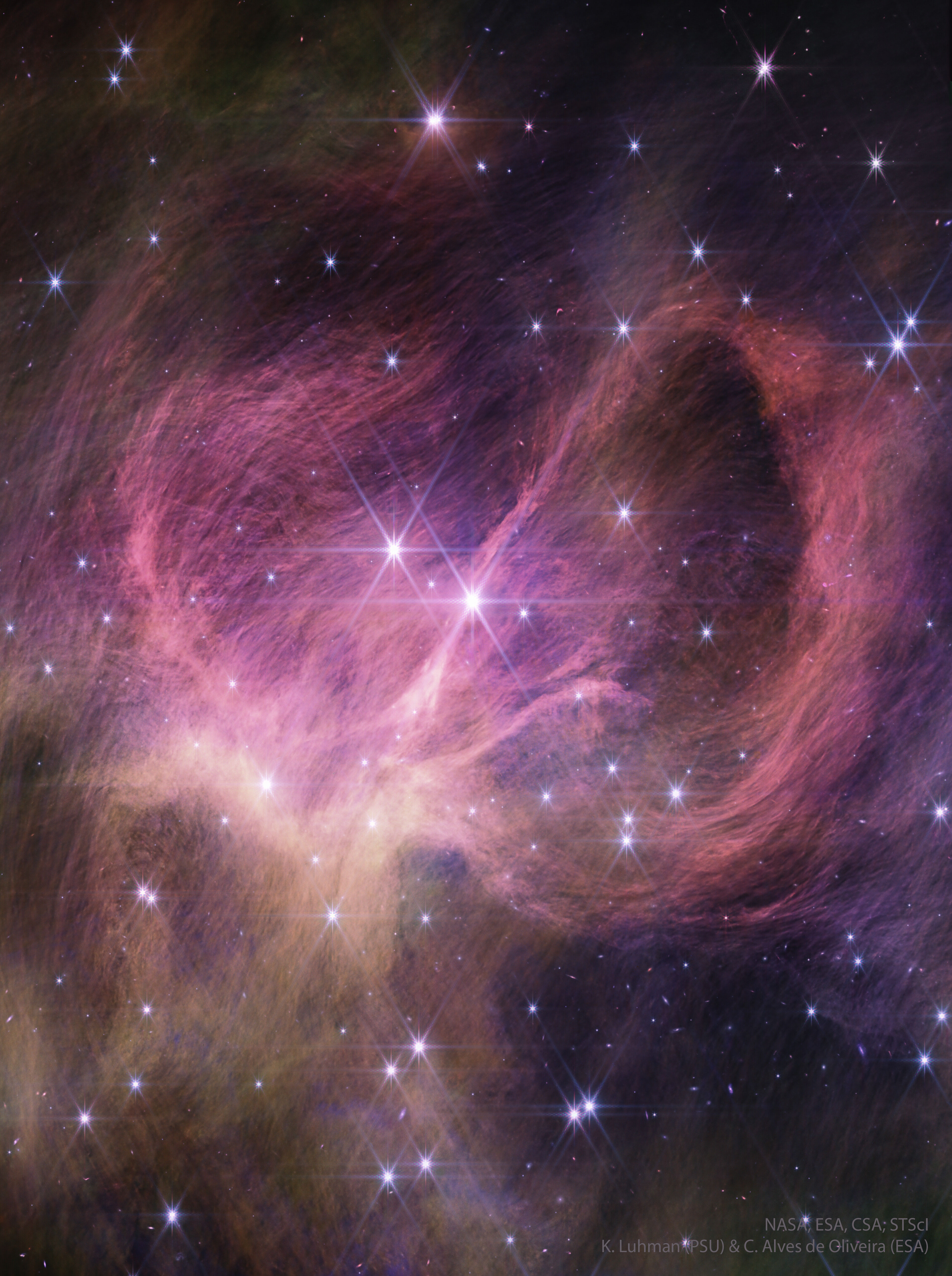
時として、最も見づらい星こそが最も興味深いものとなる。IC 348は、周囲の糸状の塵を照らす若い星団である。ウェッブ宇宙望遠鏡が最近公開した赤外線画像では、糸状に絡み合った塵がピンク色に見える。可視光では、この塵は主に青色の光を反射するため、周囲の物質は反射星雲特有の青色に見える。明るい星の他に、IC 348にはいくつかの低温天体も発見されており、これらは赤外線でより明るく輝くため観測可能である。これらの天体は低質量褐色矮星であると推測されている。その証拠として、土星の大気で以前に観測された、おそらく炭化水素である未確認の大気化学物質の検出が挙げられる。これらの天体の質量は既知の惑星よりわずかに大きく、木星の数倍程度である。これらのことから、この若い星団には注目すべき何か、すなわち他の恒星の周りを公転せず自由に漂う若い惑星質量褐色矮星が存在することが示唆される。
原文(English)
Sometimes, it's the stars that are the hardest to see that are the most interesting. IC 348 is a young star cluster that illuminates surrounding filamentary dust. The stringy and winding dust appears pink in this recently released infrared image from the Webb Space Telescope. In visible light, this dust reflects mostly blue light, giving the surrounding material the familiar blue hue of a reflection nebula. Besides bright stars, several cool objects have been located in IC 348, visible because they glow brighter in infrared light. These objects are hypothesized to be low mass brown dwarfs. Evidence for this includes the detection of an unidentified atmospheric chemical, likely a hydrocarbon, seen previously in the atmosphere of Saturn. These objects appear to have masses slightly greater than known planets, only a few times greater than Jupiter. Together, these indicate that this young star cluster contains something noteworthy -- young planet-mass brown dwarfs that float free, not orbiting any other star.
\ この感動を宇宙仲間にシェア /
宇宙をXでシェア
© NASA / APOD