ポンズブルックス彗星のイオンテイル
Comet Pons-Brooks' Ion Tail
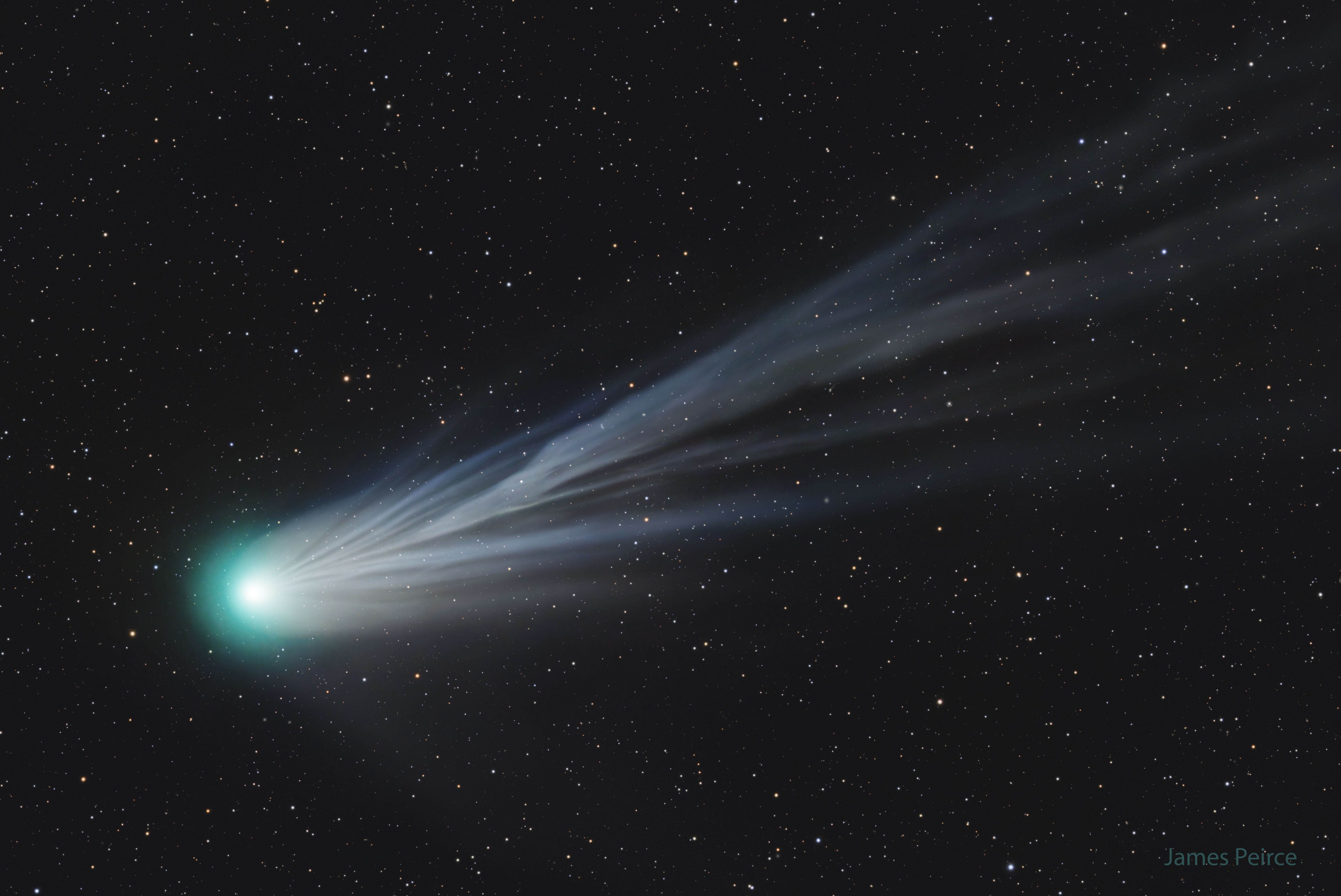
ポンス・ブルックス彗星には、実に興味深い尾があります。1385年に初めて発見されたこの噴火する汚れた雪玉は、71年ごとに太陽系の内側に戻ってきます。そして今回は、カメラの長時間露光でその姿を捉えようとしています。掲載されている写真では、水色の流れがイオンの尾です。イオンの尾は、太陽風によって彗星の核から押し出された荷電分子で構成されています。太陽風と彗星の核の自転によって形作られるイオンの尾は、常に太陽とは反対方向を向いています。12P/ポンス・ブルックス彗星は現在、夕方の北西の空に双眼鏡で見ることができ、夜ごとにわずかに移動しています。頻繁にフレアを起こすこの彗星は、平均的に明るさを増し続け、4月8日の皆既日食の経路にいる人々にとっては、日中でも肉眼で見えるようになるかもしれません。
原文(English)
Comet Pons-Brooks has quite a tail to tell. First discovered in 1385, this erupting dirty snowball loops back into our inner Solar System every 71 years and, this time, is starting to put on a show for deep camera exposures. In the featured picture, the light blue stream is the ion tail which consists of charged molecules pushed away from the comet's nucleus by the solar wind. The ion tail, shaped by the Sun's wind and the comet's core's rotation, always points away from the Sun. Comet 12P/Pons–Brooks is now visible with binoculars in the early evening sky toward the northwest, moving perceptibly from night to night. The frequently flaring comet is expected to continue to brighten, on the average, and may even become visible with the unaided eye -- during the day -- to those in the path of totality of the coming solar eclipse on April 8.
\ この感動を宇宙仲間にシェア /
宇宙をXでシェア
© NASA / APOD