ガリレオのヨーロッパ
Galileo's Europa
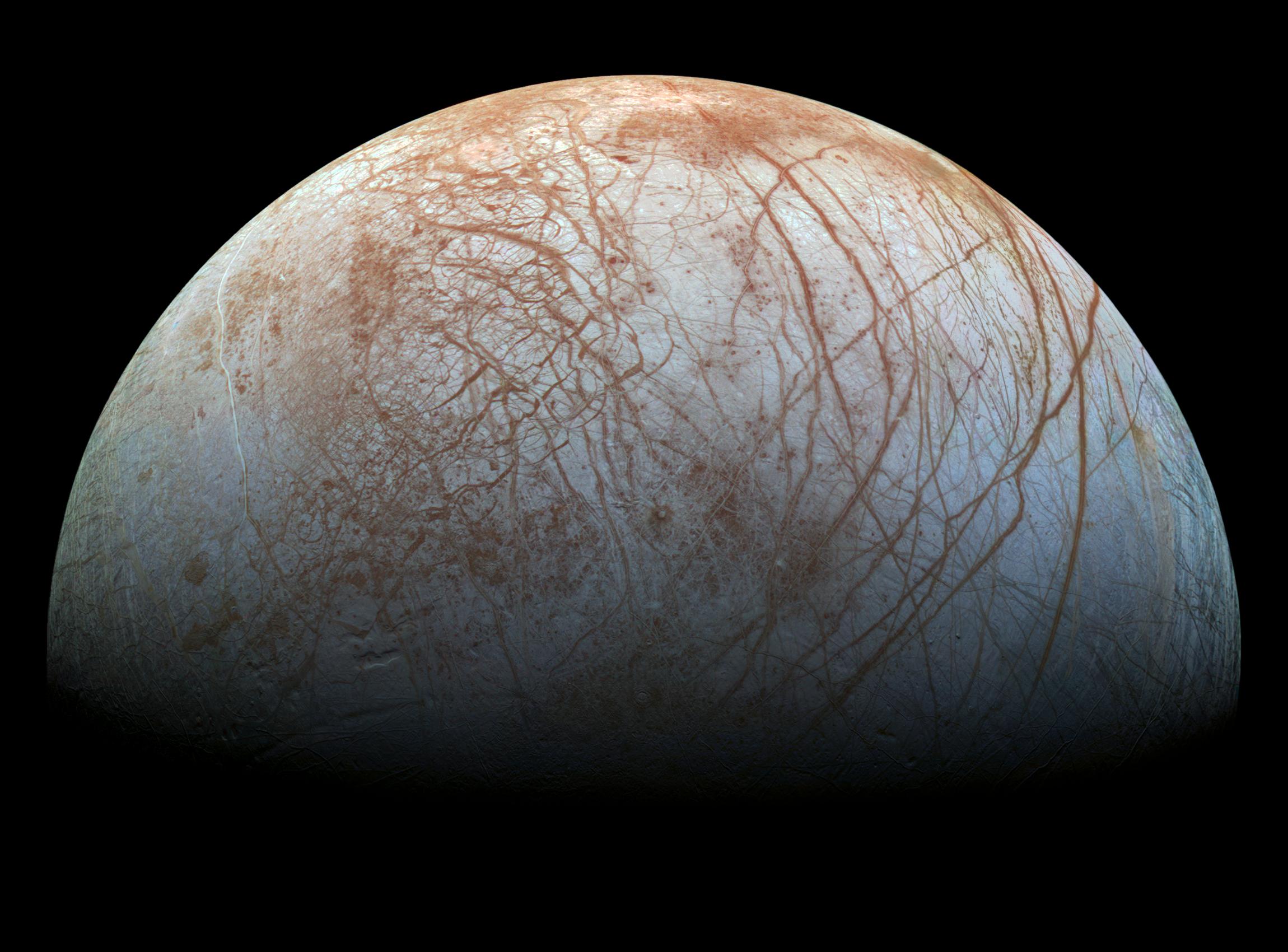
1990年代後半に木星系を周回したガリレオ探査機は、エウロパの素晴らしい画像を記録し、この衛星の氷の表面の下に深い全球的な海が隠されている可能性が高いという証拠を発見しました。ガリレオのエウロパ画像データは、人間の目で見たものに近いカラー画像を生成するために、キャリブレーションを改善してここで再マスターされています。エウロパの長く湾曲した亀裂は、地下に液体の水が存在することを示唆しています。この大きな衛星が木星の周りを楕円軌道で周回する際に経験する潮汐による屈曲が、海を液体に保つエネルギーを供給しています。しかし、さらに魅力的なのは、太陽光がなくても、このプロセスが生命を支えるエネルギーも供給する可能性があり、エウロパが地球外生命を探すのに最適な場所の1つになる可能性があるということです。現在木星軌道上にあるジュノー探査機も、この水の世界を何度もフライバイし、エウロパの居住可能性を探るデータとともに画像を送信しています。今年の10月には、NASAのエウロパ・クリッパーが探査の旅に出発します。探査機は、エウロパの氷の表面から25キロメートル以内まで接近し、約50回のフライバイを行う予定だ。
原文(English)
Looping through the Jovian system in the late 1990s, the Galileo spacecraft recorded stunning views of Europa and uncovered evidence that the moon's icy surface likely hides a deep, global ocean. Galileo's Europa image data has been remastered here, with improved calibrations to produce a color image approximating what the human eye might see. Europa's long curving fractures hint at the subsurface liquid water. The tidal flexing the large moon experiences in its elliptical orbit around Jupiter supplies the energy to keep the ocean liquid. But more tantalizing is the possibility that even in the absence of sunlight that process could also supply the energy to support life, making Europa one of the best places to look for life beyond Earth. The Juno spacecraft currently in Jovian orbit has also made repeated flybys of the water world, returning images along with data exploring Europa's habitability. This October will see the launch of the NASA's Europa Clipper on a voyage of exploration. The spacecraft will make nearly 50 flybys, approaching to within 25 kilometers of Europa's icy surface.
\ この感動を宇宙仲間にシェア /
宇宙をXでシェア
© NASA / APOD