珍しい星雲 Pa 30
Unusual Nebula Pa 30
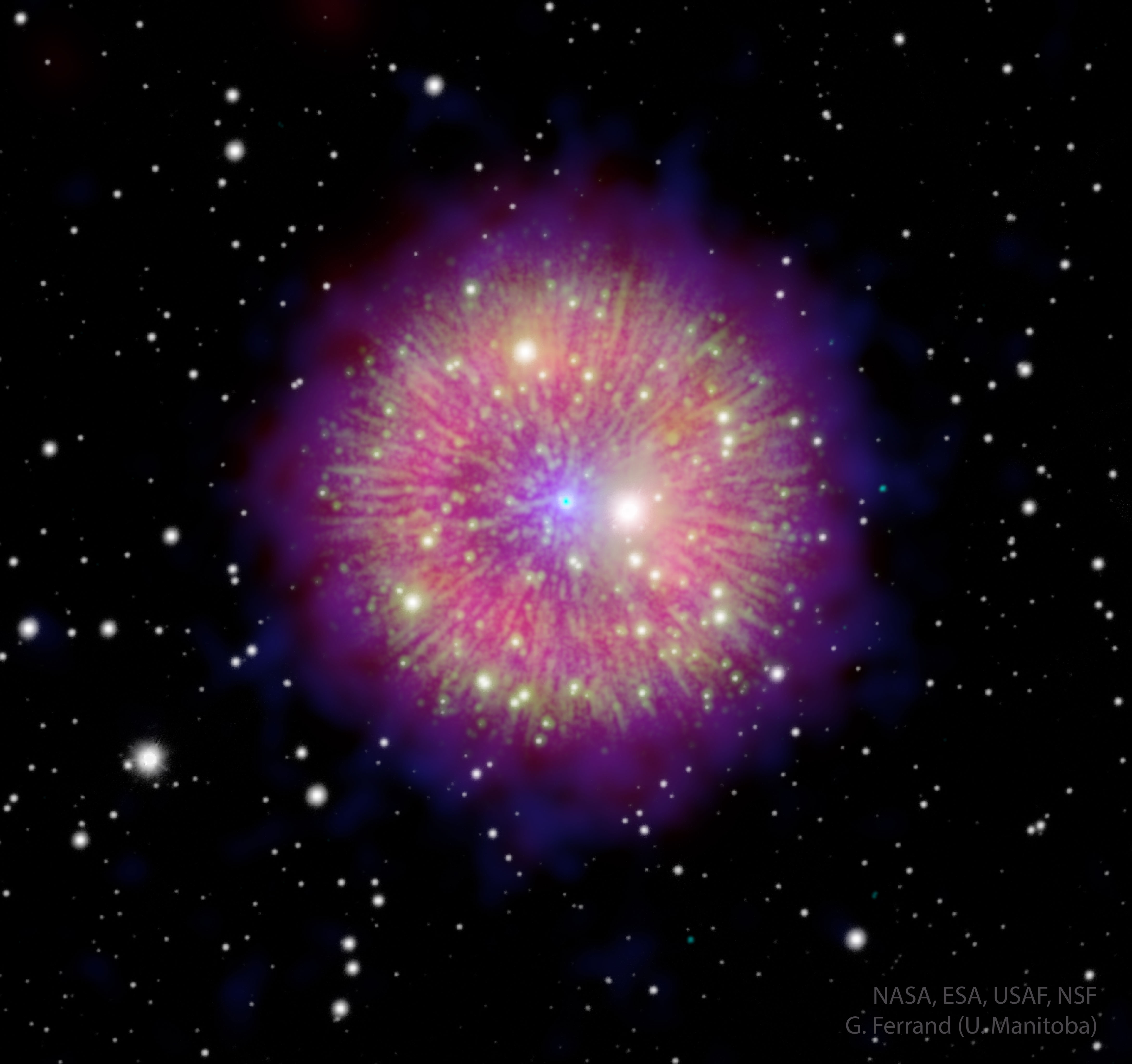
この珍しい天体花火は何が生み出したのでしょうか?Pa 30 と呼ばれるこの星雲は、1181 年に明るい「客星」が現れたのと同じ方向の空に現在も見えています。Pa 30 のフィラメントは新星 (例えば GK Per) や惑星状星雲 (例えば NGC 6751) によって作られたものと似ていますが、一部の天文学者は、これは珍しいタイプの超新星、熱核型 Iax によって作られたと提唱しており、そのため (また) SN 1181 とも呼ばれています。このモデルでは、超新星は単一の星の爆発の結果ではなく、2 つの白色矮星が螺旋状に接近して合体したときに発生した爆発です。中央の青い点は、ゾンビ星、つまりこの超新星レベルの爆発を何らかの方法で生き延びた白色矮星の残骸であると推測されています。掲載画像は、赤外線望遠鏡(WISE)、可視光望遠鏡(MDM、Pan-STARRS)、X線望遠鏡(Chandra、XMM)で取得した画像とデータを組み合わせたものです。今後の観測と分析によって、さらに多くのことが明らかになるでしょう。NASA報道:2024年4月8日の皆既日食
原文(English)
What created this unusual celestial firework? The nebula, dubbed Pa 30, appears in the same sky direction now as a bright "guest star" did in the year 1181. Although Pa 30's filaments look similar to that created by a nova (for example GK Per), and a planetary nebula (for example NGC 6751), some astronomers now propose that it was created by a rare type of supernova: a thermonuclear Type Iax, and so is (also) named SN 1181. In this model, the supernova was not the result of the detonation of a single star, but rather a blast that occurred when two white dwarf stars spiraled together and merged. The blue dot in the center is hypothesized to be a zombie star, the remnant white dwarf that somehow survived this supernova-level explosion. The featured image combines images and data obtained with infrared (WISE), visible (MDM, Pan-STARRS), and X-ray (Chandra, XMM) telescopes. Future observations and analyses may tell us more. NASA Coverage: Total Solar Eclipse of 2024 April 8
\ この感動を宇宙仲間にシェア /
宇宙をXでシェア
© NASA / APOD