夏至の月
A Solstice Moon
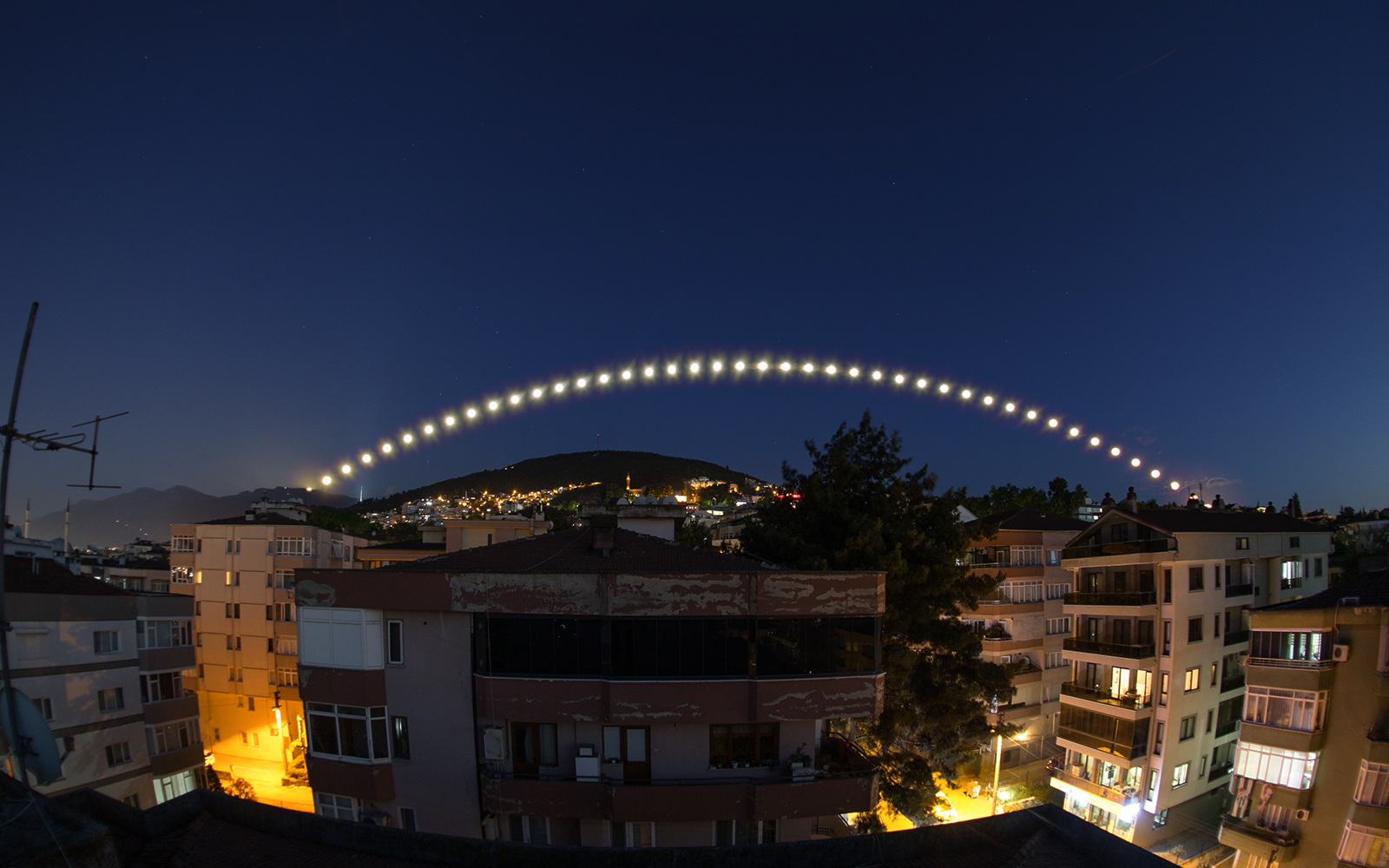
沈む太陽の反対側に昇る6月の満月は、夏至から約28時間以内に起こりました。月は黄道面に沿って太陽の軌道に近く留まるため、夏至の太陽が昼間の空高く昇る一方で、北緯から見ると6月の満月はその夜低い位置にとどまりました。実際、トルコのブルサの屋上からの6月21日の夜空の写真では、満月は地平線に沿っています。この写真は、月の出から月の入りまで10分ごとに撮影された画像から作成されています。2024年には、月は主要な月の静止にも達しました。これは、18.6年の周期で月の軌道が歳差運動することによって生じる、月の出と月の入りの月ごとの南北範囲の極値です。その結果、この6月の夏至の満月は、地平線に沿って最も南の月の出と月の入りとなりました。
原文(English)
Rising opposite the setting Sun, June's Full Moon occurred within about 28 hours of the solstice. The Moon stays close to the Sun's path along the ecliptic plane and so while the solstice Sun climbed high in daytime skies, June's Full Moon remained low that night as seen from northern latitudes. In fact, the Full Moon hugs the horizon in this June 21 rooftop night sky view from Bursa, Turkey, constructed from exposures made every 10 minutes between moonrise and moonset. In 2024 the Moon also reached a major lunar standstill, an extreme in the monthly north-south range of moonrise and moonset caused by the precession of the Moon's orbit over an 18.6 year cycle. As a result, this June solstice Full Moon was at its southernmost moonrise and moonset along the horizon.
\ この感動を宇宙仲間にシェア /
宇宙をXでシェア
© Tunc Tezel / APOD